Prime Minister approves plan to implement CPTPP

Prime Minister Nguyen Xuan Phuc has approved a plan to implement the Comprehensive and Progressive Agreement for Trans-Pacific Partnership (CPTPP).
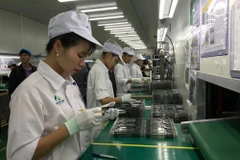
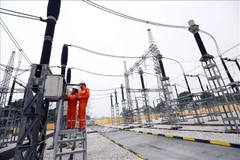
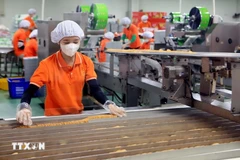
Prime Minister approves plan to implement CPTPP ảnh 1Illustrative image (Source: VNA)

Hanoi (VNA)
– Prime Minister NguyenXuan Phuc has approved a plan to implement the Comprehensive and ProgressiveAgreement for Trans-Pacific Partnership (CPTPP).

He required ministries, ministerial-level andgovernmental agencies, and People’s Committees of centrally-run cities andprovinces increase the dissemination of information about the CPTPP andparticipating countries among the public, particularly groups likely to beaffected by the deal such as  farmers,fishing communities, cooperatives, and businesses, especially small- andmedium-sized enterprises (SMEs).

The PM asked for focus to be placed on trainingofficials from State management agencies in fields related to commitments underthe CPTPP – such as investment, services, customs, government procurement,trade protection, intellectual property, agriculture, forestry and fishery,labour, and the environment – so that they clearly and precisely understand thespecific content in order to implement the deal fully and effectively.

He made the order that information on CPTPP and otherFTAs that Vietnam has joined be made available for domestic firms; along withforecasts about import-export markets, technical requirements, and regulationson goods trade management of participating countries.

Other key tasks of the plan are buildingprogrammes to support and increase the competitiveness of sectors, businesses (particularlySMEs), and farmers in line with international commitments; preparing solutionsto back those bearing direct and major impacts from international marketfluctuations, as well as assisting Vietnamese firms to join regional and globalsupply, value, and production chains.

Relevant agencies must increase vocationaltraining and science-technology application in business production, build andrefine technical measures such as national standards, technical norms and ruleson food safety, product origin and environmental protection in line withinternational commitments, to support the development of businesses andlocally-made products and protect domestic consumers.

They should increase the use of early warningsystems in trade protection to help export firms avoid risks in the field, aswell as proactively build appropriate trade defence measures in accordance withinternational regulations and commitments to protect domestic production andthe legitimate interests of Vietnamese enterprises.

It is necessary to focus on restructuring theindustrial sector and speeding up the reshuffle of agriculture and the ruraleconomy, while also boosting the application of modern and environmentally-friendlytechnologies to increase productivity in businesses, the PM noted.

He instructed the building of mechanisms toencourage foreign-invested businesses to connect with domestic firms toestablish and develop joint supply chains, as well as improve the quality ofhuman resources, especially in the fields of technology, law, and finance.

The CPTPP officially came into force in Vietnamon January 14. Its 11 member countries account for 13.4 percent of the globalGDP. –VNA 
VNA

See more

A refilling station of Petrolimex (Photo: VNA)

Import tariffs on certain fuel products reduced to 0%

Rising tensions in the Middle East, particularly the conflict involving the US, Israel and Iran, have significantly affected the global energy market, especially shipping activity through the Strait of Hormuz – a strategic route for transporting crude oil from the region.

Fishermen raise the national flag before heading out to the sea to affirm Vietnam’s sovereignty over its seas and islands. (Photo: VNA)

Dong Thap promotes IUU awareness from start of fishing season

Gia Thuan commune, located in the eastern part of the province, is a key fishing locality with 563 fishing vessels, including 423 offshore boats and 140 nearshore vessels, producing an average annual catch of over 42,970 tonnes of seafood.

Industrial production surges in the first two months of 2026. (Photo: VNA)

Industrial production posts strong growth in first two months

According to the National Statistics Office (NSO) under the Ministry of Finance, the index of industrial production (IIP) in February was estimated to decrease 18.4% from the previous month but increase 1% year on year. Overall, in the January–February period, the IIP rose 10.4% compared with the same period last year.

A delegation from the Nghe An provincial People’s Committee inspects production and business activities at the VSIP Nghe An Industrial, Urban and Service Park. (Photo:nhandan.vn)

Nghe An steps up reforms to attract FDI

In 2025, the provincial People’s Committee licensed 25 new FDI projects and approved capital adjustments for 20 others, bringing the total newly registered and additional investment to more than 1 billion USD. Many large-scale projects in the Southeast Nghe An Economic Zone have already become operational, contributing to export growth, state budget revenues and job creation.

Nearly 35,500 enterprises are newly registered nationwide, with total registered capital reaching nearly 313.7 trillion VND and more than 167,500 registered workers. (Photo: VNA)

Nearly 35,500 new businesses set up in first two months

The enterprises registered combined capital of about 313.7 trillion VND and more than 167,500 employees. Compared with the same period last year, the number of new businesses surged by 70.7%, while registered capital rose by 36.1% and registered labour increased by 19.1%.

The yarn factory of Unitex Textile and Dyeing Company Limited applies new technology to optimise operations using an automated model. (Photo: VNA)

Resolution 68: International lessons for private sector development

A common feature in many successful economies is a fundamental shift in the perception of private enterprises. In countries such as Singapore, Germany, Republic of Korea (RoK) and China, private firms are viewed not mainly as entities requiring strict control but as development partners and key forces generating growth, jobs and innovation.