Vietnam cuts import taxes on key goods ahead of US tariff announcement

The quick response from Vietnam has won approval from industry leaders, with some considering the tax cuts as a "swift, positive, and timely" move that showcases Vietnam’s goodwill.

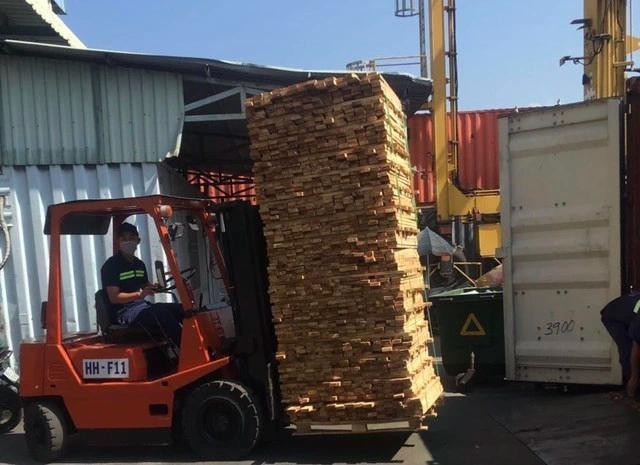
Several wood products imported from the US have has their import taxes reduced to 0% starting March 31. (Photo: thanhnien.vn)

Hanoi (VNA) – As the US government prepares to announce reciprocal tariffs on other nations on April 2, Vietnam has proactively reduced import taxes on a wide range of products, demonstrating its strong trade commitment.

0% import tariff on US wood and wooden products

On March 31, the Vietnamese Government issued Decree No. 73/2025, amending preferential tax rates on several key imports. Among the notable changes, taxes on goods such as automobiles, wood products, ethanol, frozen chicken thighs, pistachios, almonds, fresh apples, cherries, and raisins have been significantly reduced.

Import taxes on automobiles, for instance, have dropped from 64% to 50% and 45% to 32%, while ethanol taxes have been cut from 10% to 5%. Frozen chicken thighs now carry a 15% tax (down from 20%), and popular items like pistachios, almonds, fresh apples, and cherries have seen reductions from 8–15% to just 5%.

The most striking move, however, is the slash of import taxes on wood and wooden products, including coat hangers, chairs, and furniture, from 20–25% to a uniform 0%.

The decree took effect immediately on March 31.

The Vietnam Timber and Forest Products Association (Viforest) and the Handicraft and Wood Industry Association of Ho Chi Minh City (HAWA) had previously recommended revising the import tariffs on US wood products to minimise risk of potential retaliatory tariffs from the US.

The quick response from Vietnam has won approval from industry leaders. A HAWA leader told the Thanh Nien (Young people) newspaper that the tax cuts were a "swift, positive, and timely" move, showcasing Vietnam’s goodwill. In reality, the trade relationship between Vietnam and the US in wood and wood products is mutually beneficial, with Vietnam being both a leading supplier of timber and wood products for the US and an important importer of similar items from the US.

According to Viforest, although wood products have just been imported into Vietnam in recent years, the import value has grown rapidly. In 2024, Vietnam spent 316.3 million USD on US wood imports, a 32% increase in quantity and over a 34% rise in value compared to 2023. Vietnam is now the second-largest consumer of US wood in Asia and the fourth-largest globally.

Nguyen Thanh Phong, Director of Thien But Manufacturing and Trading Service Co., welcomed the reduction in the import tariff on frozen chicken thighs, which had previously stood at 20%. With domestic production covering only 40–45% of the market, Vietnam relies on imports, particularly from the US – the largest provider at present, for the rest. The tax cut will benefit consumers, especially large-scaled buyers like industrial kitchens.

Boosting US investment in Vietnam

The Government’s decision to reduce import taxes is part of broader efforts to encourage US imports and reduce the trade imbalance between the two countries. Representatives of Vietnam and the US have been engaging in frequent talks to discuss new trade measures and fine-tune policies to mitigate any potential tariff risks.
Alongside these tax cuts, Vietnam has also approved agreements to allow US companies to operate in the country. Notably, US tech giant SpaceX has received approval for the pilot deployment of its Starlink satellite internet service in Vietnam.

Prof. Dr. Vo Xuan Vinh, Dean of the Institute for Business Research at the University of Economics Ho Chi Minh City, highlighted that the recent tax cuts and the approval of Starlink services have attracted significant attention from the new US administration. These moves reflect Vietnam’s efforts to create a more favourable environment for US investments.

However, Vinh emphasised that to fully capitalise on opportunities, Vietnam must continue to simplify investment procedures, optimise infrastructure for the tech sector, and introduce groundbreaking policies to attract US capital. Simultaneously, the Government must ensure that domestic businesses grow stronger and gain a foothold in the global market.

Assoc. Prof. Dr. Nguyen Thuong Lang from the Institute of International Trade and Economics at the National Economics University noted that the US reciprocal tariff strategy may be short-termed. He commended the swift actions of Vietnamese authorities but warned that some other industries such as electronics, machinery, textile-garment, and footwear, could also face challenges if the US imposes additional tariffs since many Vietnamese exporters rely heavily on the US market for their revenue.

Lang suggested several measures for Vietnam to move forward: further diversifying trade markets to reduce overdependence on certain markets, increasing cooperation with US companies to boost exports, and expanding the import of advanced medical equipment, liquefied gas, consumer goods, and farm produce for animal feed production. He also recommended incentivising new investors applying imported US machinery and technologies./.

VNA
See more

A booth at the trade promotion fair. (Photo: VNA)

Red River Delta trade promotion fair opens in Hung Yen

A trade promotion fair for localities in the Red River Delta opened on November 10 in the northern province of Hung Yen, aiming to foster regional connectivity, promote sustainable development and enhance brand of regional products.

Tan Thuan Export Processing Zone, Ho Chi Minh City (Photo: VNA)

Foreign investors ready to pour capital into HCM City

Administrative reform remains HCM City’s top priority. The city aims to cut at least 30% of procedures, reduce processing times and costs, and shift from a “management mindset” to a “service mindset” to better support the business community.

PM Pham Minh Chinh speaks at the event (Photo: VNA)

PM spotlights solidarity, cooperation, dialogue at annual business forum

Vietnam will maintain political stability and social order, push three strategic breakthroughs in institutional reform, hard and soft infrastructure, and quality human resources, while restructuring the economy and reforming the growth model, sustaining macroeconomic stability, and bolstering connectivity between domestic and FDI enterprises, said PM Pham Minh Chinh.

Officers of the Vam Lang border guard station in Dong Thap disseminate information on the prevention of illegal, unreported and unregulated (IUU) fishing and present a national flag to members of a local ship. (Photo: VNA)

Dong Thap province’s fishing cooperation models prove effective

According to Tran Thi Be Bay, Deputy Director of the provincial Department of Agriculture and Environment, the cooperative groups and cooperatives have members engaging in logistics services, such as purchasing seafood at sea and supplying fuel to fishing vessels, thereby helping fishermen stay longer at sea and increase productivity.

Vietnam’s pepper exports maintain strong growth momentum of over 25%, earning nearly 1.4 billion USD in the first ten months of 2025. (Photo: VNA)

Pepper exports maintains over 25% growth

According to the Vietnam Pepper and Spice Association (VPSA), the country exported 19,430 tonnes of pepper in October, including 16,464 tonnes of black and 2,966 tonnes of white pepper, with a total value of 129.5 million USD.

Vietnam's dragonfruits for export (Photo: VNA)

Tay Ninh expands middle East–Africa markets for farm produce

Leveraging its position as a gateway linking the Southeast and Mekong Delta regions, Tay Ninh province is asserting its role as a strategic hub in expanding agricultural supply chains to Muslim markets, especially the Middle East and Africa, which have emerged as promising destinations for Vietnamese agricultural exports, particularly Halal-certified products.

Vietnam’s Trade Counselor in India Bui Trung Thuong and Nguyen Phi Van, Chairwoman of Go Global Holdings, cut the ribbon at the opening ceremony of a Three O’Clock coffee shop at AIPL Joy Central. (Photo: tuoitre.vn)

Three O’Clock brings Vietnamese coffee to India’s billion-people market

This milestone on November 8 came 11 months after the signing of an international franchise agreement between Three O’Clock (a brand under the Teatime limited company) and its exclusive master franchise partner for the Indian subcontinent FranGlobal. Under the deal, FranGlobal will develop the brand in India, Nepal, Sri Lanka, and Bangladesh, committing to a minimum of 100 outlets within a decade.

A Vietjet flight attendant offers gifts to international passengers during a flight. (Photo: courtesy of Vietjet)

Vietjet reports strong growth in Q3, announces 20% stock dividend

In Q3, Vietjet's air transport revenue reached 16.728 trillion VND, with a pre-tax profit of 393 billion VND. Cumulatively, for the first nine months of the year, the company reported air transport revenue of 52.329 trillion VND and a pre-tax profit of 1.987 trillion VND, which increased by 28% year-on-year.

Nguyen Duc Thien, General Director of Vietnam Electricity (EVN)’s Northern Power Corporation (centre), chairs the working session with credit rating organisation Fitch Ratings (Photo: npc.com.vn)

Fitch Ratings affirms Northern Power Corporation at ‘BB+’ with stable outlook

The rating reflects EVNNPC’s standalone credit profile of ‘BB+’, which is on par with both parent company EVN and Vietnam’s sovereign rating of ‘BB+/Stable’. Fitch said the alignment of EVNNPC’s rating with EVN’s reflects the state-owned parent’s full ownership and the high likelihood of government support, consistent with Fitch’s Parent and Subsidiary Linkage Rating Criteria.

Vietnamese Ambassador to Brazil Bui Van Nghi (right) meets with President of the Brazilian Association of Soybean Producers (Aprosoja) Mauricio Buffon in Brasilia. (Photo: VNA)

Vietnam, Brazil boost agri-trade cooperation

The Vietnamese ambassador expressed the country’s desire to increase the export of aquatic products, cashews, wood items, processed farm produce, apparel, mobile phones, computers, and electronic components to Brazil.