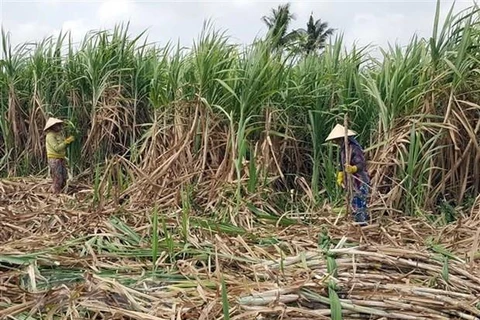
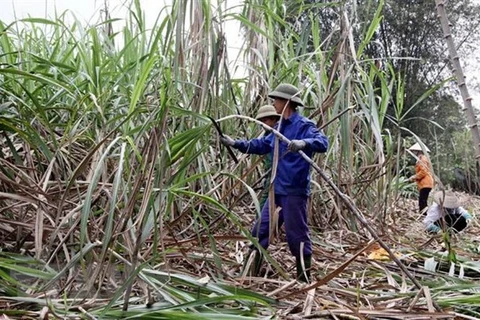
Vietnam’s 2019-20 sugarcane crop ended in May 2020 with an output of 7.4 million tonnes of sugarcane (Photo: VNA)
 Hanoi (VNS/VNA) - The General Department of Vietnam Customs must work with ministries, sectors and localities to tackle sugar smuggling and sugar trade fraud, Prime Minister Nguyen Xuan Phuc has said.
The PM has requested ministries and localities work to solve difficulties and improve the competitiveness of the sugar industry.
The department must also strictly control imports of sugar for processing export products as well as the origin of imports to stabilise the domestic sugar market.
PM Phúc also asked the Ministry of Industry and Trade (MoIT) to work with relevant agencies to monitor and propose trade remedies for imported sugar products.
This ministry must establish a synchronised and accurate database on export, import and production to assist enterprises in dealing with trade remedy lawsuits, he said.
It would have to propose management measures for trading sugar products and strengthen market management to reduce smuggling and trade fraud for sugar and sweetener products.
The Ministry of Agriculture and Rural Development was urged to compile a decree promoting mechanisation and irrigation in sugarcane growing regions and prioritise capital for research of new sugarcane varieties and development of key sugarcane producing regions.
The Prime Minister has asked people's committees of localities producing sugarcane and sugar to build concentrated sugarcane production areas and adopt policies encouraging mechanisation and improving sugarcane varieties and production processes for higher productivity and quality, and lower sugarcane production costs.
Provinces need to encourage farmers that have inefficient sugarcane growing areas to switch to other trees, according to the PM’s request.
At the same time, the Vietnam Sugarcane and Sugar Association (VSSA) has also called on sugarcane production enterprises to restructure and promote investment in science and technology to improve the productivity and quality of sugarcane and operational efficiency and competitiveness of enterprises.
The association and local authorities should also promote ties between farmers and enterprises in production and consumption of sugarcane.
The association said Vietnam’s 2019-20 sugarcane crop ended in May 2020 with an output of 7.4 million tonnes of sugarcane and the domestic sugarcane and sugar production industry produced nearly 770,000 tonnes of sugar, reported Phap luat & Xa hoi (Law and Society) newspaper.
Sugar demand is increasing domestically but imported sugar products still dominate the market.
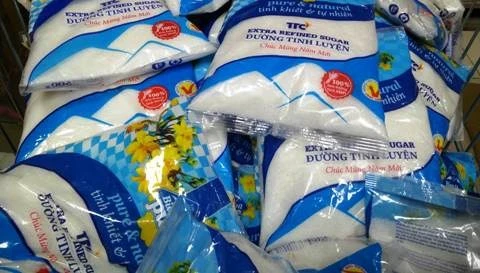
The price of domestically-produced sugar products ranges from 12,000-13,500 VND per kilo depending on the quality of sugar. The prices are lower than production costs but cannot compete with the prices of imported sugar products under quotas of the ASEAN Trade in Goods Agreement (ATIGA) with zero import tariffs.
In addition, smuggled Thai sugar has returned to HCM City, according to the association.
The association has also predicted the domestic market will have high sugar supply in next months and sugar prices still stand at low levels, leading to more difficulties for sugar enterprises and farmers./.
VNA