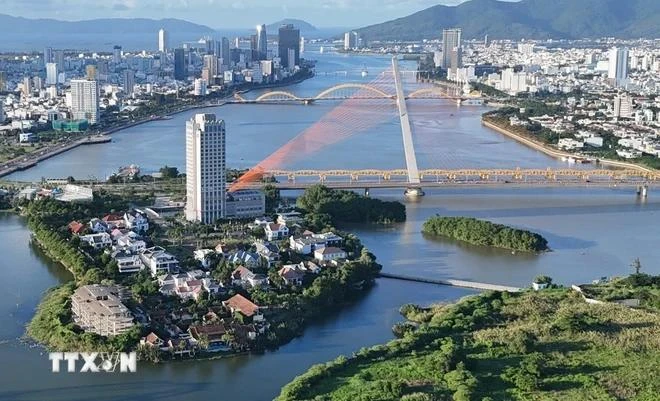
Da Nang (VNA) – Da Nang needs to effectively implement digital transformation to develop new sectors in production, health care, and education as well as continue to enhance smart urban services and e-commerce platforms which are among key drivers for future development.
This task is outlined in the Government's Resolution No. 169/NQ-CP, dated September 30, 2024, which focuses on the continued implementation of the 12th-tenure Politburo’s Resolution No. 43-KL/TW on building and developing Da Nang by 2030, with a vision to 2045.
The city is encouraged to renew its mindset, strongly inspire the aspiration for development, demonstrate determination to overcome challenges, and create new momentum to fulfill its role as the centre and driving force of the north-central and central coastal regions.
It is crucial to fully leverage Da Nang's historical and cultural traditions, along with its human resources and natural advantages, to transform the city into a comprehensive and modern metropolis that aligns with contemporary trends and the demands of the Fourth Industrial Revolution.
The resolution emphasises restructuring the economy in conjunction with renewing the growth model, identifying science, technology, and innovation as the primary driving force, while also promoting a green and circular economy.
Focus should be placed on investing in key sectors, implementing specific mechanisms and policies to utilise resources effectively, enhancing public-private partnerships (PPP), and attracting strategic domestic and international investors. Efforts should be made to establish Da Nang as a major economic centre and tourism hub linked to the maritime economy, as well as a modern fisheries centre linked with the Hoang Sa fishing ground and the safeguarding of the country's maritime security and sovereignty.
Priority should be given to developing scientific and technological infrastructure, entrepreneurship, and innovation. The effective capitalisation of concentrated information technology zones and software parks will promote the development of sectors such as information technology, electronics, telecommunications, the Internet of Things, artificial intelligence, big data, and semiconductor technology. Attention should also be directed towards constructing a national-scaled data centre, a high-tech park, and a national innovation and startup support centre.
The resolution underscores the need for investing in harmonious cultural and human development commensurate with economic growth, and introducing Da Nang as a civilised city rich in national identity to the international community. It requests establishing a "cultural and civilised urban lifestyle", supporting the development of comprehensive residents who comply with the law, engage internationally, and embody distinctive cultural values. The preservation and promotion of cultural heritage, historical sites, and scenic landscapes should align with the growth of cultural and entertainment industries.
Da Nang should continue to expand its education and training network and enhance the engagement of private sectors in education. Effective collaboration among higher education institutions, vocational training centres, and businesses is essential for training human resources, improving research capabilities, transferring technology, and supplying high-quality personnel for the semiconductor industry and other high-tech sectors.
Another important task is to complete in the healthcare network, improve the quality of medical examination and treatment services, particularly specialised and high-quality medical services, and develop medical tourism.
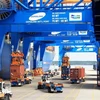
The government also urged Da Nang to promptly implement the master plan for the north-central and central coastal regions, develop Hoa Vang district into a satellite city, and accelerate key inter-regional projects, including transforming the Tien Sa wharf area into a centre for tourism and marine services./.