Testing for COVID-19 (Photo: VNA)
 Da Nang (VNA) - Samples for the coronavirus SARS-CoV-2 tests will be taken from close to 3,000 people in high-risk areas near three hospitals in the central city of Da Nang that have links with dozens of new COVID-19 infections reported over the past week.
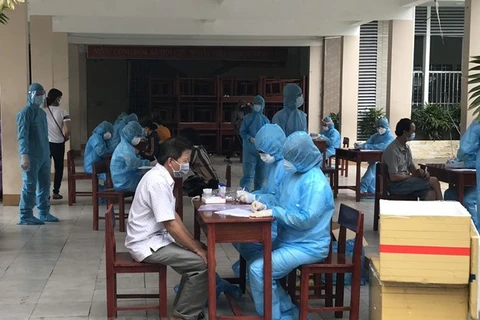
Director of the municipal Department of Health Ngo Thi Kim Yen said on July 31 that health workers will complete the taking of samples from nearly 3,000 people now in lockdown in areas near the Da Nang Hospital, the Da Nang C Hospital, and the Da Nang Orthopaedics and Rehabilitation Hospital on August 1.
By the morning of July 31, more than 2,700 residents had had samples collected.
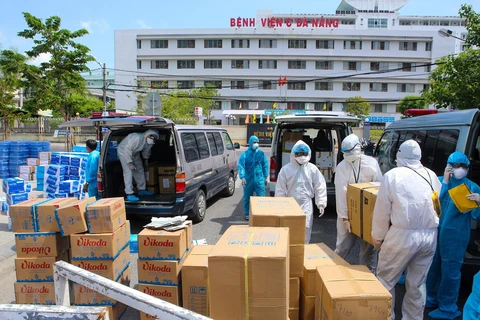
The department has urged relevant units to promptly transfer patients on dialysis at the Da Nang Hospital to the general hospital of Hoa Vang district and requested all local medical clinics be ready to quarantine suspected cases and treat those infected with the virus.
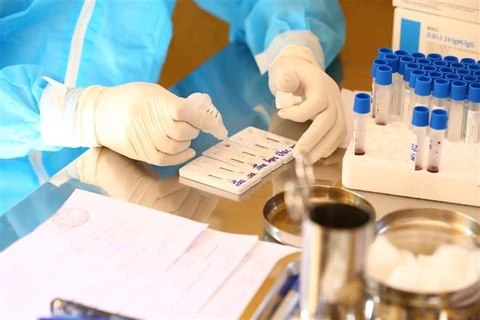
The Ministry of Health has sent a group of specialists to provide training for nearly 400 health workers and medical students in Da Nang on how to take samples for testing and tracing people in close contact with confirmed cases.
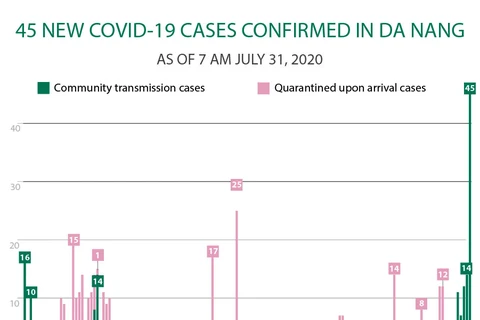
Since July 25, the city has reported 80 new COVID-19 cases. More than 7,000 people have been identified as being in close contact with COVID-19 patients.
The city has put nearly 5,600 high-risk people in quarantine at the three hospitals while about 5,640 others have been sent to state-designated facilities and district medical centres or been self-quarantined./.
Director of the municipal Department of Health Ngo Thi Kim Yen said on July 31 that health workers will complete the taking of samples from nearly 3,000 people now in lockdown in areas near the Da Nang Hospital, the Da Nang C Hospital, and the Da Nang Orthopaedics and Rehabilitation Hospital on August 1.
By the morning of July 31, more than 2,700 residents had had samples collected.
The department has urged relevant units to promptly transfer patients on dialysis at the Da Nang Hospital to the general hospital of Hoa Vang district and requested all local medical clinics be ready to quarantine suspected cases and treat those infected with the virus.
The Ministry of Health has sent a group of specialists to provide training for nearly 400 health workers and medical students in Da Nang on how to take samples for testing and tracing people in close contact with confirmed cases.
Since July 25, the city has reported 80 new COVID-19 cases. More than 7,000 people have been identified as being in close contact with COVID-19 patients.
The city has put nearly 5,600 high-risk people in quarantine at the three hospitals while about 5,640 others have been sent to state-designated facilities and district medical centres or been self-quarantined./.
VNA