Domestic food and beverage industry has development potential

The domestic food and beverage market has great potential for development despite the difficulties caused by the COVID-19 pandemic, according to experts.
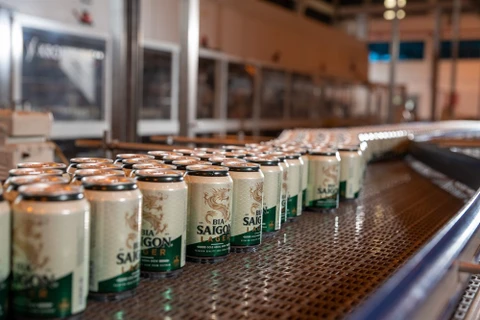
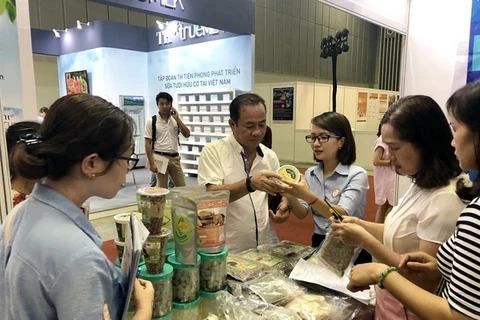
Domestic food and beverage industry has development potential ảnh 1According to a survey of Vietnam Report, 50 percent of customers have spent more on foods boosting immune system and clean foods due to the COVID-19 (Photo: baodautu.vn)
Hanoi (VNS/VNA) - The domestic food and beverage market has greatpotential for development despite the difficulties caused bythe COVID-19 pandemic, according to experts.

Food and beverages are in the fast-moving consumer goods (FMCG) category. Formany years, this has always been one of the important economic sectors withgreat potential for development, according to the Vietnam Report 2020.

The food and beverage market’s growth rate is forecasted to reach from 5-6 percentannually in 2020-2025.

Despite suffering negative impacts from the COVID-19 pandemic, the food andbeverage industry in Vietnam also has many strong growth opportunities. Atpresent, more and more consumers pay attention to nutritional foods of plantorigin, organic foods or food with healthy ingredients.

A survey conducted by Vietnam Report at the end of 2020 showed due to COVID-19,half of customers have spent more on foods boosting their immune systemand clean foods. Meanwhile, 63.7 percent of customers have cut spending onalcohol and beer. Therefore, businesses in this industry must adjust theirproduction to suit demand.

Food businesses have to increase their production capacity by about 30 percent,while beverage businesses must reduce their production to lower than 80 percentcompared to before the pandemic.

Besides that, Vu Dang Vinh, general director of the Vietnam Assessment ReportJoint Stock Company, said COVID-19 has forced nearly 70 percent of food andbeverage businesses to focus on the digital transformation for survival and development,reported the Vietnam News Agency.

Many businesses have built modern technology processes in production andmanagement. Food and beverage companies have also sped up investment activitiesto renovate the distribution system and adjust the proportion betweentraditional and modern trading channels. They develop applications to enhancethe customer experience when shopping and innovate packaging design,eco-branding and product line development.

Nguyen Dang Quang, chairman of Masan Group, said the COVID-19 pandemic is agood opportunity to promote e-commerce.

The group is building plans to attract more and more people to online shopping,he said.

Vinh said food and beverage businesses need to focus on strategies such asrevenue growth, market development, promotion of research and improving productquality. They should also diversify supply sources with priority for domesticsuppliers and develop online distribution channels on e-commerce platforms.

According to experts in the food and beverage industry, the stable macroeconomyand commitments in free trade agreements signed between Vietnam and itspartners such as the European Union-Vietnam Free Trade Agreement (EVFTA) andthe Comprehensive and Progressive Trans-Pacific Partnership (CPTPP) would bringexport opportunities and more foreign investment. They would promote thetransfer of technology and technological advancement in the industry.

Along with that, the food and beverage companies need to improve theircompetitiveness and increase investment in infrastructure systems andmodernisation of production processes and corporate governance./.
VNA
See more

Illustrative image (Photo: VNA)

Australia announces import conditions for Vietnamese pomelos

Australia’s formal publication provides an important legal basis, marking the completion of the review, assessment and agreement on technical requirements for fresh Vietnamese pomelos. This represents a significant step forward in market access, creating favourable conditions for relevant agencies, localities and businesses to prepare for export activities in the coming time.

Containers of fresh Vietnamese durian for export are subject to a full-chain traceability system. (Photo: VNA)

First “green lane” durian shipment exported to China

​Under the “green lane” process, quality control begins at the cultivation stage, including soil sampling and monitoring, and continues through harvesting and processing, with traceability labels attached to trees and applied to fruit at the time of picking. It also allows plant quarantine procedures and the issuance of certificates of origin (C/O) directly in the localities where the orchards are located.

Delegates at the Vietnam Expo 2026 (Photo: VNA)

Vietnam pushes for deeper auto supply chain ties with RoK

The RoK stood as Vietnam’s largest foreign investor with more than 95.2 billion USD in registered capital as of February 2026, or about 18% of all foreign cash flowing in, with thousands of active projects. In January-February alone, the RoK led the pack with nearly 2 billion USD in pledges, grabbing a whopping 32.7% of total registered capital and showing no signs of slowing down.

More than 600 tourism firms, 15 countries and territories, and 34 provinces and cities are promoting destinations and introducing tourism products at the fair (Photo: VNA)

Digital transformation key to elevating Vietnam’s tourism: official

Speaking at the opening of the Vietnam International Travel Mart (VITM) 2026 in Hanoi on April 10, Deputy Minister of Culture, Sports and Tourism Ho An Phong noted that despite challenges in 2025, Vietnam largely fulfilled its socio-economic development goals. Tourism remained a bright spot, recording 21.5 million foreign arrivals and 135.5 million domestic visitors, with total revenue exceeding 1 quadrillion VND (37.9 billion USD).

A drone sprays fertiliser over rice fields. (Photo: VNA)

Low-altitude economy emerges as new growth driver for Vietnam

The UAV technology is particularly effective in addressing challenges faced by ground infrastructure, especially in densely populated urban areas and remote regions. Smart aerial devices also enable real-time data collection, improving governance, decision-making and digital transformation across industries.

Passengers at Cat Bi Airport in Hai Phong city (Photo: VNA)

Aviation sector ensures fuel supply for April 30–May 1 peak

Aviation fuel suppliers are actively negotiating and diversifying supply sources both domestically and internationally, while strengthening coordination, storage and distribution capacity to meet immediate demand. These efforts aim to support airlines in optimising operations and maintaining stable flight schedules.

A session at the Vietnam–Australia Green Transition Forum 2026. (Photo: VNA)

Green transition offers opportunities for stronger Vietnam–Australia cooperation

Under the theme "Accelerating decarbonisation in agriculture and manufacturing – Unlocking trade and investment opportunities", the forum gathered nearly 200 researchers, experts and businesses involved in policy development, investment, research and innovation. Participants exchanged insights and explored ways to translate the cooperation potential between Vietnam and Australia into practical business opportunities.