Dong Nai province eases access to AIDS treatment

People with HIV/AIDS in the southeastern province of Dong Nai who have public health insurance can now go to any medical facility for treatment without requiring a transfer order from their designated hospital.
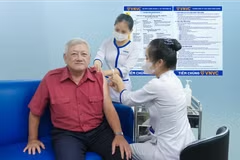
Dong Nai province eases access to AIDS treatment ảnh 1A man with HIV receives treatment at the Dong Nai Province HIV/AIDS Prevention and Control Centre. (Photo: dongnai.gov.vn)

Dong Nai (VNS/VNA)
- Peoplewith HIV/AIDS in the southeastern province of Dong Nai who have public healthinsurance can now go to any medical facility for treatment without requiring atransfer order from their designated hospital.

Until now they could only go to the healthfacility registered in their health insurance card. If they wanted to go toother places including higher-level hospitals, they had to obtain a transferorder from the facility.

The new system makes it easier for them to theirhospital of choice, said Dr Nguyen Gioi, Deputy Director of the provincialHIV/AIDS Prevention and Control Centre. 

The province’s website cites the case of a womanfrom Vinh Cuu district who tested positive for HIV eight years ago anddeveloped pneumonia and candidiasis and needed to go to a province-level hospitalfor treatment.

It took a long time to get the transfer paperfrom Bien Hoa city’s Preventive Health Centre, she complained.

Two medical facilities, the provincial HIV/AIDSPrevention and Control Centre and Long Khanh town’s Health Centre, have yet to signup for the new system with Vietnam Social Security, but are expected to come onboard this month.

Dr Truong Van Rang, deputy head of the latter,said the centre has all the facilities needed to examine and treat people withHIV/AIDS. It now provides free anti-retroviral (ARV) drugs to 412 people withHIV/AIDS.

Dr Nguyen Thi Van Van, head of the Long ThanhDistrict Health Centre, said the ARV drugs are sponsored by the Global Fund andprovided free.

The Global Fund is a partnership betweengovernments, civil society, the private sector and people affected by AIDS,tuberculosis and malaria, designed to accelerate the end of the diseases asepidemics.

Of 486 people with HIV treated at hercentre, Van said 112 do not have health insurance cards.

The Ministry of Health has warned that if healthfacilities do not sign up with the Vietnam Social Security to cover HIVtreatment for insured people, the province would have to cover the cost of ARVtherapy for them and the Global Fund would stop its assistance from next year.

Dong Nai province has seen a decrease in theincidence of new HIV cases in recent years from more than 300 in 2015 to 200last year and 60 so far this year. But the incidence among men who have sexwith men has increased sharply.

As of the beginning of this month, the provincehas issued for free health insurance cards to more than 2,600 people withHIV/AIDS. It is likely to issue another 300 soon.

Its goal is to ensure everyone with the diseaseis covered by the beginning of next year.

According to the province Department of Health,2,900 people with HIV/AIDS are receiving treatment at health facilities, withmore than 87 percent having health insurance cards.-VNS/VNA
VNA
See more

Male plastic surgery: Why masculine aesthetics require a different approach

Male plastic surgery: Why masculine aesthetics require a different approach

Plastic surgery has long been associated with procedures for women, but men also seek treatment for abdominal fat, enlarged breasts and age-related changes around the eyes and face. The American Society of Plastic Surgeons (ASPS) includes liposuction, gynecomastia surgery and eyelid surgery among procedures performed on male patients.

A speaker delivers presentations at the conference (Photo published by VNA)

Vietnam, Denmark expand cooperation in high-tech healthcare

Ambassador Nguyen Le Thanh called on Vietnamese and Danish partners to identify priority areas and promote research and training programmes, knowledge transfer and technology application in line with Politburo's Resolution No. 57-NQ/TW on breakthroughs in science – technology development, innovation and national digital transformation.

Ho Chi Minh City has favourable conditions for developing the ecosystem, including a large population, diverse healthcare needs and an extensive public and private medical network. (Illustrative photo: VNA)

Ho Chi Minh City develops multi-tier elderly care network amid population ageing

Dr. Huynh Minh Chin, Deputy Director of the department, said rising elderly care needs are putting pressure on traditional family-based care, as older people increasingly face multiple chronic illnesses, mobility problems, malnutrition, dementia and depression, requiring continuous support and closer coordination among hospitals, grassroots healthcare facilities, families and social support institutions.

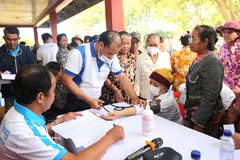
Local residents in Mondulkiri province, Cambodia, receive free medical check-ups and health consultation. (Photo: VNA)

Free medical examinations provided to remote communities in Cambodia

Vietnamese Ambassador Nguyen Minh Vu said the programme has been jointly organised by the embassy and the hospital annually in various Cambodian localities to provide healthcare support to disadvantaged households and contribute to the Cambodian Government’s efforts to improve public health. The initiative also reflects close cooperation in healthcare and the strong bonds between the people of Vietnam and Cambodia.

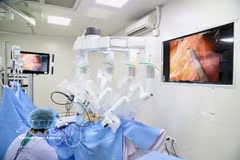
With the assistance of robotic-assisted laparoscopic surgery, doctors successfully perform a complex operation (Photo: VNA)

Vietnam advances towards high-quality, specialised healthcare

Recent developments in Hanoi and other localities highlight efforts to develop specialised treatment, standardise professional practices and apply artificial intelligence (AI) and advanced medical techniques, towards a more modern healthcare system.

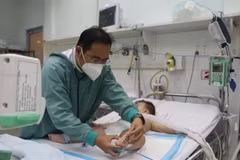
Collecting a sample from a pediatric patient for influenza testing (Photo: VNA)

Ho Chi Minh City acute respiratory infections surge over 64%

According to the Ho Chi Minh City Centre for Disease Control (HCDC), influenza viruses are are among the fastest-rising pathogens, with 151 positive samples in a single week. Influenza A is the dominant strain, with A/H1N1pdm09 in 116 samples, or nearly 77%.