Draft law designed to lift banks’ role in e-commerce

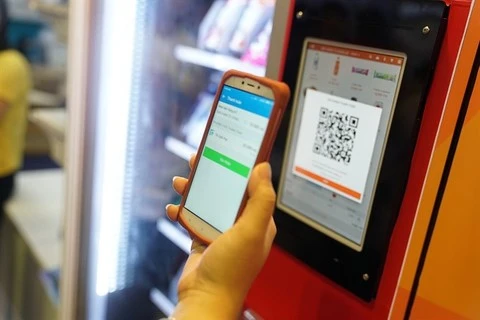
Payments for e-commerce transactions must be made via banks or authorised payment intermediary services, according to the draft of the amended Law on Tax Management.
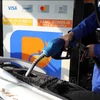
Draft law designed to lift banks’ role in e-commerce ảnh 1Payments for e-commerce transactions must be made via banks or authorised payment intermediary services, according to the draft of the amended Law on Tax Management (Photo: cafef.vn)


Hanoi (VNA)
- Payments for e-commercetransactions must be made via banks or authorised payment intermediaryservices, according to the draft of the amended Law on Tax Management.

The draft law, which was recently released bythe Ministry of Finance (MoF) for recommendation, aims to better manage andcollect taxes on e-commerce businesses, which have developed strongly in Vietnamin recent years.

Besides the tax agency, it is necessary to haveclose co-ordination among other relevant ministries and agencies to make taxmanagement more effective, according to the draft law.

Accordingly, the MoF has proposed that the taxdepartment will build databases and apply electronic tax services, such aselectronic tax declaration, electronic invoices and online tax payments,ensuring that 100 percent of taxpayers will have access to these facilities tocatch up with e-commerce.

The State Bank of Vietnam (SBV) will takemeasures to develop e-commerce payments and to ensure that cross-borderservices pay through payment service suppliers or licensed payment intermediaryservices.

The MoF will co-ordinate with SBV in guidingcommercial banks to deduct the tax that foreign social networking sites, suchas Google, Facebook and YouTube, have to pay when they transfer money fromorganisations and individuals to the sites.

Under the current legal regulations, everybusiness or individual, regardless of having a business registrationcertificate or not, that earns over 100 million VND (4,400 USD) from tradingactivities, including those on social media operating as e-trading floors, mustregister, declare and pay taxes.

However, tax authorities find itchallenging to tax e-commerce businesses as it is not easy to control onlinebusiness revenues given cash payment is so common in Vietnam.

Currently, individual traders mainly paypersonal income tax based on taxpayers’ declarations. To declare and pay taxes,individual traders must register their tax codes with the tax authorities. Butonline traders are reluctant to make tax declarations, while the taxauthorities’ facilities and personnel for tax inspection and collection arelimited, failing to catch up with the swift growth of e-commerce. The commonpractice of cash transactions in Vietnam also makes it impossible to determinethe exact income of online shops.

In developed countries, tax enforcement andcontrol mechanisms are mostly based on declarations of taxpayers, but mosttransactions are made via bank accounts rather than in cash, helping securefull and accurate declaration by taxpayers.

Experts therefore suggested that Statemanagement agencies should adopt measures to encourage online payment andreduce cash transactions to help oversee revenues of online traders. Thereshould also be closer coordination between concerned authorities andintermediary payment banks.-VNA

VNA

See more

Emma McDonald, Australian Senior Trade and Investment Commissioner, speaks at the conference on April 14. (Photo: VNA)

Vietnam, Australia boost cooperation in fintech

Australian companies have strengths in regtech, data governance, cybersecurity, payment infrastructure, and digital assets—areas that align with Vietnam’s priorities. Their experience in highly regulated environments could help Vietnam address challenges such as financial fraud, cybercrime, and security risks.

Booths of Vietnamese cooperatives and enterprises at the Halal Expo 2025 exhibition in Türkiye. (Photo: VNA)

Türkiye seen as promising market for Vietnam’s Halal products

With a large Muslim population, Türkiye serves as both a major consumer market and a well-developed processing hub for such products. Meanwhile, Vietnam is gradually establishing its capacity to supply Halal goods, particularly in processed foods, agricultural produce, beverages, tourism services and logistics.

A view of Da Nang city (Photo: VNA)

Da Nang charts mega merger for global eco-city vision

Da Nang has set a target of having at least five financial technology (FinTech) businesses with revenues of over 1 trillion VND (40 million USD) yearly, while the Free Trade Zone would contribute 17.9% to the city’s gross regional domestic product (GRDP).

A VinFast electric motorbike showroom. (Photo: vinfastecoxe.vn)

Fuel hikes push electric motorbike sales

Electric motorcycle sales by Honda Vietnam, Yamaha Motor Vietnam, Piaggio Vietnam, SYM Vietnam and Suzuki Vietnam, rose by 8.3% year-on-year to 729,121 units.

Prime Minister Le Minh Hung speaks at the meeting (Photo: VNA)

PM orders sharp cuts to business conditions for double-digit growth

Vietnam now maintains 198 conditional business lines and 4,603 business conditions. Under the Party Central Committee conclusion, ministries and agencies must cut at least 30% of existing conditional business lines, or about 60 business lines, while eliminating all redundant conditions.

Delegates at the forum (Photo: VNA)

Vietnam, Slovakia PMs attend business forum to boost bilateral cooperation

Prime Minister Le Minh Hung called on businesses of Vietnam and Slovakia to strengthen partnerships in areas of mutual strength and demand, particularly in manufacturing, high technology, automotive industry, precision engineering, automation, renewable energy, green transition, logistics, supply chain connectivity, digital transformation, and human resource development.

Pomelos of Dong Thap province are exported to the Australian market. (Photo: VNA)

Dong Thap exports first pomelo shipment to Australia

Dong Thap has now secured its first pomelo growing area that meets export requirements for Australia, facilitated by Blue Ocean Import-Export JSC. This milestone is expected to serve as a foundation for expanding market access in the coming period.

Ambassador Pham Vinh Quang (seventh from left) poses for a photo with staff of the Vietnamese Embassy in Canada at the Vietnam booth at the exhibition. (Photo: VNA)

Vietnam promotes tourism at travel expo in Canada

The Vietnamese Embassy in Canada joined the exhibition to promote Vietnam as an attractive travel destination. With support from domestic tourism companies and tour operators, the Vietnam booth attracted attention thanks to its well-designed displays and informative materials.

Sun Group partners with Dragone to jointly establish a new standard for performing arts in Vietnam (Photo: Sun Group)

Phu Quoc set for a global spotlight with Sun Group–Dragone flagship show

The agreement signed on April 10 represents Dragone’s first formal entry into Vietnam through a strategic partnership, underscoring the country’s growing appeal to leading global creative companies. It also reinforces Sun Group’s role as a pioneer in bringing world-class performing arts experiences to Vietnamese audiences.