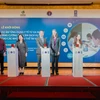
The level of early diagnosis and treatment of breast cancer in Vietnam is becoming more and more consistent with countries that have better medical services. (Photo: VietnamPlus)
 Hanoi (VNA) – The level of early diagnosis and treatment of breast cancer in Vietnam is becoming more and more consistent with countries that have better medical services like France and the Republic of Korea (RoK), heard a symposium in Hanoi on April 2.
Speaking at the symposium "Updating knowledge in breast cancer diagnosis and treatment," Professor Dao Thu Ha, Head of Breast Imaging Unit under the Henri Mondor Hospital in France, said the application of advanced techniques in breast cancer diagnosis and intervention would help patients get positive treatment results without having to go abroad.
Statistics from the Global Cancer Observatory reveal that breast cancer accounts for 25% of cancers in women in Vietnam with nearly 22,000 new cases and more than 9,000 deaths each year.
Breast cancer screening in high-risk groups helps detect the disease at early stages. If the five-year survival rate in the very early stage reaches 98%, the rate is only about 10% in the later stages.
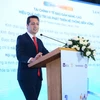
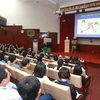
 At the symposium "Updating knowledge in breast cancer diagnosis and treatment." (Photo: VietnamPlus)
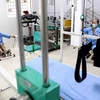
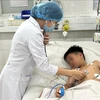
 Participating doctors and experts in cancer exchanged experience and knowledge in breast cancer diagnosis and treatment. Not only updating on knowledge about new methods, doctors also used models to perform techniques for ultrasounds and X-rays.
According to Nguyen Thu Huong, Director of Breast Centre at Vinmec Times City International Hospital, and advisor for the Breast Cancer Network Vietnam, these advancements have helped ensure better treatment and quality of life for patients.
She said that currently, Vietnam detected breast lesions through X-rays, requiring biopsy of specimens to obtain the most accurate results.
This technique has advantages as there are breast lesions that are completely invisible through ultrasound and can only be detected through X-rays, according to the director.
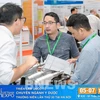
 At the symposium "Updating knowledge in breast cancer diagnosis and treatment." (Photo: VietnamPlus)
 The technique will help early and accurately diagnose in many difficult cases such as in patients with breast implants, thin breasts or cases with very small clusters of micro-calcifications measuring as little as 2 millimetres.
The doctor added that lymphoscintigraphy (sentinel lymph node mapping) in surgery is also a new, advanced technique and brings great benefits to patients.
A sentinel lymph node is the first node, or the first group of nodes, where cancer cells appear before spreading to other nodes.
By this technique, doctors will accurately determine the location of sentinel lymph nodes for surgical dissection, helping patients avoid unnecessary lymph node dissection, minimising complications such as sensory disturbances, hand oedema, loss of aesthetics for the patient.
In Vietnam, the Ministry of Health issued decision No. 1639/QD-BYT on supplementing documents guiding prevention, screening, early detection and management of breast and cervical cancer in the community. It recommended that women should screen for breast cancer once a year to detect the disease in its early stage.
Hương said the cases of breast cancer in Vietnam are increasing and the number of young women suffering from breast cancer is also on the rise. In the meantime, there are still many patients coming to the hospital when they are at the late stage of the disease.
"At the late stage, the treatment will be less effective," she said, added that all women aged 40 and over should be examined and screened for breast cancer in accordance with the guidelines of the World Health Organization.
They should be screened once a year even if there are no symptoms and no palpable tumour, she said.
According to experts, breast cancer is the cancer with the highest number of female cancer sufferers in the world, and also in Vietnam.
It is estimated that about two million people are newly infected each year and about 600,000 people die worldwide./.