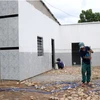
Villagers in Dam Rong district’s Ro Men commune can now access clean water. Life in the Mong ethnic minority village in the Central Highlands province of Lam Dong has changed a lot thanks to a concerted communal effort that commenced over a dozen years ago. (Photo: tintaynguyen.com)
 Lam Dong (VNS/VNA) - An ethnic-minority village in the Central Highlands province of Lam Dong has become well-known for its title “village with 3-nos” (no drinking, no smoking and no social evils) thanks to a concerted communal effort that commenced over a dozen years ago.
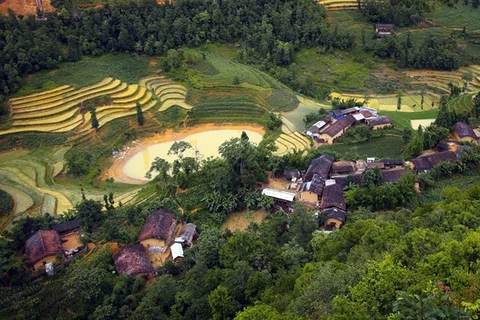
The village, home to 789 people of the Mong ethnic group, is in Dam Rong district’s Ro Men commune.
While drunkenness, smoking and social evils are rife in the countryside, the village has set a bright example of civilised society by stopping the sale of alcohol and tobacco. This has helped eliminate scenes of drunken men and gambling.
Sung A Sang, 40, head of the village, said every Mong person who wanted to settle there had to strictly follow the State’s laws and commit to not drinking or smoking, while avoiding social evils.
This has achieved security and order, and no one leaves their houses after 9pm anymore.
When a stranger comes to visit, they must inform the head of the village even if they are only staying for one night so the police can carry out the necessary procedures for them. If they don't, the family they are visiting must take responsibility in case any regulations are broken.
“During the Tet (Lunar New Year) holiday, local residents participate in games such as nem con (throwing a ball through a ring for good luck) and badminton. There’s a lot of fun. However, people never drink wine or smoke cigarettes. They only consume soft drinks,” Sang told Nong Thon Ngay Nay (Countryside Today) newspaper.
Giang Seo Pao, 55, a local resident, agreed.
“Everyone in the village gave up drinking and smoking because we are aware of its harmful effects,” he said.
Everybody knew that tobacco was harmful because it affected both smokers and their families in the long run, Pao said.
“It is easy for men to get drunk, but that can lead to domestic violence. That's why people decided to give up all these bad habits."
Pao said he was from the northern mountainous province of Ha Giang where there are only terraced fields and it was difficult for local residents to develop a well-rounded economy. Like many other people, they volunteered to go to areas like Lam Dong, Dak Lak and Dak Nong provinces to settle down with the hopes of a better future.
To start with back in 2004, they faced a lot of difficulties.
“We had to borrow rice seeds from residents in Da Tong, another commune in Dam Rong district, and dig dong (arrowroot) bulbs in the forest. We couldn't make ends meet,” he recalled.
With hard work, a passion for learning and support from the Party and Government, the living standards have gradually improved.
The district authorities have poured resources into building infrastructure and implemented social security polices for poor people to help them escape poverty.
They have also promoted restructuring crops and livestock, taking advantage of the region’s potential to boost sustainable socio-economic development.
Local authorities have strived to achieve the target of between 1,000-1,500 new jobs created each year, and the percentage of people who have access to clean water at 93 percent.
As Pao said: “My family now has 1 hectare for coffee cultivation. I will plant durian and avocado trees on that land to boost my income.”
What’s more important is that villagers have access to clean water thanks to a facility which was put into operation in 2015.
In the past, they had to travel dozens of kilometres to take water from local streams.
The improvements have led to a change in awareness among the community.
Knowing that the Government had invested in building infrastructure for the commune, some people donated land for the construction of a 1,500 sq.m community house, Sang said.
Local residents have also contributed land for concrete roads built with Government funding. As a result, they don’t have to walk on dirt paths when it rains.
Their efforts have been paid off as Ro Men commune has been recognised as meeting the nation's new rural standards thanks to the contributions of the Mong community./.
VNA