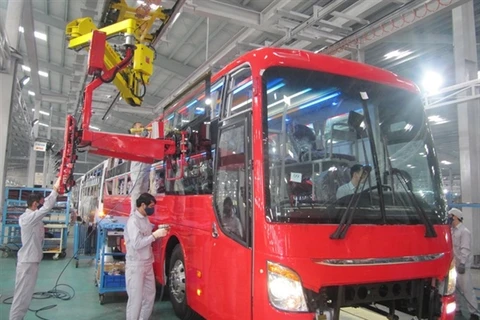
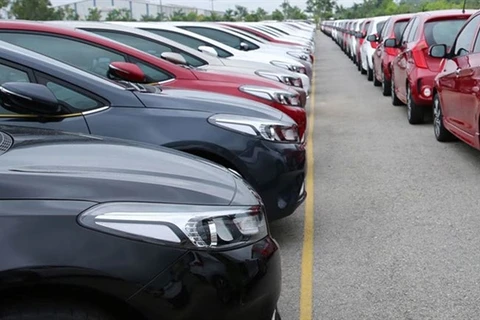
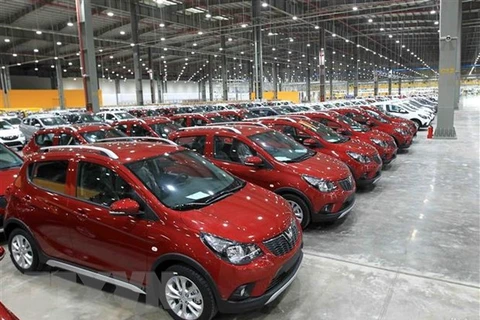
EuroCham proposes 50 pct cut in registration fee for imported cars (Photo: internet)
 Hanoi (VNS/VNA) - The European Chamber of Commerce in Vietnam (EuroCham) proposed the Government to apply a 50 percent registration fee reduction to all automotive assembly firms, importers and dealers of new vehicles.
The proposal was part of recommendations at the EuroCham’s 12th White Book publication, which was announced last week. It was issued after the Vietnamese Government recently decided to apply the 50 percent fee reduction for buyers of locally-manufactured and -assembled vehicles until the end of this year.
The cut aims to stimulate domestic consumption and remove difficulties for local production and business due to the impacts of the COVID-19 pandemic.
Currently, buyers of cars with less than nine seats in Vietnam are subject to a 10 percent registration fee, or 12 percent for residents of Hanoi.
“With the Prime Minister’s decision to reduce the registration fee, buyers of domestically-manufactured and -assembled vehicles will only have to pay a fee of 5-6 percent. Those who buy cars imported from abroad still have to pay registration fees of 10-12 percent depending on the locality,” EuroCham said in the book.
For domestic car joint ventures, only two European brands – Mercedes and Peugeot – out of 19 imported in Vietnam will benefit for their locally assembled models.
EuroCham said stimulating consumption in the automotive market is necessary as customers struggle to maintain their activities. Furthermore, it will take time for supply chain disruption to be resolved.
“Such discrimination in favour of locally assembled vehicles is not casting the intended positive light for Vietnam with the European Union when the EVFTA is expected to enter into force soon,” EuroCham said.
EuroCham also recommended a 50 percent reduction of Value Added Tax and of excise tax.
Due to the impact of COVID-19, 2020 is now proving to be an extremely challenging year for the whole automotive industry worldwide. The full supply chain for new vehicles and spare parts is disrupted.
Automakers in the EU, the US and Vietnam have had to suspend operations – manufacturing, distribution and retail – for about a month in April to comply with social distancing regulations of the Government.
Despite social distancing being revoked in May, the sales in 2020 were still far below expectation. On April 28, Fitch Rating’s forecast a 21.8 percent drop in new cars sales in Vietnam for the full year 2020.
According to Vietnam Automobile Manufacturers' Association, sales hit a five-year low, dropping 36 percent year-on-year to about 61,000 vehicles in the first four months of 2020. After-sales service has, so far, decreased by 30-40 percent.
EuroCham said that bonded warehouses are not allowed to import complete-built-up (CBU) vehicles cars for sale in Vietnam. CBU importers must pay all taxes, including import tax, special consumption tax and value-added tax at customs clearance immediately. Car sales in Vietnam are now very low.
“The market will take time to recover as customers need to ensure their own financial safety. Still, costs such as real estate rental and labour did not fall. Cash is scarce both at importers and dealers and will remain so until a global recovery in the supply chain and the market,” EuroCham noted.
For the automotive industry to maintain jobs and operations until post-COVID-19 recovery, EuroCham recommended the Ministry of Finance exceptionally re-allows partial clearance at customs by re-authorising bonded warehouses for new CBU imported vehicles until December 2020.
“Such a customs clearance extension should provide the necessary time for importers to recover financially to pay taxes gradually as they sell their stock and as the economy recovers.”
Vietnam’s automobile market exceeded a record 400,000 new vehicles – 302,000 passenger cars and 80,000 commercial vehicles – in 2019. Of these, 70 percent were locally assembled units and 30 percent imported cars./.
VNA