Experts slam Vietnam’s air pollution

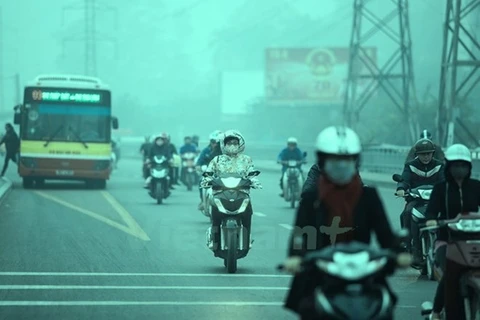
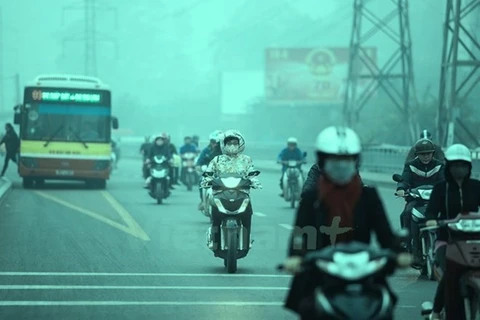
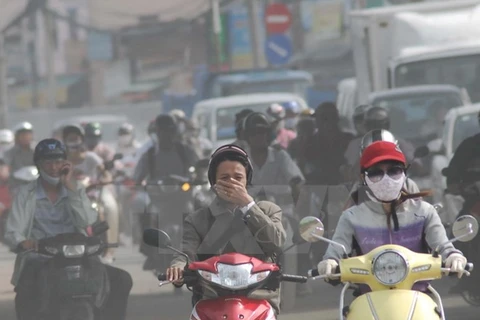
Vietnam has an increasing incidence of respiratory diseases, with the World Health Organisation (WHO) repeatedly issuing warnings that it is among the most air-polluted countries in the Asia-Pacific region, according to health experts.
Experts slam Vietnam’s air pollution ảnh 1Assoc Prof Dr ​Dang Xuan Hung of the Ear Nose Throat Association of HCM City and Southern Provinces said at a conference in HCM City (Photo VNA)

HCM City (VNA)
- Vietnam hasan increasing incidence of respiratory diseases, with the World HealthOrganisation (WHO) repeatedly issuing warnings that it is among the mostair-polluted countries in the Asia-Pacific region, according to health experts.

Dr Nguyen Thanh Vu, a lecturer at theSchool of Medicine at the Vietnam National University-HCM City, said childrenwere at high risk from air pollution, which has a long-term effect on theirhealth, causing pneumonia, diseases relating to their ears, nose and throat,and asthma.

He was speaking at a conference titled NewWarning About Respiratory Safety held last week by the Ear Nose ThroatAssociation of HCM City and Southern Provinces.

Vu cited a WHO report saying that twomillion children die globally due to acute respiratory infections, 60 percentof them caused by polluted air.

Some 3-5 percent of children’s congenitaldefects are caused by environmental pollution, the report added.

Vu said Vietnam had the highest prevalenceof asthma among children aged 12-13 in Asia, and warned this would continue toincrease.

HCM City’s paediatrics hospitals get manypatients with respiratory diseases.

The best way to prevent the diseases is toreduce exposure to polluted air, he said.

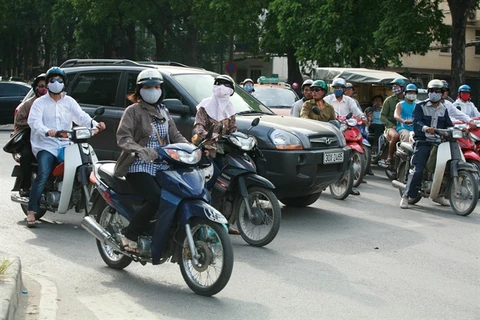
People should keep the air and environmentin their home clean, and everyone should wear masks when going out, hesaid.     

Assoc Prof Dr Dang Xuan Hung of the EarNose Throat Association of HCM City and Southern Provinces said people shouldproactively adopt preventive methods against diseases.

Proper nutrition, physical activity andadequate consumption of water helps improve resistance, but when resistance islow, bacteria and viruses which are always present in body easily causediseases, he added.-VNA
VNA

See more

The Intensive Care Unit at Duc Giang General Hospital has continuously introduced and applied advanced specialised techniques to improve the treatment and survival of critically ill patients. (Photo: VNA)

40 years of renewal: Healthcare quality advanced for new era

Over the past four decades of Doi moi (Renewal), Vietnam’s healthcare sector has made remarkable progress, and is now well positioned to achieve further breakthroughs by harnessing science, technology and innovation to improve public health care in the new era, according to experts from the Vietnam Union of Science and Technology Associations (VUSTA).

Doctors from Cho Ray Hospital conduct preventive health screenings for residents at the Cho Lon ward health station. (Photo: VNA)

Ho Chi Minh City targets completion of universal health check-ups by December 15

According to the municipal Department of Health, as of July 20, a total of 732,873 residents had undergone periodic check-ups and had electronic health records established. The figure reflects encouraging initial results from the citywide campaign launched by the department and underscores local authorities' commitment to implementing one of the largest community healthcare programmes ever undertaken in the southern metropolis.

Medical staff at Cho Ray Hospital in Ho Chi Minh City cares for and treat the victim. (Photo published by VNA)

Last survivor of Phu Quoc boat capsize shows signs of recovery

The health condition of the last patient receiving treatment following the deadly boat capsize off the Phu Quoc special one in An Giang province has shown positive signs of improvement after three more days of intensive care, Cho Ray Hospital in Ho Chi Minh City said on July 16.

The number of foreign tourists coming to Ho Chi Minh City for travel combined with medical check-ups is increasing. (Photo: VNA)

Vietnam looks to unlock medical tourism potential with national strategy

The draft strategy aims to position Vietnam as a trusted healthcare destination in Southeast Asia by 2030 and eventually among Asia's leading medical tourism hubs. The plan marks a shift from viewing medical tourism as an untapped opportunity to making it a national development priority.

Delegates at the conference. (Photo: VNA)

Vietnam to produce first homegrown next-generation vaccines from 2028

Under the agreement, Sanofi will transfer technology to VNVC to manufacture selected high-demand vaccines for children and adults at VNVC Vaccine and Bioproduct Plant. The first next-generation vaccines produced in Vietnam are expected to roll off production lines in 2028.

Eric and Alysha joyfully welcome their baby through Mini IVF after more than 10 years of waiting. (Photo: Hong Ngoc Phuc Truong Minh General Hospital)

Vietnam - a destination for journeys to parenthood

An increasing number of international families are choosing Vietnam for infertility treatment, embarking on journeys to parenthood that transcend geographical distance and differences in nationality.

Prime Minister Le Minh Hung delivers remarks at the inauguration ceremony for Viet Duc University Hospital's second campus in Ninh Binh province. (Photo: VNA)

PM urges modern restructuring of healthcare network

The PM stressed that throughout the country’s development process, people have consistently been regarded as the centre, the driving force, the objective and the most important resource for national development. Sustainable and rapid development requires not only a healthy, knowledgeable and skilled population but also a modern, equitable, efficient, sustainable and accessible healthcare system.

Thu Duc General Hospital, with a capacity of 1,000 beds, was inaugurated and put into operation in April 2025 (Photo: VNA)

Ho Chi Minh City moves to expand robotic surgery to gateway hospitals

According to the municipal Department of Health, developing gateway hospitals is a key pillar of the city's strategy to establish a regional specialised healthcare system. The network is designed to permanently relieve overcrowding at major downtown hospitals while strengthening strong inter-regional emergency care and treatment network.

Doctors conduct health screenings for children in Tru Van Tho commune, Ho Chi Minh City. (Photo :VNA)

Ho Chi Minh City moves closer to universal health check-ups

Achieving universal health check-ups in 2026 will lay the foundation for a new healthcare model in which every resident has an electronic health record, receives regular screenings, benefits from lifelong health management and gains access to early intervention through primary healthcare services.