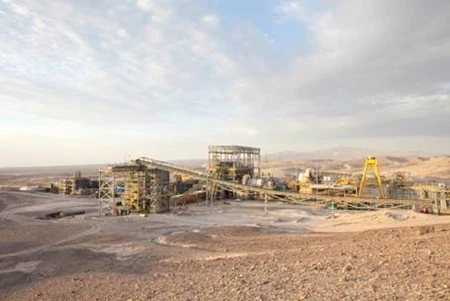
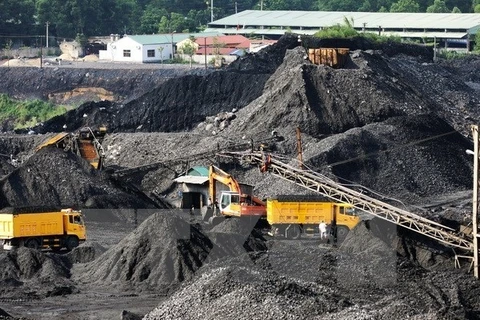
A coal mine in the northern province of Quang Ninh (Photo: VNA)
The research on transparency compliance lamented inaccurate financial disclosures, unreliable reports on the true mine reserves throughout the country, withheld information regarding the development of and adjustments made to mining planning – especially at local levels. Most of all, the level of transparency regarding the mining sector’s social and environmental responsibilities for the community and the public is sorely lacking, the study found.
The number of mining companies claiming they had to pay "unofficial fees" (which amounted to 2 percent of their revenues) was 12 percent higher than in other sectors, and it should be noted that these mining companies are usually far bigger.
“Most mining companies post bleak revenues, but the paradox is that in our survey, they also mostly said they are planning to expand production in the next two years,” Nguyen Minh Duc from the VCCI’s legal department, said.
The report also suggests that private companies with close ties to State agencies may get first-hand information that should be made public as soon as possible, such as bidding notices, new ore discoveries, changes in planning, making for unfair competition.
The findings were presented at a workshop in Hanoi held by VCCI and members of the Vietnam Mining Coalition.
The workshop was organised against the backdrop of heated public debate over recent mining-related discoveries, such as massive illegal "sand drain" from Vietnam to Singapore or threats made against a provincial leader when he ordered a halt to sand mining operations.
According to Ministry of Finance data, natural resources taxes collected from the mining sector (excluding oil) account for a meagre 0.9-1.1 percent of the State budget revenues, which many provinces said was not even enough to cover the cost of mining activity management.
Le Ai Thu, Chairman of the Vietnam Economics Geology Association urged a change in the current taxing scheme. Instead of collecting natural resources and environmental tax from companies before they even start mining, the collection should be done after they have sold their products and the price has been identified. “This will leave them with more financial means to invest and upgrade technology, to dig deeper, extracting the ’poorer’ ores instead of just picking the rich ores, which is actually more wasteful,” he argued.
Assoc. Prof. Trinh Thi Kim Ngoc, former head of the humanities and culture faculty at Vietnam Academy of Social Sciences, however, focused on the lives of mining area residents. As is often the case, mineral deposits are concentrated largely in the mountainous uplands of Vietnam, with their rich biodiversity but poor and vulnerable population. With the pollution from mining activities and influx of workers, “people’s lives there will be heavily affected during the mining operations, and long after those operations have ended, resulting in diminishing quality of human resources,” Ngoc said. “Thus, making all information publicly available will help civil society monitor and keep mining in check,” she added.
Lai Hong Thanh, Deputy Director of the General Department of Geology and Minerals, said legislation that came into effect earlier this year had remedied many long-standing issues, showing that a receptive attitude on the authorities’ part to address complaints and criticism by experts in the field, such as public information on enterprise performance of their social responsibilities, the level of public information on natural resources with relation to its ‘national secret,’ clearer bidding processes or transparency in licences granting, among others.
Many attempts over the last decade have been made to push for Vietnam’s participation in the Extractive Industries Transparency Initiative – a global standard to promote openness and accountability in management of extractive resources. But the efforts have not been fruitful, despite rampant and damaging violations in the mining sector, and the country is lagging behind other ASEAN countries in this regard.
Experts in the field are calling for more commitment by the Vietnamese Government to reforms in the mining sector towards transparency and sustainable development, given its dismal place in international transparency rankings. In 2013, Natural Resource Governance Institute rated transparency in Vietnam’s mining sector at 41th place in 58 countries assessed.
In Vietnam, according to the constitution, natural resources “belong to the people,” with the State acting as the owners’ representative to manage the resources; companies are the owners’ representatives for exploiting these resources, hence it’s natural that the State and the enterprises divulging information to the people, an idea experts at the workshop unanimously agreed upon.-VNA
VNA