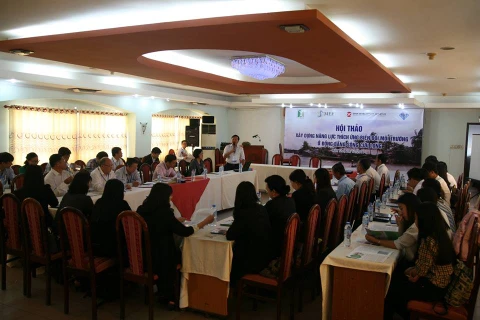
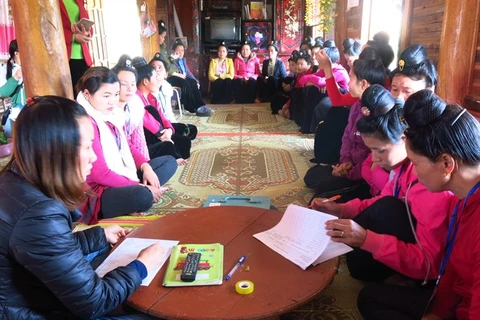
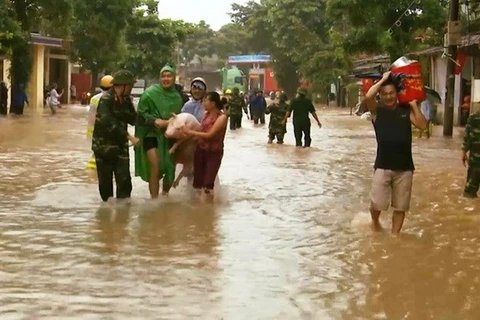
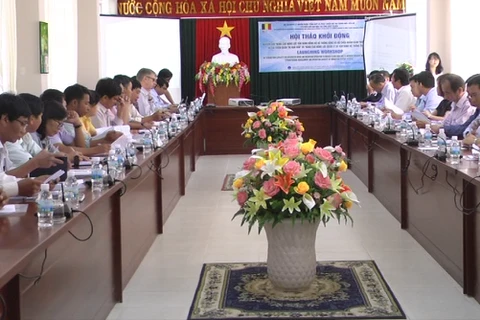
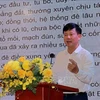
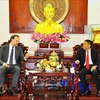
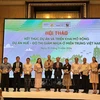
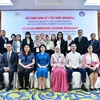
A photo of the conference held on March 15 (Photo: VNA)
 Hanoi (VNA) - The Food and Agriculture Organisation (FAO) of the United Nations is cooperating with its member states in the Asia-Pacific region as well as relevant social organisations to improve the agriculture sector’s adaptation to climate change and reduce its reception of impacts of the weather phenomenon.
The move is part of the activities to carry out the Sendai Framework for Disaster Risk Reduction 2015-2030 (Sendai Framework), heard a regional conference held in Hanoi on March 15.
The framework outlines four priorities for actions to be taken to prevent new and reduce existing disaster risks, including understanding disaster risks, strengthening disaster risk governance to manage disaster risks, investing in disaster reduction for resilience and enhancing disaster preparedness for effective response.
The management of disaster risks should be included in all development sectors as it is crucial to reduce losses caused by natural disasters, respond to climate change and realise the Sustainable Development Goals.
Kundhavi Kadiresan, FAO Assistant Director-General and Regional Representative for Asia and the Pacific, said that 2.5 billion people in the world are living on agriculture development and agricultural losses will threaten global efforts in alleviating poverty.
FAO is joining hands with the governments to enhance capacity of accessing weather forecast information as well as warn small-scale farming households so that the farmers can adjust their agricultural activities ahead of the natural calamities, she noted.
Deputy Minister of Agriculture and Rural Development Le Quoc Doanh highlighted that agricultural development, especially the production of grains, has helped Vietnam stand firm in the face of regional and global economic recession, thus technical measures are necessary to protect the agriculture from climate change.
Other participants at the event shared experience in reducing risks and improving capacity to response to climate change. Also, they identified priorities to implement the Sendai Framework.
Results of the conference will be reported to the 34th FAO Regional Conference for Asia and the Pacific in Fiji in April and the conference on the implementation of Sendai Framework to be held in Mongolia in July.
According to FAO 2017 report on the impacts of disasters on agriculture and food security, natural disasters caused economic damage worth 96 billion USD in cultivation and animal breeding in developing countries.-VNA
The move is part of the activities to carry out the Sendai Framework for Disaster Risk Reduction 2015-2030 (Sendai Framework), heard a regional conference held in Hanoi on March 15.
The framework outlines four priorities for actions to be taken to prevent new and reduce existing disaster risks, including understanding disaster risks, strengthening disaster risk governance to manage disaster risks, investing in disaster reduction for resilience and enhancing disaster preparedness for effective response.
The management of disaster risks should be included in all development sectors as it is crucial to reduce losses caused by natural disasters, respond to climate change and realise the Sustainable Development Goals.
Kundhavi Kadiresan, FAO Assistant Director-General and Regional Representative for Asia and the Pacific, said that 2.5 billion people in the world are living on agriculture development and agricultural losses will threaten global efforts in alleviating poverty.
FAO is joining hands with the governments to enhance capacity of accessing weather forecast information as well as warn small-scale farming households so that the farmers can adjust their agricultural activities ahead of the natural calamities, she noted.
Deputy Minister of Agriculture and Rural Development Le Quoc Doanh highlighted that agricultural development, especially the production of grains, has helped Vietnam stand firm in the face of regional and global economic recession, thus technical measures are necessary to protect the agriculture from climate change.
Other participants at the event shared experience in reducing risks and improving capacity to response to climate change. Also, they identified priorities to implement the Sendai Framework.
Results of the conference will be reported to the 34th FAO Regional Conference for Asia and the Pacific in Fiji in April and the conference on the implementation of Sendai Framework to be held in Mongolia in July.
According to FAO 2017 report on the impacts of disasters on agriculture and food security, natural disasters caused economic damage worth 96 billion USD in cultivation and animal breeding in developing countries.-VNA
VNA