Insurance customers at Bao Viet Life Insurance Office in Nam Dinh city (Photo: VNA)
 Hanoi (VNA) - The finance, banking and insurance industry expanded 7.89 percent in the first nine months of this year, the highest level recorded in the past seven years.
A report of the General Statistics Office (GSO) revealed that the growth rate of the industry was 6.99 percent in 2011, 5.97 percent in 2012, 6.68 percent in 2013, 5.39 percent in 2014, 6.7 percent in 2015 and 7.38 percent in 2016.
As for insurance, the GSO reported that the insurance market maintained positive growth. Total premiums for the whole market in nine months were estimated to swell 18 percent year-on-year, of which life insurance premiums increased more than 22 percent.
The GSO report also showed that as of September 20, total money supply increased 9.59 percent compared with the end of 2016 and rose 11.76 percent year-on-year.
Capital mobilisation of credit institutions rose 10.08 percent while credit growth reached 11.02 percent.
According to GSO, good credit growth has shown a positive development trend and a relatively good capital absorption capacity of the economy.
Thanks to the good results of the first three quarters, most commercial banks have expected their business performance to accelerate in the last quarter of this year, helping the average pre-tax profit of the entire banking system rise 13.63 percent in 2017, according to the latest survey on the business performance trend of credit institutions conducted by the State Bank of Vietnam.
As per the survey, 89 percent of credit institutions estimated their growth this year to be positive in comparison with last year.
A total of 70.65 percent of credit institutions continued to be optimistic about the trend of increasing demand for financial and banking services in 2017, especially demand for loans in the fourth quarter of 2017.
Capital mobilisation and lending are expected to accelerate in the last quarter of the year, of which capital mobilisation will grow 5.32 percent, as against 3.74 percent in the fourth quarter of last year, and credit growth will rise 6.07 percent, as against 5.91 percent in the fourth quarter of 2016.
As for interest rates in the fourth quarter, State-owned banks expected the rate to decline by 0.06-0.15 percentage points for both deposits and loans. Joint stock commercial banks expected a higher reduction of 0.45 percentage points for loans and 0.57 percentage points for deposits.
State-owned banks and joint stock commercial banks also expected the lending rate in the whole year to reduce by 0.09 and 0.03 percentage points, respectively, as against December last year.
Economist Le Xuan Nghia told Dau tu chung khoan (Securities Investment) newspaper said Vietnam’s banking industry in 2017 has witnessed a spectacular recovery, following a period of significant efforts towards dealing with bad debt, especially the risk provision.
The net interest on total assets of the banking sector used to fall to 0.4 percent but has now reached some 0.8 percent, while some banks have touched more than 1 percent. The net interest on equity fell to 5.6 percent during certain times but has now risen to 8 percent, even more than the 10 percent at some banks.
Compared with the most difficult period, commercial banks’ profitability has nearly doubled. This is the most important sign proving that commercial banks’ financial potential has recovered quite impressively, Nghia said.
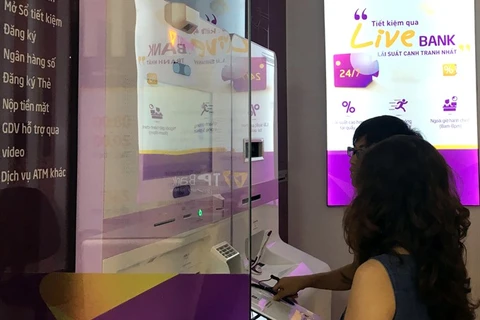
Some banks have increased their equity through domestic capital, and most of these banks have invested heavily in technology to develop new services, such as internet banking, mobile banking and automatic payment, in this difficult scenario. The aforementioned achievements are remarkable, reflecting a new trend of the banking sector in terms of risk management, management and service development towards Bank 3.0, he added.-VNA
A report of the General Statistics Office (GSO) revealed that the growth rate of the industry was 6.99 percent in 2011, 5.97 percent in 2012, 6.68 percent in 2013, 5.39 percent in 2014, 6.7 percent in 2015 and 7.38 percent in 2016.
As for insurance, the GSO reported that the insurance market maintained positive growth. Total premiums for the whole market in nine months were estimated to swell 18 percent year-on-year, of which life insurance premiums increased more than 22 percent.
The GSO report also showed that as of September 20, total money supply increased 9.59 percent compared with the end of 2016 and rose 11.76 percent year-on-year.
Capital mobilisation of credit institutions rose 10.08 percent while credit growth reached 11.02 percent.
According to GSO, good credit growth has shown a positive development trend and a relatively good capital absorption capacity of the economy.
Thanks to the good results of the first three quarters, most commercial banks have expected their business performance to accelerate in the last quarter of this year, helping the average pre-tax profit of the entire banking system rise 13.63 percent in 2017, according to the latest survey on the business performance trend of credit institutions conducted by the State Bank of Vietnam.
As per the survey, 89 percent of credit institutions estimated their growth this year to be positive in comparison with last year.
A total of 70.65 percent of credit institutions continued to be optimistic about the trend of increasing demand for financial and banking services in 2017, especially demand for loans in the fourth quarter of 2017.
Capital mobilisation and lending are expected to accelerate in the last quarter of the year, of which capital mobilisation will grow 5.32 percent, as against 3.74 percent in the fourth quarter of last year, and credit growth will rise 6.07 percent, as against 5.91 percent in the fourth quarter of 2016.
As for interest rates in the fourth quarter, State-owned banks expected the rate to decline by 0.06-0.15 percentage points for both deposits and loans. Joint stock commercial banks expected a higher reduction of 0.45 percentage points for loans and 0.57 percentage points for deposits.
State-owned banks and joint stock commercial banks also expected the lending rate in the whole year to reduce by 0.09 and 0.03 percentage points, respectively, as against December last year.
Economist Le Xuan Nghia told Dau tu chung khoan (Securities Investment) newspaper said Vietnam’s banking industry in 2017 has witnessed a spectacular recovery, following a period of significant efforts towards dealing with bad debt, especially the risk provision.
The net interest on total assets of the banking sector used to fall to 0.4 percent but has now reached some 0.8 percent, while some banks have touched more than 1 percent. The net interest on equity fell to 5.6 percent during certain times but has now risen to 8 percent, even more than the 10 percent at some banks.
Compared with the most difficult period, commercial banks’ profitability has nearly doubled. This is the most important sign proving that commercial banks’ financial potential has recovered quite impressively, Nghia said.
Some banks have increased their equity through domestic capital, and most of these banks have invested heavily in technology to develop new services, such as internet banking, mobile banking and automatic payment, in this difficult scenario. The aforementioned achievements are remarkable, reflecting a new trend of the banking sector in terms of risk management, management and service development towards Bank 3.0, he added.-VNA
VNA