Firms in supporting industries in dire need of skilled workers

Firms in supporting industries in Vietnam are in desperate need of high-qualified and skilled workers in addition to solutions regarding capital and raw materials.
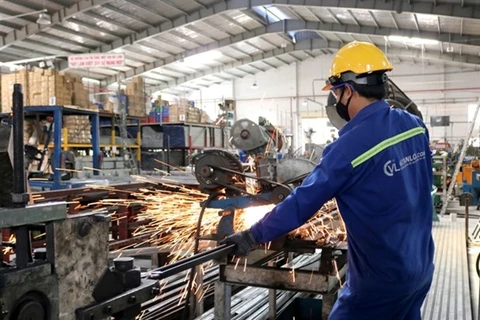
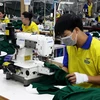
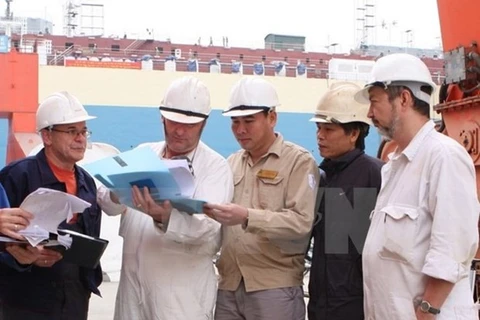
Firms in supporting industries in dire need of skilled workers ảnh 1Staff at MBT Electrical Equipment JSC (Photo: VNA)
Hanoi (VNS/VNA) - Firms in supporting industries in Vietnam are indesperate need of high-qualified and skilled workers in addition to solutionsregarding capital and raw materials.

Le Lam, Deputy General Director of the MBT Electrical Equipment JSC in Hanoi's DanPhuong district, said his company faced many difficulties in the past two yearsdue to the impact of the COVID-19 pandemic and disruption of the global supplychain, resulting in sharp declines in orders and revenue.

The company, which specialises in manufacturing transformers and medium-voltagecabinets, had been coping with dependence on imported raw materials as thequality of domestic products has failed to meet demand. Lam said his firm hadalso encountered difficulties in recruiting human resources to meet therequirements of its factory.

“We seek intermediate-level welding workers all year round, but could onlyrecruit a few," Lam told Viet Nam News.

Although the market was facing difficulties, in the future, if exportsincreased, his firm would need abundant human resources. Therefore, Lamsuggested the authorities draw up effective training policies for supportingindustries.

Nguyen Hong Phong, Managing Director of the An Mi Tools Co in the capital cityagreed. He said his company which is involved in manufacturing high-precisionproducts and mechanical components for enterprises in automobiles, motorcycles,aviation, space and moulds needed to recruit workers in the cutting andprocessing industries throughout the year.

However, personnel recruitment had caused his firm headaches because it wasdifficult for the local workforce to meet the recruitment demand of hiscompany.

"Currently, we need to recruit between 30 and 50 new employees annually.But we can only meet about 30-40% of our goal," Phong told Viet Nam News.

Furthermore, businesses had to spend a lot of time retraining recruited workersfrom the concept of operations in production to expertise as most of themlacked the necessary skills, he said.

“This is costly and time-consuming as it takes six months for workers to mastertheir work, one year to have related skills and experience and they can be ableto work independently only after two years,” he said.

Meanwhile, his firm has failed to collaborate continuously with educationalfacilities to train students or recruited workers.

According to Pham Xuan Khanh, Rector of the College of High Technology (HHT),HHT has established relationships with large enterprises in Vietnam and in theworld and they are willing to cooperate with HHT to build the training centres.

At these centres, businesses will invest in facilities and equipment, and bringgood experts who can team up with HHT from developing and organising trainingprogrammes to assessing students. Businesses will later use this workforce fortheir business and production activities.

However, there are no specific guidelines governing businesses' investments inschool facilities and the coordination between schools and businesses to buildcentres which specialise in training, research, production, andcommercialisation of products, Khanh said.

Khanh said he hoped Hanoi's authorities and the Ministry of Labour, Invalidsand Social Affairs would soon remove these difficulties so that enterpriseswould be offered more favourable conditions in investing in the training area.

Sharing Khanh's opinion, Nguyen Van, Standing Vice Chairman of the Hanoi SupportingIndustries Business Association (HANSIBA), said it was very important to removebottlenecks in institutions and policies governing cooperation betweenbusinesses and universities, colleges and vocational training institutions.This would help facilitate cooperation between firms in supporting industriesand educational institutions and the ultimate beneficiaries are students.

In the past, HANSIBA organised short-term training courses, bringing affiliatesto visit training facilities. Through specific connection activities, HANSIBAhad listened to both sides - schools and enterprises - thereby buildingconnection programmes to meet demand and supply labour for each other.

This would be the shortest way in meeting the supply-demand of human resourcesfor the supporting industries in the short term as well as in the long term, Vansaid.

To ensure the quality of human resources served for supporting industries, Vanemphasised the importance of setting up technical standards on occupationalskills according to international standards and focusing on training methodsand certification systems so that Vietnamese labourers can work in regional andinternational markets.

Well-structured training plans and roadmaps for personnel resources served forsupporting industries should be also included, he said./.
VNA
See more

An Phát Complex Industrial Park in Hai Phong City is one of the eco-friendly industrial parks. (Photo: VNA)

Green industrial parks become new magnet for FDI

Statistics show that about 80% of FDI enterprises prioritise investing in industrial parks with green energy infrastructure, reflecting a growing shift in investment preferences amid tightening global environmental standards.

Wood panel production at the Thuan An Wood JSC in Ho Chi Minh City (Photo: VNA)

Vietnamese businesses ride wave of investment in green manufacturing

Recent developments in private investment show that as confidence in the private sector has grown and is a key driver of economic development, investors are strengthening support for enterprises not only through capital but also management expertise and market connectivity.

Officers and soldiers of Son Tra Border Guard Station, Da Nang City Border Guard Command tell local fishermen about IUU fishing. (Photo: VNA)

Fishing solidarity groups help Vietnam with IUU “yellow card” warning removal

Over the years, coastal authorities in Da Nang have intensified efforts to educate fishermen about regulations, particularly the need to avoid illegal fishing in foreign waters. Local administrations and competent forces have also strengthened vessel registration and inspection procedures, installed vessel monitoring systems and ensured transparent declarations of catches at ports.

Representatives of Central Retail Vietnam and Lotte Plaza Market sign a distribution cooperation agreement at the networking event in Ho Chi Minh City on March 13. (Photo: VNA)

Vietnamese firms step up cooperation with international distribution chains

Connecting Vietnamese businesses with international distribution networks has been a key component of government-led trade promotion programmes for many years, which are designed to help domestic companies place goods directly into global retail systems rather than exporting solely through intermediaries.

Direct Hanoi–Amsterdam flights by Vietnam Airlines to begin on June 16. (Photo: Vietnam Airlines)

Vietnam Airlines to launch direct Hanoi–Amsterdam service on June 16

Under the plan, the Hanoi–Amsterdam route will commence operations on June 16, 2026, with an expected frequency of three return flights per week using modern wide-body Airbus A350 aircraft. This will be the first direct air link between Vietnam and the Netherlands, helping to shorten travel time and enhance connectivity between Vietnam and one of Europe’s key economic, logistics and aviation transit hubs.

Farmers harvest the 2025 Winter–Spring rice crop in An Giang province. (Photo: VNA)

An Giang accelerates export shift to meet green consumption trends

To enhance competitiveness, authorities are assisting businesses in obtaining globally recognised certifications such as GlobalG.A.P., Organic and HACCP, enabling key exports including rice, seafood and clean agricultural products to strengthen their position in global markets, according to Quang Xuan Lua, Director of the An Giang Centre for Trade and Investment Promotion.

Motorcycle riders refill their vehicles at a petrol station in Hanoi (Photo: VNA)

E5 RON92 biofuel price falls in latest adjustment

Since the beginning of this year, domestic fuel prices have undergone 14 adjustments, including five decreases and nine increases for RON95 and six declines and eight hikes for E5 RON92. Meanwhile, diesel price has fallen three times and risen 11 times.

A French customer is tasting Vietnamese lychee. (Photo: VNA)

Vietnamese agricultural products boost global brand recognition

Vietnam aims to achieve about 74 billion USD in agro-forestry-fishery export turnover this year. Expanding value-added products, improving quality standards and strengthening brand building, especially through international supermarket systems, will be key to enhancing the competitiveness and global recognition of Vietnamese agricultural products.

An apartment building developed by BCONS in Binh Duong (Photo: VNA)

Resolution 68 boosts businesses entering market

By the end of 2025, Vietnam had more than one million active enterprises. In the first two months of 2026, about 64,500 enterprises entered or re-entered the market, up 29.4% year-on-year, averaging 32,200 newly established or returning businesses per month.

A Vinh Long official introduces signature local products to Korean guests. (Photo: VNA)

Vinh Long courts Korean investment in key sectors

Vice Chairman of the provincial People’s Committee Nguyen Truc Son vowed to accompany investors and provide them with optimal conditions, while building a transparent and stable business environment to secure long-term engagement from foreign enterprises, particularly those from Daejeon.