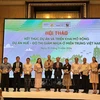
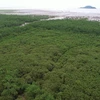
The development of a forest carbon market is opening up significant opportunities for Vietnam’s forestry sector to mobilise new financial resources for forest protection and development, while creating sustainable livelihoods for local communities, particularly in ethnic minority areas.
With a population of about 3.5 million, Hung Yen generates around 1,850 – 2,000 tonnes of household waste each day, along with about 1,000 tonnes of waste from production and business establishments, posing a major challenge for the locality.
The findings provided updated species data and a scientific basis for wildlife management and conservation efforts in the locality and the wider region.
The carbon credit exchange will operate under a centralised model subject to strict state supervision, with tradable assets including greenhouse gas emission quotas and eligible carbon credits.
The launch ceremony of a nationwide campaign that calls on all citizens to use energy economically and efficiently in response to Earth Hour 2026 will be held on the morning of Saturday, March 21, instead of March 7 as initially planned.
After inspection, military engineers identified the object as an MK-82 high-explosive bomb, measuring 20cm in diameter and 155cm in length, weighing about 350kg and still fitted with an intact detonator. The bomb was believed to be left over from the war.
After more than two decades, the garden now sprawls across nearly 11 ha, divided into nine functional zones. To date, more than 120 indigenous species have been planted, with numerous rare species now forming closed-canopy forest patches.
Restoring and developing forests as part of the 2026–2030 coastal forest protection and development project is still a big job. The plan aims to plant 5,088 hectares — including 3,236 hectares of mangroves and 1,852 hectares on soil and sandy land — and to enrich, restore, and improve 1,514 hectares of existing forests, with 683 hectares of mangroves and 831 hectares on soil and sand.
The People’s Committee of Dakrong commune in the central province of Quang Tri, in coordination with the Dakrong Forest Protection Station, on February 26 handed over a small-clawed otter to the Cuc Phuong National Park and the Wildlife Rescue Centre in Vietnam for further care and rehabilitation.
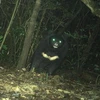
Notable findings feature the Asian palm civet, greater coucal and red-throated flycatcher, as well as Red Data Book species such as the slow loris and pangolin.
Initial assessments by authorities indicated that the animal is a rare and endangered wild species subject to protection and listed in the Vietnam Red Data Book.
Climate change adaptation remains a top priority in Vietnam’s development strategy and national security outlook through 2050. Vietnam will maintain close cooperation with Japan, UNESCO and other partners to guarantee the project’s effectiveness and advance common goals.
Verification confirmed that the object was an MK82 bomb with its detonator still intact. Buried at a depth of around 3.5m, the bomb measured 40cm in diameter, 140cm in length and weighed approximately 250kg.
Schäfer-Gümbel praised the strong commitment of Vietnamese partners to sustainable energy goals. He noted that the long-standing development cooperation between Germany and Vietnam is evolving, with energy transition emerging as a strategic area of collaboration in addressing global challenges.
Through the lens of “Le Jardin Extraordinaire”, Vietnam was portrayed not simply as a travel destination but as a still-emerging realm of discovery: a nation whose nature, though heavily wounded in the past, demonstrates extraordinary powers of recovery, quietly upholding its pristine essence against the pressures of time.
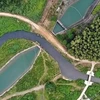
With more than 841,000 hectares of forest and a forest coverage rate exceeding 61%, Quang Tri is among the provinces with the largest forested areas and carbon stocks in the north central region.
The Cam Lo-Dong Ha forest protection unit in the central province of Quang Tri has received a rare stump-tailed macaque, a species listed as endangered, precious and rare in the Vietnam Red Data Book.
Gas output from Vietnam's 26 producing fields hit its peak between 2010 and 2015, followed by a steep fall-off after 2016. During 2021-2025, annual volumes hovered between around 5.95 and 8.08 billion cu.m.
Dutch and international experts agreed that rather than attempting to completely prevent salinity, a smarter strategy is to manage it and learn to live with it. Areas that successfully develop profitable farming systems under saline conditions will gain a long-term competitive advantage.
A notable new feature in the draft documents of the 14th National Party Congress is that environmental protection is no longer treated as an auxiliary task, but increasingly regarded as a foundation for the country’s sustainable development in the coming period.