FMCG continues recovery with 5.7 pct growth in Q4 2015

In the last quarter of 2015, the Fast Moving Consumer Goods (FMCG) growth in the six key cities of Vietnam rallied, with an increase of 5.7 percent, compared to 4.5 percent in the previous quarter.
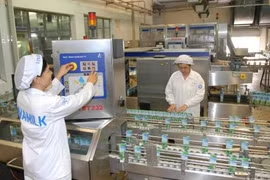
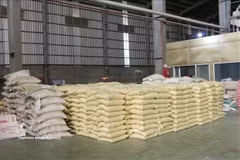
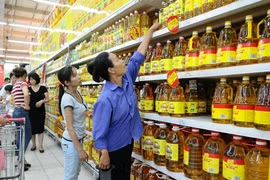
FMCG continues recovery with 5.7 pct growth in Q4 2015 ảnh 1Illustrative photo (Source: VNA)

Hanoi (VNA) – In the last quarter of 2015, the Fast Moving Consumer Goods (FMCG) growth in the six key cities of Vietnam rallied, with an increase of 5.7 percent, compared to 4.5 percent in the previous quarter.

According to the quarterly Market Pulse report released by Nielsen, the global performance measurement firm, the FMCG growth in Hanoi, Ho Chi Minh City, Hai Phong, Can Tho, Nha Trang and Da Nang was driven by a volume expansion of 4.9 percent, compared to 3.6 percent in the third quarter.

This recovery is reflected across most of the seven key categories of beverages, food, milk base, household care, personal care, cigarettes and baby care, the report said.

Beverages continued to enjoy stable growth with an increase of 7.7 percent in volume, contributing 38 percent to the total FMCG sales.

The fourth quarter also saw a soft recovery of the food and milk-based categories which recorded volume increases of 0.9 percent and 3.7 percent, respectively. The remaining categories also showed signs of rebound, except for personal care which remained stagnant.

“Although FMCG growth in Quarter 4 continues to show recovery, the market is no longer expected to have double digit organic growth,” said Nguyen Huong Quynh, Executive Director of Retail Measurement Services at Nielsen. “The volatility presents a lot of challenges for manufacturers to make sound decisions to fully seize market growth opportunities and drive a profitable business.”

Quynh believes that the rural population has been emerging as a new source of growth for many manufacturers.

Last year, FMCG sales in rural areas experienced a significant growth of 5.5 percent. The rural community in Vietnam accounts for 68 percent of the country’s 90 million population and contributed 54 percent to FMCG sales.

Furthermore, rural residents are now investing more in education and enjoying income growth of around 44 percent over the last three years, Quynh added.-VNA

VNA

See more

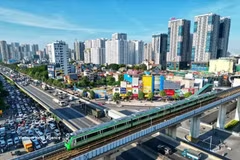
The automatic ticketing system that uses electronic identification, authentication, biometric recognition and cashless payment for passengers on the Cat Linh-Ha Dong railway line in Hanoi. (Photo: VNA)

Cashless payments open gateway to financial inclusion

Cashless payments continued to grow rapidly in the first eight months of 2026. The number and value of cashless transactions rose 34.56% and 13.26% year-on-year, respectively, while online transactions increased 46.57% in number and 21.77% in value.

Ho Chi Minh City attracts more than 17.8 billion USD in FDI in the first nine months of 2026 (Illustrative image. Photo: VNA)

Ho Chi Minh City offers new destinations for FDI flows

The merger of Ho Chi Minh City with Binh Duong and Ba Ria-Vung Tau has opened up a larger development space, enabling the city to reshape its approach to attracting foreign investment. In particular, Resolution No. 10-NQ/TW of the Politburo sets out clear orientations for developing the foreign-invested economic sector, providing a basis for shifting the focus from the amount of investment capital to the quality of investment.

Vietnam exports about 1.4 million tonnes of coffee worth 6.54 billion USD in the first nine months of 2026. (Photo: VNA)

Vietnam seeks to boost value, expand markets for coffee sector

Acording to VICOFA, Vietnam needs to focus on exporting green coffee beans that meet EUDR criteria, particularly as compliance levels among some other producing countries remain low. At the same time, it should develop specialty and organic coffee lines as well as deeply processed products to serve the premium segment in Europe.

Part of Khanh Hoa province in central Vietnam (Photo: VNA)

Malaysian economist upbeat about Vietnam’s growth outlook

Among ASEAN’s “Fabulous Five”, namely Vietnam, Malaysia, Indonesia, Thailand and the Philippines, Vietnam demonstrates how industrial depth and effective investment can underpin rapid growth, Shan Saeed said, noting strong investment momentum.

Automobile production at the Honda Vietnam factory in Vinh Phuc ward, Phu Tho (Photo: VNA)

Vietnam’s auto market accelerates amid growing electrification trend

According to data released by PwC in late September, total vehicle sales across the six ASEAN-6 markets, namely Vietnam, Indonesia, Thailand, Malaysia, the Philippines and Singapore, reached about 1.755 million units in the first half of 2026, up 11% year on year. Vietnam recorded the highest sales growth in the group at 31.1%, followed by Indonesia at 15.9% and Thailand at 15.1%.

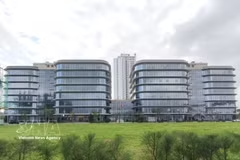
The headquarters of the Vietnam International Financial Centre in Da Nang (Photo: VNA))

VIFC-DN gradually establishes position on global financial centre map

According to Dang Dinh Duc, Standing Vice Chairman of the VIFC-DN Executive Agency, the ranking marks an important milestone, reflecting the foundations that VIFC-DN and Da Nang authorities are gradually building to connect with international capital flows, institutions and markets.

Quy Nhon Port, located in Quy Nhon Bay of Gia Lai province, offers highly favourable conditions for vessel anchoring and cargo handling throughout the year. (Photo: VNA)

Vietnam Logistics Forum 2026 to be held in early November

The Vietnam Logistics Forum 2026 will take place on November 6-7 in Gia Lai province, bringing together management agencies, local authorities, associations, experts and businesses to identify opportunities and challenges and discuss logistics development solutions suited to the new period.

VCCI Chairman Ho Sy Hung speaks at the Vietnam Corporate Sustainability Forum (VCSF) 2026 in Hanoi on October 5, 2026. (Photo: VNA)

Vietnam’s corporate sustainability forum calls for new growth paradigm

Breakthrough growth and sustainable development should be pursued as a shared journey in which the State creates an enabling environment, localities support businesses, enterprises take the pioneering role, science and technology provide momentum, and society as a whole participates.

Khanh Hoa province is rolling out infrastructure projects for the Van Phong Economic Zone. (Photo: VNA)

Khanh Hoa targets green, smart marine economy

The province aims for average annual GRDP growth of 11-12% during 2026-2030, with the digital economy accounting for 35% of GRDP and total factor productivity contributing more than 55% to growth. Labour productivity is expected to rise by an average of 11% annually.