Foreign banks make beeline for Vietnam

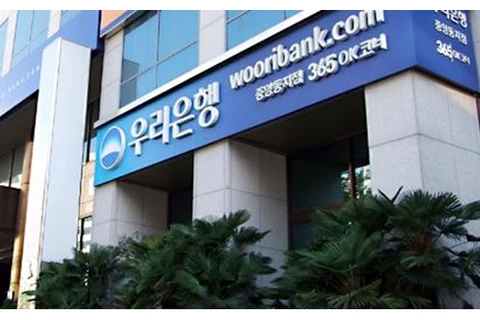
The State Bank of Vietnam early this month approved in-principle Woori Bank’s proposal to set up a wholly-owned bank in the country.
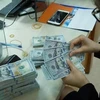
Foreign banks make beeline for Vietnam ảnh 1Illustrative image (Source: dailymail.co,uk) 

HCM City (VNA) – The State Bank of Vietnam early this month approved in-principle Woori Bank’s proposal to set up a wholly-owned bank in the country.

The largest Republic of Korea’s bank in terms of consolidated assets as of the end of March has been told to apply for a licence.

Once it gets the licence, Woori expects to be a vehicle that will help expand Republic of Korea’s investment in Vietnam. It will also be the seventh wholly foreign-owned lender in the country after HSBC, Standard Chartered, ANZ, Republic of Korea’s Shinhan Bank and Malaysia’s Hong Leong Bank Berhad and Public Bank Berhad, with the last-named licensed earlier this year.

There are also branches of dozens of foreign banks.

The number of foreign banks, especially from ASEAN member countries, to invest in Vietnam has been increasing rapidly in recent years with the opening up of the banking sector as part of the Government’s commitment to international integration.

The number of foreign bank branches has gone up from 31 in 2006 to 50 now, and there are also representative offices of 50 banks and joint venture banks.

Market observers said that for long foreign lenders have sought to enter Vietnam as wholly foreign owned, but they were not allowed to do so.

They then had to buy stakes in local banks to become strategic shareholders, set up joint ventures with domestic banks or open branches or representative offices.

For instance, VietinBank has two foreign strategic shareholders - International Finance Corporation and Koyo Mitsubishi UFJ.

In 2011 Japan’s Mizuho Corporate Bank Ltd bought a 15 percent stake in Vietcombank to become a strategic shareholder.

But the opportunity for foreign banks to establish wholly-owned entities in Vietnam only arose when the banking sector was forced to restructure, which resulted in a sharp decrease in the number of banks from 33 in 2006 to 28 late last year.

This created conditions for foreign banks to expand their presence in what is a promising market.

Analysts have said that admittedly the presence of more foreign banks offers more alternatives to the public and has made the banking sector more competitive by ushering in improved management and greater transparency.

But the flipside, of course, is that domestic banks are in danger of losing market share or worse.

Foreign banks now have minor market shares - 5 percent of deposits and 15 percent of loans - but these are predicted to increase in the near future since the foreign lenders have now acquired better knowledge of the market and its demands to go with their deep pockets, high-quality, diverse products and efficient management.

The average size of Vietnam’s biggest banks is only 30-35 billion USD compared with 70 billion USD for major lenders in Thailand and Indonesia. Many banks in neighbouring countries also score double on the quality index that Vietnamese banks do.

The challenges Vietnamese banks face with the advent of their foreign rivals are that they would lose their advantages in retail banking, find it hard to compete in foreign exchange services and derivative products, and suffer from a brain drain as foreign banks, with their ability to pay higher salaries, poach the best and brightest.

Analysts said they should speed up the restructuring process to strengthen their financial capacity, improve their management, and change their income structure to fee-based rather than interest-based earnings.

They also said the lenders should explore ways to expand their investment abroad to exploit opportunities thrown up by international economic deals such as FATA, TPP and AEC.-VNA
VNA

See more

Delegates at the launching ceremony (Photo: VNA)

Digital platform on overseas market development launched

With Vietnam’s network of 64 trade offices overseas, Deputy PM Son noted that connecting them through a modern digital platform could help establish a unified national trade information system that operates efficiently, transparently and with strong forecasting capacity.

The Government’s issuance of Decree No. 72/2026/ND-CP revising preferential import tariffs on several petrol products and raw materials is a timely move to diversify supply sources. (Photo: VNA)

Fuel import tariff cuts strengthen Vietnam’s energy resilience: experts

Economic expert Dinh Trong Thinh said revising fuel import tariffs helps diversify supply sources and reduce reliance on traditional markets, thereby strengthening Vietnam’s ability to cope with potential global supply shocks. Ensuring access to multiple energy sources is also vital for safeguarding national energy security, he added.

Leaders of Dak Lak province inspect IUU fishing prevention and control efforts at Phu Lac fishing port, Hoa Hiep ward. (Photo: daklak.gov.vn)

Dak Lak readies for EC mission on anti-IUU fishing efforts

Dak Lak province is completing preparations for an upcoming European Commission (EC) inspection on efforts to combat illegal, unreported and unregulated (IUU) fishing, with a view to having the fisheries “yellow card” removed.

Vietnamese Ambassador to Argentina Ngo Minh Nguyet speaks at the event. (Photo: VNA)

Vietnam, Argentina promote trade, investment cooperation

On relations with South America, Nguyet noted that in December 2025, Vietnam and the Southern Common Market (MERCOSUR) announced the launch of negotiations for a Preferential Trade Agreement (PTA). She expressed her hope that the agreement will be signed soon, thereby further boosting trade and investment between Vietnam and MERCOSUR member states, including Argentina.

Customers buy petrol at a Petrolimex petrol station in Tran Hung Dao ward, Hung Yen province. (Photo: VNA)

PM orders stronger measures to ensure stable petrol supply

The MoIT was instructed to direct key petrol producers and traders to proactively develop supply plans to guarantee adequate fuel provision for distribution systems, maintain regular sale operations, and sell products at listed prices. It must also closely monitor developments in global and domestic petrol markets and adopt appropriate management measures when necessary.

Farmers in Ca Mau province use combine harvesters to harvest rice. (Photo: VNA)

PM orders coordinated measures to stabilise rice production and markets

The Minister of Agriculture and Environment is tasked with instructing local authorities to closely monitor production developments, improve forecasting capacity, strengthen pest control measures, and proactively respond to adverse weather conditions to protect crops, maintain planned yields and output, and reduce production costs.

A worker refuels a vehicle at a petrol station in Hung Yen province. (Photo: VNA)

Fuel prices slashed as stabilisation fund used

According to a joint decision by the Ministry of Industry and Trade and the Ministry of Finance, the price of RON95-III petrol – the most widely used grade – fell by 3,880 VND to 25,240 VND (0.95 USD) per litre.

Customers purchase petrol at Station No. 03 (Petrolimex Hung Yen) on Quang Trung Street, Tran Hung Dao ward, Hung Yen province. (Photo: VNA)

Hung Yen takes measures to curb speculation, stabilise fuel market

Petrolimex Hung Yen maintains regular reserves of about 5,500 cubic metres at directly managed outlets and roughly 2,000 cubic metres at franchised stations. The provincial Department of Industry and Trade has ordered closer monitoring of supply and demand and retail prices to detect shortages or unjustified price hikes.

The automobile assembly line of the Honda Phuc Yen factory in Phu Tho province (Photo: VNA)

Honda Vietnam sees decline in motorcycle, car sales

Sales of both motorcycles and automobiles by Honda Vietnam declined in February, dropping 19.6% and 41.8% year-on-year, respectively, according to the company’s latest business results released on March 11.

Team 2 of the Hanoi Market Surveillance Sub-department inspects operations of a Petrolimex petrol station on Tran Quang Khai street (Photo: VNA)

Hanoi maintains stable supply of petrol, LPG

The Hanoi Market Surveillance Sub-department said petrol and LPG trading activities across the city remain stable, with supply largely meeting demand despite volatility in global energy prices.

A Qatar Airways aircraft is seen at Noi Bai International Airport in Hanoi. (Photo: VNA)

Qatar Airways cancels 13 more flights amid Middle East conflicts

Statistics show that airspace across the Middle East has yet to return to normal operations, with multiple FIRs still imposing restrictions or partial closures. As a result, international flight operations through the region continue to face disruptions and route adjustments.

New FDI registrations remained robust in the first two months of 2026, with 620 newly licensed projects worth 3.54 billion USD, up 20.2% in the project number and 61.5% in registered capital compared to the same period last year. (Photo: VNA)

FDI attraction in 2026: Vietnam adapts to new global investment standards

To further enhance FDI attraction amid rising global and regional competition, Deputy Minister of Finance Tran Quoc Phuong said the ministry is drafting new strategies on foreign-invested economic development and next-generation FDI attraction, focusing on more open, transparent and competitive institutional frameworks.

Prime Minister Pham Minh Chinh speaks at the conference. (Photo: VNA)

PM highlights 'silver economy' as sustainable growth driver

The PM stressed that population ageing is an inevitable part of development, and the key challenge is not to avoid it but to respond proactively with sound policies and decisive action to turn the "silver economy" into a new driver of growth, innovation and sustainable development.

The first EU – Vietnam Global Gateway Business and Investment Forum is scheduled to take place in Hanoi on March 24, 2026. (Photo: vneconomy.vn)

EU – Vietnam Global Gateway business forum to be held in Hanoi

Key discussions will centre on sectors viewed as catalysts for Vietnam’s sustainable growth such as sustainable transport, energy transition, infrastructure connectivity, green and digital transformation, and the adoption of ESG standards in investment and business practices.