Foreign businesses dominate Vietnam’s lucrative online travel market

Foreign businesses dominated the online travel agency channel in Vietnam, according to The Outbox Company's Most Loved Ranking, which surveyed Vietnamese travellers' preferences and awareness in Q1/2023.
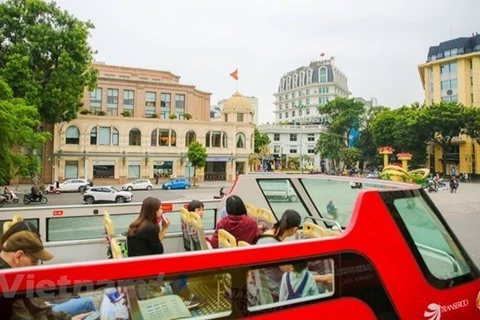
Foreign businesses dominate Vietnam’s lucrative online travel market ảnh 1Tourists in Hoi An. Foreign businesses dominate the online travel agency channel in Vietnam. (Photo:VNA)
 Hanoi (VNS/VNA) - Foreign businesses dominated the onlinetravel agency channel in Vietnam, according to The Outbox Company's Most LovedRanking, which surveyed Vietnamese travellers' preferences and awareness inQ1/2023.

The top online travel agents (OTAs) in Q1 are international brandsin the travel sector, such as Traveloka, Booking.com, Agoda, Expedia andTrip.com. There are no domestic OTAs platforms among the top choices of Vietnamesetravellers.

Traveloka has experienced tremendous growth thanks to effective campaignsduring Tet (Lunar New Year)2023, with more than 40% of travellers selecting it in Q1, which is 10% morethan the second-ranked Booking.com.

One of the main reasons domestic customers prefer foreign OTAs is that theyhave a head start of about 20 years, with extensive experience in onlinetransactions, global operations and established brand names with a solidreputation and strong financial backing.

For example, Indonesia-based Traveloka is a unicorn startup valued at 1 billionUSD or more. Booking.com is based in Amsterdam, Netherlands. Agoda isheadquartered in Singapore, and Expedia owns and operates travel fareaggregators and metadata search engines based in the US.

Trip.com is an international online travel agency based in China.
According to a report by Google and Temasek, Vietnam’s onlinetravel market is a lucrative industry that may reach 9 billion USD in scale by2025.

However, this market is dominated by foreign online travel agencies (OTAs),which account for 80% of the market share, leaving Vietnamese OTAs like Gotadi,VnTrip, Ivivu, and Chudu, respectively Mytour.vn and Vinabooking with only asmall percentage of transactions.

Vietnam’s tourism consumption trends have undergone significant changes in thepast decade due to the emergence of digital technology.

Online payment methods, such as credit and debit cards and e-wallets, havereplaced cash and are now more commonly used. Additionally, booking servicesfor airline tickets, hotels and other travel arrangements through smartphoneapplications have significantly increased. These developments have facilitatedthe growth of online travel agencies (OTAs), both foreign and domestic.

Large hotels report that 40-60% of their total revenue comes from OTA channels,primarily foreign businesses.

Since tax regulations in Vietnam do not yet bind foreign online exchanges, theyhave more financial resources to invest in marketing, advertising and offeringdiscounts to their partners, creating a significant competitive advantage.

The Private Economic Development Research Board acknowledges a tax inequalitybetween domestic tourism and travel service businesses and foreign OTAs, as thelatter do not have representative offices in Vietnam. This disadvantagesdomestic OTAs when competing with foreign OTAs on pricing.

The founder of Gotadi Ngo Minh Duc believes that Vietnam’s tourism industryneeds to build a community and product ecosystem and adopt smart policies todominate the market.

Vietnamese tourism businesses must link and transform digitally to create anecosystem of Vietnamese people with smart service providers, smart users, andsmart destinations, no longer losing at the "home field", Duc said./.
VNA
See more

Traditional dragon procession held on the river in Ninh Binh. (Photo: VNA)

Cultural heritage drives sustainable tourism growth in Ninh Binh

In the first two months of 2026, Ninh Binh welcomed over 5.4 million visitors, up 9.9% year-on-year, generating nearly 5.84 trillion VND (221 million USD) in tourism revenue, up 15.9%. During the 2026 Lunar New Year holiday alone, the province received 2.38 million visitors, an 81.4% increase from the previous year, ranking second nationwide.

Outstanding individuals and firms honoured at VITM 2026 (Photo: VNA)

Outstanding individuals, firms honoured at Vietnam International Travel Mart 2026

In 2025, Vietnam’s tourism sector recorded its highest-ever number of visitors, welcoming more than 21.5 million international arrivals, up more than 20% from 2024, and serving over 135.5 million domestic travellers. Tourism revenue also surpassed 1 quadrillion VND (nearly 38 billion USD). The sector has become a bright spot of the economy, with Vietnam ranking among the world’s fastest-growing tourism destinations.

The Ba Trieu Temple in Thanh Hoa province (Photo: VNA)

Thanh Hoa taps digital transformation to boost heritage tourism

With 28 nationally-recognised intangible cultural heritage elements, Thanh Hoa province has prioritised integrating conservation with tourism development. Digital transformation, in particular, is seen as a crucial bridge connecting tradition with innovation, helping heritage sites become more accessible and engaging.

Pristine white-sand beach on Cu Lao Cham Island, Da Nang city, is a magnet for visitors. (Photo: VNA)

Vietnam – a safe destination amid global uncertainties

Despite global tourism headwinds linked to geopolitical conflicts, transport disruptions and surging travel expenses, Vietnam’s tourism sector has sustained strong growth, underscoring the destination’s resilience and rising international profile.

A border guard at the Mong Cai International Border Gate processes exit procedures for passengers at the Bac Luan 1 border gate in Quang Ninh province. (Photo: VNA)

Vietnam, China promote AI application in cross-border tourism cooperation

During the programme, participants will attend intensive courses delivered by AI technology experts, China–ASEAN policy researchers, and tourism specialists. The curriculum focuses on the application of big data in tourism policy planning, the development of cross-border tourism products, and the building of joint tourism brands.

The sea area off the southern coast of Phu Quoc Island. (Photo: VNA)

UK newspaper praises Phu Quoc’s unspoilt charm amid tourism boom

Phu Quoc is positioned as a compelling alternative – even a potential rival to Phuket – for travellers seeking authenticity in Southeast Asia. Its appeal lies not only in scenic beauty and fresh seafood, but also in the harmonious coexistence of modern tourism and enduring local culture.

At an elevation of 1,700 metres above sea level, the summit of Pu Luong is increasingly emerging as an ideal destination for trekking - a form of adventure tourism that combines hiking with nature exploration and physical as well as mental endurance. (Photo: VNA)

Vietnam eyes becoming region’s leading tourism destination

Vietnam has in recent years undergone a notable transformation in its tourism development strategy, placing a strong emphasis on nature-based and eco-tourism. This shift is not merely aligned with global trends, but represents a necessary step towards safeguarding valuable natural resources, while appealing to a growing segment of environmentally conscious travellers.

Foreign tourists in a photo with local residents. (Photo: VNA)

Vietnam serves 6.76 million foreign arrivals in Q1

China and the Republic of Korea (RoK) continued to lead as Vietnam’s largest source markets in the quarter, with 1.4 million and 1.3 million visitors respectively, accounting for around 40% of total arrivals.

Cua Viet beach is a magnet for both locals and visitors during holidays. (Photo: VNA)

Quang Tri seeks to unlock potential of marine tourism’s “golden triangle”

Cua Tung, Cua Viet and Con Co special zone are identified as three key destinations of marine tourism, and to transform this “tourism triangle” into premium and peaceful resorts, a new strategy is needed to enhance attractiveness to high-end travellers seeking private spaces as the strength of these places lies in their pristine and tranquil beauty.

A corner of the Phu Quy special zone in Lam Dong province (Photo: VNA)

Phu Quy moves to unlock potential as premier marine tourism hotspot

Under a resolution of the provincial Party Congress for the 2025–2030 term, the locality prioritises spatial planning of the marine economy, focusing on emerging sea-based industries linked with environmental protection and national defence. Located 56 nautical miles offshore, Phu Quy is a central pillar of this vision.