Forum discusses how HCM City can attract investment to renewable energy

A specific regulatory framework for renewable energy development is needed to encourage private capital flows into this sector in Vietnam, including Ho Chi Minh City, a forum heard in HCM City on September 20.

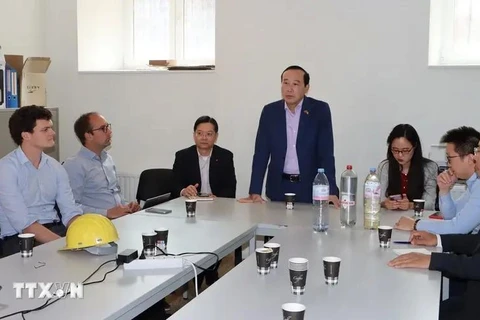
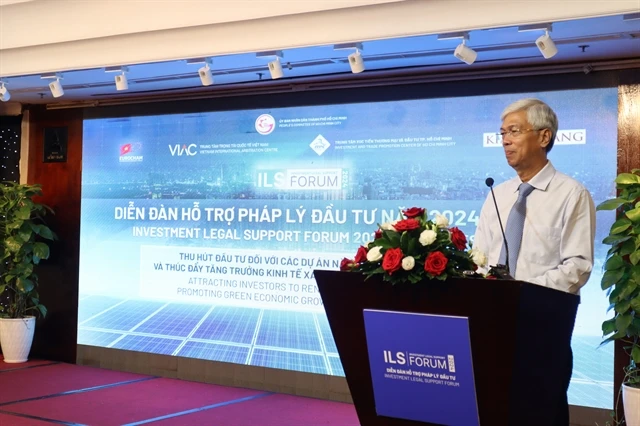
Vo Van Hoan, vice chairman of the city People’s Committee, speaks at the Investment Legal Support Forum 2024 - Second Term in HCM City on September 20. (Photo: Courtesy of ITPC)

Ho Chi Minh City (VNS/VNA) — A specific regulatory framework for renewable energy development is needed to encourage private capital flows into this sector in Vietnam, including Ho Chi Minh City, a forum heard in HCM City on September 20.

Speaking at the Investment Legal Support Forum 2024 - Second Term, with the theme “Attracting Investors to Renewable Energy and Promoting Green Economic Growth in HCM City”, Vo Van Hoan, vice chairman of the city People’s Committee, said many countries around the world are pursuing sustainable economic development, and Vietnam, particularly HCM City, is no exception.

He said the city had drafted the Green Growth Action Plan for 2024-30 to implement the national Green Growth Strategy to achieve sustainable development.

Under the plan, the city has identified 14 key tasks for "green" development, with an emphasis on renewable energy.

The plan, together with special policy mechanisms under the National Assembly’s Resolution 98, provides a framework to promote the development of green projects in the city, he said.

However, the city remains concerned about whether these policies are truly favourable for investors in renewable energy projects.

The forum provides an opportunity for it to connect with and listen to investors, leading to reforms in its investment environment, he added.

In his opening remarks, Tran Du Lich, vice president of the Vietnam International Arbitration Centre, said promoting the development of renewable energy, particularly wind, solar and biomass, not only helps mitigate environmental impacts but also creates significant advantages for countries and localities in the global trend towards greening.

But he pointed out that terms like "greening" and "renewable energy" remain unfamiliar to many businesses and the regulatory framework for the sector remains inadequate.

He emphasised that the lack of clear regulations and guidance increases the risk of disputes, raising concerns among both investors and the government.

Therefore, the city and businesses need to collaborate to identify issues and devise solutions to address them, he said.

Nguyen Xuan Thang, vice chairman of EuroCham Vietnam and managing director of Schaeffler Vietnam, praised the city’s efforts to promote green investment under Resolution 98.

It has achieved significant progress in rooftop solar development, he said.

But he also referred to the challenges faced by the private sector in developing solar projects, including tardy regulatory approvals and restrictions on private sector involvement in public solar installations.

Regulatory framework for solar power projects in Vietnam is still being developed, creating uncertainty for investors, slowing projects and potentially discouraging long-term investment, he said.

He also referred to successful international models of solar energy deployment that Vietnam could learn from./.
VNA

See more

The World Coffee Heritage Forum officially opens at the World Coffee Museum in Dak Lak province, with eyes on UNESCO recognition for Vietnamese coffee culture. (Photo: VNA)

World Coffee Heritage Forum opens in Dak Lak

Dak Lak is known as the 'capital' of Vietnamese coffee, with rich, fertile basalt red soil ideal for agriculture. The coffee provides livelihoods for thousands of locals and has developed a unique cultural space, closely tied to the socioeconomic life, customs and identity of local communities.

Chili peppers are on the list of essential goods in Indonesia (Photo: VNA)

Indonesia reduces imports of strategic food commodities

In 2026, Indonesia is expected to have approximately 12 million tonnes of rice carried over from the previous year, supported by annual production of around 34.7 million tonnes. With projected consumption of 31.1 million tonnes, national rice reserves could reach approximately 16 million tonnes by the end of the year.

Hanoi’s roadmap to implement low-emission zones from July is providing a strong boost to the electric two-wheeler market (Photo: VNA)

Low-emission zone roadmap drives electric two-wheeler boom in Hanoi

From July 1, Hanoi will introduce time-based or area-based restrictions on petrol-powered motorcycles within Ring Road 1, with plans to expand coverage across the entire zone by 2028 and extend to areas within Ring Road 3 by 2030. The policy is expected to reshape travel habits for millions of urban residents.

Delegates at the opening ceremony of the Made in Da Nang Expo 2026 (Photo: VNA)

Nearly 300 firms join Made in Da Nang Expo 2026

Speaking at the opening ceremony, Vice Chairman of the Da Nang People’s Committee Tran Chi Cuong said the exhibition is a large-scale trade promotion event aimed at showcasing products, connecting markets, and helping businesses enhance competitiveness while expanding domestic and export markets.

 Green production, standardised value chains key to fruit, vegetable sector growth

Green production, standardised value chains key to fruit, vegetable sector growth

Facing mounting pressure from increasingly stringent domestic and international standards, Vietnam’s fruit and vegetable sector is accelerating its shift toward green, safe, and sustainable production models. Beyond changing farming practices, localities and businesses are stepping up efforts to standardise value chains and build brands to achieve growth targets for 2026.

Hiep Phuoc Industrial Park in Ho Chi Minh City. (Photo: VNA)

Southern industrial real estate enters strategic growth phase

Key industrial hubs in the south, including Ho Chi Minh City, Dong Nai and Tay Ninh, are transitioning from a period driven largely by supply expansion and rising land prices to a more refined growth model. This new phase is shaped by infrastructure upgrades, supply chain restructuring, product improvement and greater emphasis on operational performance.