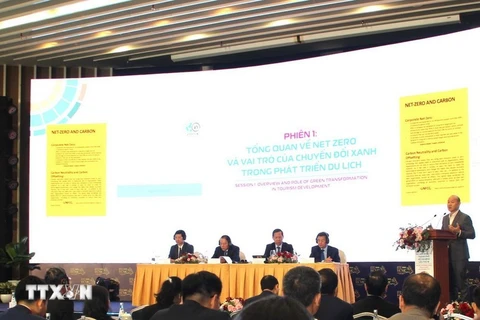
Hanoi (VNS/VNA) - Clear regulations, bankable projects, the pooling of concessional and commercial capital, and climate capacity are four keys that can unlock the climate finance market, a forum heard in Ho Chi Minh City on September 19.
Speaking at the “Sustainable Development 2024” forum organised by Saigon Times with the theme “Accelerating the Economy to Net-Zero,” Darryl James Dong, principal country officer and head of HCM City office at IFC, said Vietnam has committed to become carbon-neutral by 2050 by integrating high-income growth into its net-zero trajectory.
According to the World Bank, it will cost Vietnam 368 billion USD by 2040 to finance the infrastructure, new technologies and social programmes for its transition.
But climate finance in the country is limited so far. Today only 4.5% of local bank funding goes to green credit, Dong said.
Lim Dyi Chang, head of commercial banking, UOB Vietnam, said the push for a low-carbon economy is gaining momentum globally, and Vietnam is no exception.
“As we confront the urgent need to mitigate climate change, the role of green investments in propelling low-carbon sectors has never been more crucial.”
He defined low-carbon sectors as industries that minimise greenhouse gas emissions and focus on sustainable practices such as renewable energy, circular industries like plastic and metal recycling, sustainable agriculture, green transportation, green buildings, and waste management, among others.
He too pointed to the immense scale of investments required to achieve low-carbon transition.
According to Power Development Plan VIII, power transition alone will require some $650 billion between 2021 and 2050 for expanding renewable energy capacity, upgrading energy transmission infrastructure and supporting R&D investments in new green technologies.
Banks therefore would have a pivotal role to play in this transformation, he said.
“As the gatekeepers of capital, they have the power to direct funds towards sustainable projects and away from high-carbon industries. Green finance initiatives such as green bonds and sustainable loans can mobilise the private sector’s wider participation in low-carbon projects.”
But he said directing funds to low-carbon sectors is not without its challenges, including the lack of a clear green taxonomy framework, insufficient incentives for green investments, and the perceived financial risks associated with new technologies.
“Additionally, there is often a mismatch between the long-term nature of green investments and the short-term financial expectations of investors.
“Overcoming these challenges will require coordinated efforts from policymakers, financial institutions and the private sector.”
Dong said the country needs to mobilise hundreds of billions of dollars in the next 10 years.
“But private capital won’t move at the pace we need unless we set the stage to define what is green, reduce reliance on fossil fuels, neutralise intensive industrial sectors, and unlock commercial solutions.”
He highlighted the four key factors that can unlock financing - clear regulations, bankable projects, blended finance or the pooling of Blended finance is the pooling of concessional and commercial capital, and climate capacity.
Referring to regulations, he said the climate market would not develop if there is little or confusing guidance.
“If you build a good regulatory climate framework, then they, investors and financiers, will come.”
To promote more bankable projects, he said banks need to up their game to refine their market approach to identify green projects and work with eco-clients to make them bankable.
Blended finance is a compelling de-risking tool to mobilise climate finance and unlock tough deals, he said.
“We need to build green capacity in Vietnam’s financial system. We need to mobilize climate-smart credit in our banks and develop green principles in our capital markets.
“For this, it is important to build the necessary skills and capabilities to identify climate opportunities, assess credit quality, design funding solutions, and measure impact.”
Tran Minh Hung, Editor-in-chief of the Saigon Times, said Vietnam is implementing numerous measures and policies related to greenhouse gas emission reduction, promoting renewable energy and environmental protection, reflecting its strong commitment to engage in the fight against climate change and realising its net-zero target by 2050.
Dr Nguyen Quoc Viet, Deputy Director of the Vietnam Institute for Economic and Policy Research, said the business community is also actively participating in the green transition process, with many companies practicing ESG (environmental, social, and governance) principles and aiming for green growth.
But to accelerate the transition, the Government and businesses need to take new actions, he said.
They include completing the carbon reduction policy framework; establishing regulations for the carbon market, carbon pricing and green certification; and rolling out and implementing supportive policies for businesses that adopt green production practices, he said.
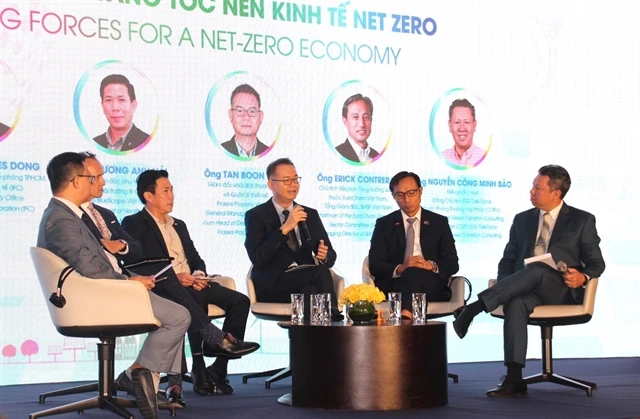
At the event, executives from manufacturing companies and infrastructure and sustainable development experts also shared their experiences in the greening journey and initiatives in reducing greenhouse gas emissions./.