Funding, regulatory hurdles challenge Vietnam's developers long term

Property developers in Vietnam face a steep path to long-term growth, with various hurdles awaiting them in the next 12 months, including challenges related to funding access and an evolving regulatory landscape.
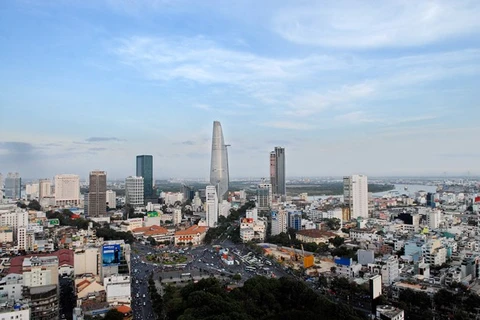
Funding, regulatory hurdles challenge Vietnam's developers long term ảnh 1Apartment complex in HCM City. Over the past five years, Vietnamese developers have pursued aggressive growth through debt financing, leading to higher leverage ratios. (Photo: VNA)
Hanoi (VNA) - Property developers in Vietnam face a steep path tolong-term growth, with various hurdles awaiting them in the next 12 months,including challenges related to funding access and an evolving regulatorylandscape.

A recent survey by S&P Global Ratings sheds light on the heavy reliance ofVietnamese developers on short-term funding. This reliance leaves themsusceptible to liquidity and default risks when access to funding becomesrestricted. For example, Novaland has encountered difficulties in meeting itsdomestic debt payments and is currently seeking to restructure its foreign debtobligations.

As of December 31, 2022, short-term debt for Vietnamese developers exceededtheir cash balance, surpassing 100%.

Over the past five years, Vietnamese developers have pursued aggressive growththrough debt financing, leading to higher leverage ratios. The reporthighlights that they often resort to debt to finance working capital forhigh-rise condominiums and capital expenditures for land acquisitions.

The government's tightening of developers' access to funding, including bankloans and the local bond market since June 2022, has constrained liquidity andled to project construction and handover delays. Buyers' sentiment has alsodecreased as developers can no longer provide sales incentives, and access tomortgage loans has diminished.

However, some early signals of easing appeared in early 2023, as the countrytook steps to reduce financial stress in the property sector. The recent policychanges aim to support the affordable segment of the market while discouragingproperty speculation, ultimately promoting more sustainable growth in the propertymarket, the report said.

Additionally, investor-buyers accounted for approximately 86% of propertypurchases in Vietnam between 2020 and 2022, with overseas buyers contributing45% of the total, according to CBRE Group. The high proportion ofinvestor-buyers in Vietnam leads to greater sales fluctuations due to theirsensitivity to economic cycles and market sentiment.

“In Vietnam, we expect aggregate residential sales to decline by 15 to 20% in2023 after experiencing growth of 25 to 30% in 2022.”

Developers in Vietnam also tend to have higher off-balance sheet liabilities.These include debt-like obligations such as sales incentives. For example, somedevelopers subsidise the mortgage interest expense for customers during theinitial stage of project construction. Additionally, they provide guaranteedrental returns for a certain period after handing over the units (more commonfor hospitality-related projects).

The report said although such incentives are common in the Vietnamese industry,the disclosure of their extent and commitment period is limited underVietnamese Accounting Standards. Consequently, developers' actual liabilitiesand cash flow burdens may be understated.

Additionally, Vietnam’s developers face key-man risk, as they are oftencontrolled by the founding family either directly or indirectly. Somedevelopers have complex corporate structures involving multiple business linesand joint ventures. Debt obligations may be concentrated at the parent company,with debt servicing relying on dividends from operating subsidiaries and jointventures. This complexity makes it challenging to track the flow of funds andassets.

Despite some challenges, the report also pointed out opportunities for Vietnam'sgrowth, driven by rising disposable incomes, increased foreign directinvestments, a young population (over 70% under the age of 45), robust GDPgrowth, and ample room for further urbanisation./.
VNA
See more

Aircraft at the Noi Bai International Airport in Hanoi. (Photo: VNA)

Vietnam seeks stable jet fuel supplies from China amid Middle East disruptions

On the basis of the long-standing friendship and cooperation between Vietnam and China, as well as close ties between their aviation authorities, the Civil Aviation Authority of Vietnam has asked the Civil Aviation Administration of China to direct relevant fuel suppliers to ensure sufficient and stable supplies for Vietnam.

Illustrative photo (Photo: Xinua/VNA)

Remittances to Ho Chi Minh City decline in Q1 amid global headwinds

Data from the State Bank of Vietnam (SBV)'s Region 2 branch showed that remittances transferred through credit institutions and economic organisations in Ho Chi Minh City exceeded 2 billion USD in the January–March period, down 15.6% from the previous quarter and 16.9% year-on-year.

The shipments are unloaded at the airport. (Photo: VNA broadcasts)

Nearly 100 tonnes of Vietnamese fruits, vegetables airlifted to UAE

Vietnamese fresh produce and processed foods are increasingly recognised for their quality, with items such as cashew nuts, coffee and spices gaining popularity among Middle East consumers. In 2025, Vietnam’s farm produce exports to the UAE exceeded 445 million USD, up nearly 24% year-on-year.

The World Coffee Heritage Forum officially opens at the World Coffee Museum in Dak Lak province, with eyes on UNESCO recognition for Vietnamese coffee culture. (Photo: VNA)

World Coffee Heritage Forum opens in Dak Lak

Dak Lak is known as the 'capital' of Vietnamese coffee, with rich, fertile basalt red soil ideal for agriculture. The coffee provides livelihoods for thousands of locals and has developed a unique cultural space, closely tied to the socioeconomic life, customs and identity of local communities.

Chili peppers are on the list of essential goods in Indonesia (Photo: VNA)

Indonesia reduces imports of strategic food commodities

In 2026, Indonesia is expected to have approximately 12 million tonnes of rice carried over from the previous year, supported by annual production of around 34.7 million tonnes. With projected consumption of 31.1 million tonnes, national rice reserves could reach approximately 16 million tonnes by the end of the year.

Hanoi’s roadmap to implement low-emission zones from July is providing a strong boost to the electric two-wheeler market (Photo: VNA)

Low-emission zone roadmap drives electric two-wheeler boom in Hanoi

From July 1, Hanoi will introduce time-based or area-based restrictions on petrol-powered motorcycles within Ring Road 1, with plans to expand coverage across the entire zone by 2028 and extend to areas within Ring Road 3 by 2030. The policy is expected to reshape travel habits for millions of urban residents.

Delegates at the opening ceremony of the Made in Da Nang Expo 2026 (Photo: VNA)

Nearly 300 firms join Made in Da Nang Expo 2026

Speaking at the opening ceremony, Vice Chairman of the Da Nang People’s Committee Tran Chi Cuong said the exhibition is a large-scale trade promotion event aimed at showcasing products, connecting markets, and helping businesses enhance competitiveness while expanding domestic and export markets.

 Green production, standardised value chains key to fruit, vegetable sector growth

Green production, standardised value chains key to fruit, vegetable sector growth

Facing mounting pressure from increasingly stringent domestic and international standards, Vietnam’s fruit and vegetable sector is accelerating its shift toward green, safe, and sustainable production models. Beyond changing farming practices, localities and businesses are stepping up efforts to standardise value chains and build brands to achieve growth targets for 2026.

Hiep Phuoc Industrial Park in Ho Chi Minh City. (Photo: VNA)

Southern industrial real estate enters strategic growth phase

Key industrial hubs in the south, including Ho Chi Minh City, Dong Nai and Tay Ninh, are transitioning from a period driven largely by supply expansion and rising land prices to a more refined growth model. This new phase is shaped by infrastructure upgrades, supply chain restructuring, product improvement and greater emphasis on operational performance.