Germany supports Vietnam’s garment industry in green transformation

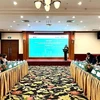
Five pilot projects on green technology for Vietnamese textile and garment exporters went on show at the ‘For a Sustainable Garment and Textile Industry in Vietnam’ show held in Hanoi on June 17.

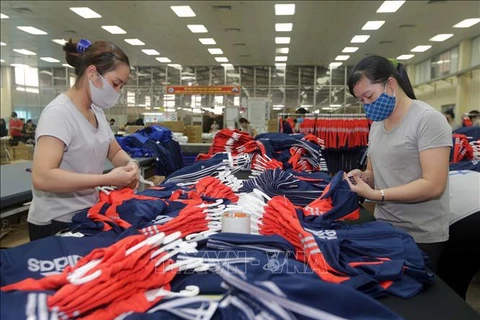
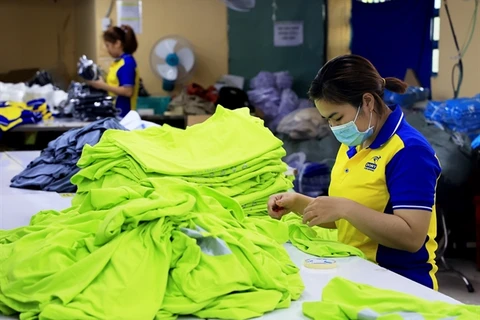
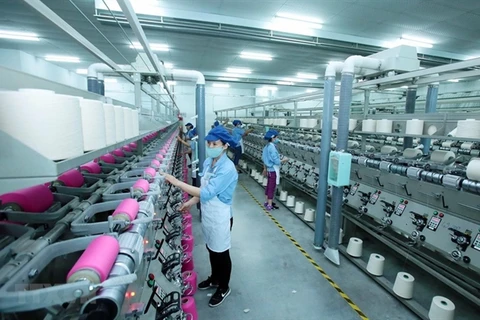
Vietnam's textile and garment industry will face many difficulties and challenges in green transformation. (Photo: VNA)

Hanoi (VNS/VNA) - Five pilot projects on green technology for Vietnamese textile and garment exporters went on show at the ‘For a Sustainable Garment and Textile Industry in Vietnam’ show held in Hanoi on June 17.

The event is part of the German government-supported ‘Green Tech Landing Pad’ initiative, jointly implemented by GIZ and the National Innovation Center (NIC) under the Ministry of Planning and Investment.

The new technologies being piloted include IoTeamVN's energy management solution, Enedig Kft's cloud-based labour cost calculation solution timeSSD®, Hoang Ha's waste heat recovery solution, ECOSOI's pineapple fabrics and fibres, and BlockTexx's polyester and cellulose recycling solution.

These innovations, evaluated favourably by domestic partners such as VINATEX, Faslink, Thinh Phuc, and Kyungbang, demonstrate significant potential for application and scale-ups.

The pilot projects have demonstrated the industry’s potential in transitioning to sustainable production and meeting European market standards.

The textile and garment sector makes an average contribution of 30-50 billion USD to Vietnam’s GDP and is poised for significant growth, especially with free trade agreements like the one with the EU (EVFTA).

Nonetheless, textile and garment enterprises face technical challenges in their transition to green and sustainable practices to comply with EU standards and seize growth opportunities.

The Green Tech Landing Pad represents a strategic response to those challenges. It identifies, connects, and facilitates the adoption of green technologies among Vietnamese textile and garment enterprises to ensure compliance with European sustainability standards.

Vu Quoc Huy, Director of the National Innovation Centre, said: “The Green Tech Landing Pad initiative plays a crucial role in the context of the environmental and sustainability challenges that Vietnam’s textile and garment industry is facing.

"Through this initiative, we equip textile and garment enterprises with cutting-edge and eco-friendly technologies, solutions, and production models. This not only enhances competitiveness but also drives Vietnam's garment and textile industry’s trajectory towards sustainability.”

Tarek Hassan, head of the Digital Transformation Centre Vietnam, a project funded by GIZ noted that Vietnam's textile and garment industry would face many difficulties and challenges in green transformation such as high upfront costs, Return on Investment (ROI) uncertainty, lack of a skilled workforce, infrastructure limitations, integration of new technologies and environmental issues.

Dennis Quennet, Director of Sustainable Economic Development at GIZ in Vietnam, said: "German-Vietnamese cooperation goes beyond today. On behalf of the German government, GIZ will continue to support the digital and green transformation of Vietnam’s economy by working with the public and private sectors in different industries. Together, we will enhance the roles of start-ups and SMEs in Vietnam’s economy to improve competitiveness and create innovation, opportunities, and jobs.”

The Green Tech Landing Pad initiative has successfully connected nine new technological solutions with seven textile and garment export companies to address common technical issues, including sludge treatment, heat recovery, fabric recycling, energy optimisation, labour management, and new sustainable materials./.
VNA

See more

Pham Van Cong, Chairman of the Vietnam Cashew Association, speaks in a conference reviewing the industry’s 2025 performance and deploying procurement plans for 2026 in HCM City on March 13. (Photo: VNA)

Cashew sector braces for challenges in 2026 amid global uncertainties

Vietnam’s cashew industry recorded export turnover of about 5.5 billion USD in 2025, the highest level ever. He noted that the result reflects the industry’s remarkable development, dynamism and timely adaptation to complex and unpredictable challenges both domestically and globally.

An Phát Complex Industrial Park in Hai Phong City is one of the eco-friendly industrial parks. (Photo: VNA)

Green industrial parks become new magnet for FDI

Statistics show that about 80% of FDI enterprises prioritise investing in industrial parks with green energy infrastructure, reflecting a growing shift in investment preferences amid tightening global environmental standards.

Wood panel production at the Thuan An Wood JSC in Ho Chi Minh City (Photo: VNA)

Vietnamese businesses ride wave of investment in green manufacturing

Recent developments in private investment show that as confidence in the private sector has grown and is a key driver of economic development, investors are strengthening support for enterprises not only through capital but also management expertise and market connectivity.

Officers and soldiers of Son Tra Border Guard Station, Da Nang City Border Guard Command tell local fishermen about IUU fishing. (Photo: VNA)

Fishing solidarity groups help Vietnam with IUU “yellow card” warning removal

Over the years, coastal authorities in Da Nang have intensified efforts to educate fishermen about regulations, particularly the need to avoid illegal fishing in foreign waters. Local administrations and competent forces have also strengthened vessel registration and inspection procedures, installed vessel monitoring systems and ensured transparent declarations of catches at ports.

Representatives of Central Retail Vietnam and Lotte Plaza Market sign a distribution cooperation agreement at the networking event in Ho Chi Minh City on March 13. (Photo: VNA)

Vietnamese firms step up cooperation with international distribution chains

Connecting Vietnamese businesses with international distribution networks has been a key component of government-led trade promotion programmes for many years, which are designed to help domestic companies place goods directly into global retail systems rather than exporting solely through intermediaries.

Direct Hanoi–Amsterdam flights by Vietnam Airlines to begin on June 16. (Photo: Vietnam Airlines)

Vietnam Airlines to launch direct Hanoi–Amsterdam service on June 16

Under the plan, the Hanoi–Amsterdam route will commence operations on June 16, 2026, with an expected frequency of three return flights per week using modern wide-body Airbus A350 aircraft. This will be the first direct air link between Vietnam and the Netherlands, helping to shorten travel time and enhance connectivity between Vietnam and one of Europe’s key economic, logistics and aviation transit hubs.

Farmers harvest the 2025 Winter–Spring rice crop in An Giang province. (Photo: VNA)

An Giang accelerates export shift to meet green consumption trends

To enhance competitiveness, authorities are assisting businesses in obtaining globally recognised certifications such as GlobalG.A.P., Organic and HACCP, enabling key exports including rice, seafood and clean agricultural products to strengthen their position in global markets, according to Quang Xuan Lua, Director of the An Giang Centre for Trade and Investment Promotion.

Motorcycle riders refill their vehicles at a petrol station in Hanoi (Photo: VNA)

E5 RON92 biofuel price falls in latest adjustment

Since the beginning of this year, domestic fuel prices have undergone 14 adjustments, including five decreases and nine increases for RON95 and six declines and eight hikes for E5 RON92. Meanwhile, diesel price has fallen three times and risen 11 times.

A French customer is tasting Vietnamese lychee. (Photo: VNA)

Vietnamese agricultural products boost global brand recognition

Vietnam aims to achieve about 74 billion USD in agro-forestry-fishery export turnover this year. Expanding value-added products, improving quality standards and strengthening brand building, especially through international supermarket systems, will be key to enhancing the competitiveness and global recognition of Vietnamese agricultural products.