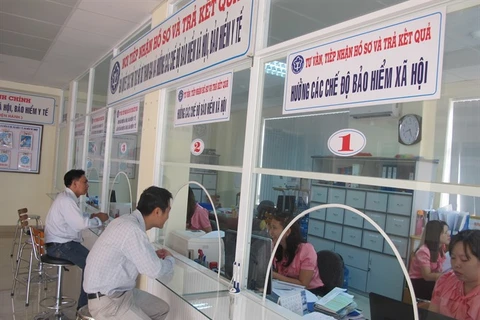
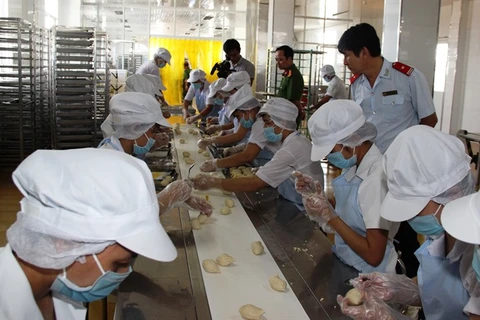
Decree No 15, effective since February 2, 2018, dictates several changes, the most notable of which is giving firms the right to self-declare food-product origins and quality, replacing the long-standing method of keeping records at public management agencies (Source: news.chinhphu.vn)
 Hanoi (VNS/VNA) - In a policy turnaround, the Government has said it is determined to assist food and beverage importers and producers by reducing inspection times, costs and criteria, opting for businesses to make self declarations instead of being constantly watchdogged by officials.
Decree No 15, effective since February 2, 2018, dictates several changes, the most notable of which is giving firms the right to self-declare food-product origins and quality, replacing the long-standing method of keeping records at public management agencies.
As such, only a handful of food products will now require special inspection by the Ministry of Health before entering the general market.
Nguyen Thanh Long, Deputy Minister of Health, said on the Vietnam Customs’ online portal, that once the new regulations were in place, about 95 percent of food imports would not be subject to specialised inspection.
However, regular inspections would still apply to all imports, unless otherwise specified.
Long added that regular inspection time would also be shortened from seven to three working days, while specialised inspection time would be shortened from 10 to seven working days.
He said the new decree aimed to dramatically reduce registration procedures and transfer time between pre-check and post-inspection to create favourable conditions for producing and importing food businesses.
By his estimate, Vietnamese firms throughout the country would save about seven million eight-hour working days and about 3 trillion VND (133.6 million USD) per year thanks to these changes.
Long said that State management agencies would strengthen post-inspection sanctions for importing firms if any malpractices were detected.
Nguyen Thanh Phong, director general of the Ministry of Health’s Food Safety Department, said the decree adhered to global food management practices on production and business conditions.
He named small and medium-sized farms, processing facilities, restaurants, and food stores as examples of businesses with the right to self-declare and take full responsibility for their own food product quality.
However, health food used for medical purposes or special diets and compound-food additives with new uses must be registered at the ministry, while nutritional products for children up to 36 months of age must be registered at local health departments.
Additionally, the decree removes State inspection for products that have been granted certificates of quality by the signatory country, brought for personal use or as gifts by individuals entitled to diplomatic privileges and immunities.
Food products temporarily imported for sale at duty-free shops, or those imported only for initial processing without being later sold on the domestic market have also been exempted.
By expanding the bracket of firms exempt from compulsory certificates of eligibility, as well as reducing the number of food items needing declaration, he hoped to also minimise administrative procedures in food safety management.
"All these new regulations means local authorities will be in charge more than central ministries, based on reports from businesses, to effectively implement food hygiene and safe practice," said Phong.
Decree 15 assigns responsibilities for State management of food safety to the Ministry of Health, the Ministry of Industry and Trade, and the Ministry of Agriculture and Rural Development.
Late last year, in a working session between the Prime Minister and the health ministry, Nguyen Thi Hong Minh, chairwoman of the Association of Food Transparency’s Advocacy Committee, said she had received complaints from enterprises about long waiting times for online food-safety inspections.
Minh claimed that if the company sent their dossier to the ministry online, the waiting time was often about 40 to 45 days, sometimes with no reply at all.
She proposed that a deadline be set for getting back to waiting firms in the online queues, after which their case would automatically be viewed as valid and permitted to enter the market.-VNA
Decree No 15, effective since February 2, 2018, dictates several changes, the most notable of which is giving firms the right to self-declare food-product origins and quality, replacing the long-standing method of keeping records at public management agencies.
As such, only a handful of food products will now require special inspection by the Ministry of Health before entering the general market.
Nguyen Thanh Long, Deputy Minister of Health, said on the Vietnam Customs’ online portal, that once the new regulations were in place, about 95 percent of food imports would not be subject to specialised inspection.
However, regular inspections would still apply to all imports, unless otherwise specified.
Long added that regular inspection time would also be shortened from seven to three working days, while specialised inspection time would be shortened from 10 to seven working days.
He said the new decree aimed to dramatically reduce registration procedures and transfer time between pre-check and post-inspection to create favourable conditions for producing and importing food businesses.
By his estimate, Vietnamese firms throughout the country would save about seven million eight-hour working days and about 3 trillion VND (133.6 million USD) per year thanks to these changes.
Long said that State management agencies would strengthen post-inspection sanctions for importing firms if any malpractices were detected.
Nguyen Thanh Phong, director general of the Ministry of Health’s Food Safety Department, said the decree adhered to global food management practices on production and business conditions.
He named small and medium-sized farms, processing facilities, restaurants, and food stores as examples of businesses with the right to self-declare and take full responsibility for their own food product quality.
However, health food used for medical purposes or special diets and compound-food additives with new uses must be registered at the ministry, while nutritional products for children up to 36 months of age must be registered at local health departments.
Additionally, the decree removes State inspection for products that have been granted certificates of quality by the signatory country, brought for personal use or as gifts by individuals entitled to diplomatic privileges and immunities.
Food products temporarily imported for sale at duty-free shops, or those imported only for initial processing without being later sold on the domestic market have also been exempted.
By expanding the bracket of firms exempt from compulsory certificates of eligibility, as well as reducing the number of food items needing declaration, he hoped to also minimise administrative procedures in food safety management.
"All these new regulations means local authorities will be in charge more than central ministries, based on reports from businesses, to effectively implement food hygiene and safe practice," said Phong.
Decree 15 assigns responsibilities for State management of food safety to the Ministry of Health, the Ministry of Industry and Trade, and the Ministry of Agriculture and Rural Development.
Late last year, in a working session between the Prime Minister and the health ministry, Nguyen Thi Hong Minh, chairwoman of the Association of Food Transparency’s Advocacy Committee, said she had received complaints from enterprises about long waiting times for online food-safety inspections.
Minh claimed that if the company sent their dossier to the ministry online, the waiting time was often about 40 to 45 days, sometimes with no reply at all.
She proposed that a deadline be set for getting back to waiting firms in the online queues, after which their case would automatically be viewed as valid and permitted to enter the market.-VNA
VNA