Guinea-Bissau President’s Vietnam visit carries important significance: Ambassador

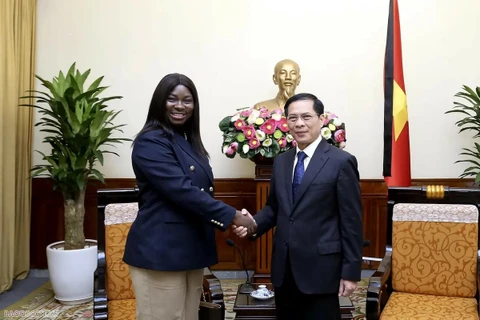
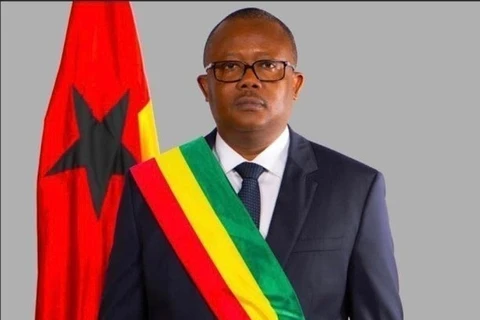
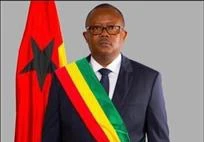
Guinea-Bissau President Umaro Sissoco Embaló’s official visit to Vietnam from September 5-8 holds important significance for both countries, Vietnamese Ambassador to Morocco and Guinea-Bissau Le Kim Quy told the Vietnam News Agency (VNA)'s reporter in Africa.

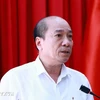
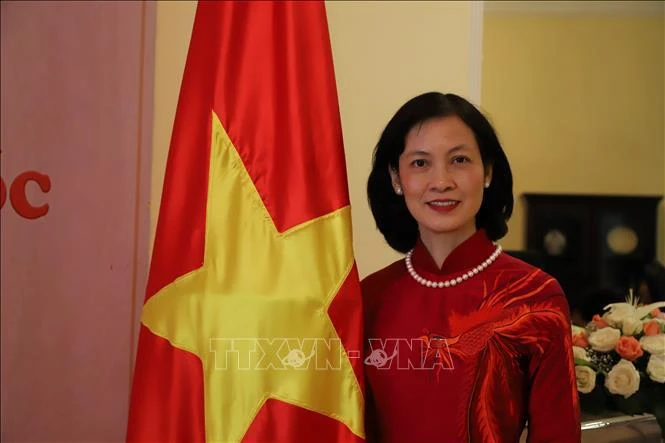
Vietnamese Ambassador to Morocco and Guinea-Bissau Le Kim Quy (Photo: VNA)

Hanoi (VNA) - Guinea-Bissau President Umaro Sissoco Embaló’s official visit to Vietnam from September 5-8 holds important significance for both countries, Vietnamese Ambassador to Morocco and Guinea-Bissau Le Kim Quy told the Vietnam News Agency (VNA)'s reporter in Africa.

Quy said that welcoming the President represents a step in implementing Vietnam’s foreign policy set by the 13th National Party Congress on independence and self-reliance for peace, friendship, cooperation, development, multilateralisation and diversification, and comprehensive and extensive international integration. The visit also contributes to the implementation of the plan on developing relations between Vietnam and Middle East-Africa nations in the 2016-2025 period.

Notably, the trip marks the resumption of high-level delegation exchanges between the two countries after three decades, and it is also the first visit of a head of state since bilateral diplomatic relations were established in 1973, the diplomat said, adding that it will open a new and promising phase in the multifaceted cooperation between Vietnam and Guinea-Bissau, benefiting their people and contributing to peace, stability, cooperation, and development in the regions and the world.

At the regional level, the reception for heads of state of African countries, including Guinea-Bissau, by Party General Secretary and State President To Lam in the first months of his new positions underscores the importance Vietnam attaches to and its close sentiments towards its traditional African friends.

Originating from mutual support during their past struggles for national independence, relations between Vietnam and these African countries have continuously been consolidated and nurtured throughout the period of national construction and development, serving as a model and testament to the strength of South-South cooperation, Quy said.

The ambassador went on to say that Vietnam and Guinea-Bissau officially set up their diplomatic relations on September 30, 1973, just one week after the African nation declared its independence and while Vietnam was in the midst of its struggle for national reunification.

Over the past five decades, the two countries have maintained a strong political relationship, reflected through the exchange of delegations. Guinea-Bissau has actively supported Vietnam at various multilateral forums. In July, Guinea-Bissau was one of the two African countries sending a delegation to pay respects to late Party General Secretary Nguyen Phu Trong.

In the economic sphere, bilateral trade has been steadily increasing, from 56.1 million USD in 2020 to nearly 170 million USD in 2023. Guinea-Bissau is currently one of the top five African suppliers of raw cashew nuts for Vietnam, making the Southeast Asian nation the third largest export market of Guinea-Bissau.

However, cooperation between Vietnam and Guinea-Bissau has not yet matched the needs and potential of both sides.

Therefore, the President’s visit, the first to Vietnam since he assumed his role in February 2020, is not only an opportunity for both sides to review their past achievements, but is also expected to mark a new turning point in their multifaceted cooperation, Quy stressed.

To further boost the bilateral relations, the ambassador proposed the two countries promote all-level delegation exchanges and meetings to enhance mutual understanding and seek cooperation opportunities in the fields that the two nations have strengths.

Both sides should also leverage their roles in supporting each other in enhancing cooperation at the regional level through organisations such as the African Union, the Economic Community of West African States (ECOWAS), and the Association of Southeast Asian Nations (ASEAN).

It is necessary to define priority areas of cooperation that align with each other's needs and strengths, such as trade, agriculture, maritime transport, and infrastructure; and explore and promote cooperation in trilateral or multilateral models.

In terms of trade exchanges, in addition to the key product of cashew nuts, both sides should facilitate market access and diversify other goods such as agricultural products, textiles, and machinery for the agricultural sector.

Quy suggested both sides enhance the legal framework for cooperation by promoting negotiations and signing of important agreements relating to trade, agriculture, investment promotion and protection, and double taxation avoidance.

To support the implementation of these major directions, the two foreign ministries need to continue to actively and effectively play a leading role in supporting relevant ministries, businesses, and local authorities of both sides to advance cooperation efforts, she added./.
VNA

See more

PM Pham Minh Chinh speaks at the reception (Photo: VNA)

Vietnam commits all possible support for semiconductor investors: PM

Vietnam already issued a national semiconductor industry development strategy through 2030 with a vision to 2050, plus a workforce development plan for the semiconductor sector, and a list of 11 strategic technologies and technological products. The country aims to launch its first chip manufacturing facility next year.

At the closing ceremony of the 13th Party Central Committee's 14th plenum (Photo: VNA)

Announcement of 13th Party Central Committee’s 14th plenum

The 13th Central Committee of the Communist Party of Vietnam convened its 14th plenum in Hanoi on November 5-6 to discuss preparations for the 14th National Party Congress, the Party and political system building, personnel work and other important issues

Vietnam advocates sustainable development of its marine economy and aims to maintain the sustainable growth of the fisheries sector with a fleet structure and fishing methods aligned with the aquatic resource exploitation capacity. (Photo: VNA)

Vietnam cracks down on IUU fishing violations with transparency, strict enforcement

As an active, proactive, and responsible member of the international community, Vietnam is always ready to work with regional countries and the international community to strengthen cooperation and share experience in combating illegal fishing, promoting effective and sustainable fisheries management in line with international law.

An overview of the Vietnam–France High-Level Economic Dialogue in Hanoi on November 6 (Photo: VNA)

France remains important partner in Vietnam’s foreign policy: Deputy Minister

At the dialogue, established as a regular intergovernmental mechanism between Vietnam and France, both sides discussed macroeconomic developments in their respective countries and reviewed bilateral cooperation in trade, investment, development aid, and sectoral partnerships in transport, energy, agriculture, environment, finance, and banking.

Muong ethnic women in traditional costumes in Phu Tho province perform at the Khai Ha (going down to the field) Festival. (Photo: VNA)

Phu Tho people determined to work alongside Party to shape nation's future

An official in Phu Tho suggested development directions for the northern midland and mountainous regions be further clarified, including special policies to support sustainable agricultural development, community-based tourism, and livelihood transitions for residents in the vicinity of Hoa Binh Lake and mountainous areas.

Phan Van Mai, Chairman of the NA’s Committee for Economic and Financial Affairs, speaks at the 51st session of the NA Standing Committee on November 5, 2025. (Photo: VNA)

NA Standing Committee’s 51st session spotlights reformed lawmaking approach

After more than a year of implementing the 2024 Land Law and guidance documents, the new policies have yielded initial positive results, helping unlock land resources for socio-economic development. However, as new development requirements are arising in the new period, it is necessary to issue an NA resolution to continue institutionalising the Party's viewpoints and directions while tackling certain challenges.

The Government is working to ensure the highest possible fulfilment of socio-economic development targets for 2025 (Illustrative photo: VNA)

Government defines key tasks to achieve socio-economic targets

Under the resolution, ministers, heads of agencies, and chairpersons of municipal and provincial People’s Committees are requested to uphold accountability, promote solidarity, and focus on effectively implementing resolutions and directions of the Party, National Assembly, Government and the Prime Minister, particularly on priority tasks through the end of 2025.

Kim Yong Nam, former Chairman of the Standing Committee of the Supreme People’s Assembly of the DPRK (Source: Reuters)

Condolences extended to DPRK over former leader's passing

State President Luong Cuong on November 5 sent a message of condolences to General Secretary of the Workers’ Party of Korea and President of the State Affairs of the Democratic People's Republic of Korea (DPRK) Kim Jong Un over the passing of comrade Kim Yong Nam, former Chairman of the Standing Committee of the Supreme People’s Assembly of the DPRK.

Prime Minister Pham Minh Chinh (right) and Permanent Deputy Prime Minister Nguyen Hoa Binh (left) present a decision appointing Nguyen Quoc Doan as Standing Deputy Inspector General of the Government Inspectorate. (Photo: VNA)

PM hands over appointment decision to Standing Deputy Inspector General of Government Inspectorate

The PM noted that in recent years, the Government Inspectorate has achieved significant results, contributing to national development and governance. It has acted as a “shield protecting discipline and the rule of law” and remains a key instrument of the Party and the State in inspection, supervision, and the fight against corruption, wastefulness, and misconduct, thereby reinforcing the integrity of the State apparatus and public trust.

The 14th plenum of the 13th Party Central Committee opens in Hanoi on November 5. (Photo: VNA)

First working day of 13th Party Central Committee’s 14th plenum

The 14th plenum of the 13th Party Central Committee (PCC) elected Tran Sy Thanh, member of the PCC, Deputy Secretary of the Hanoi Party Committee, Chairman of the municipal People's Committee, as Chairman of the 13th PCC’s Inspection Commission, on the first day of working.