Hang Kia-Pa Co – Unique cultural destination in Hoa Binh

Nestled in the Mai Chau district of the northern province of Hoa Binh, Hang Kia and Pa Co are mountainous communes located within the Hang Kia - Pa Co Nature Reserve, have become a unique destination featuring the special culture of Mong ethnic minority community, which makes up more than 90% of the local population.

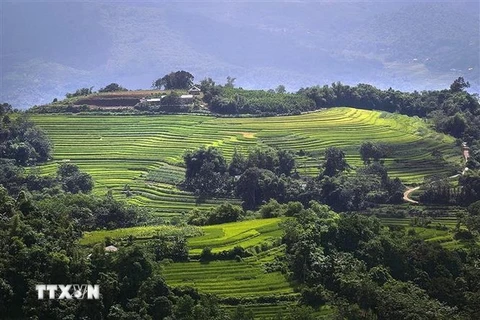
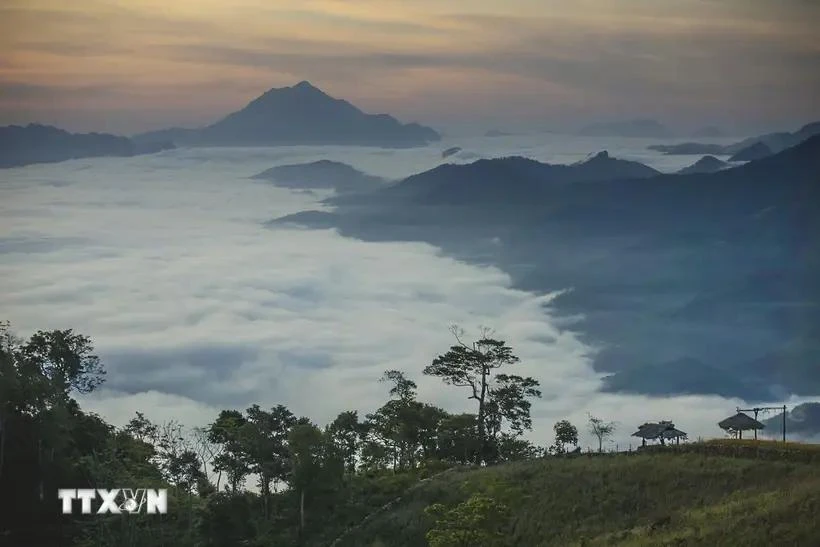
Situated over 1,000 metres above sea level, Hang Kia and Pa Co enjoy a cool, refreshing climate akin to that of Moc Chau in Son La (Photo: VNA)

Hoa Binh (VNA) – Nestled in the Mai Chau district of the northern province of Hoa Binh, Hang Kia and Pa Co are mountainous communes located within the Hang Kia - Pa Co Nature Reserve, have become a unique destination featuring the special culture of Mong ethnic minority community, which makes up more than 90% of the local population.

With its pristine landscapes, majestic mountains, and rich cultural heritage, this region has become a popular destination for both domestic and international visitors. The Mong people here have long been aware of the importance of preserving their unique culture while capitalising on their natural resources, creating a "promised land" that attracts tourists from all over.

A unique, captivating destination

Situated over 1,000 metres above sea level, Hang Kia and Pa Co enjoy a cool, refreshing climate akin to that of Moc Chau in Son La. The region is often shrouded in mist, with a weather pattern that reflects all four seasons within a single day. Mornings are cool like spring, afternoons can be hot like summer, evenings bring a crisp autumn chill, and nights descend with a wintery feel.

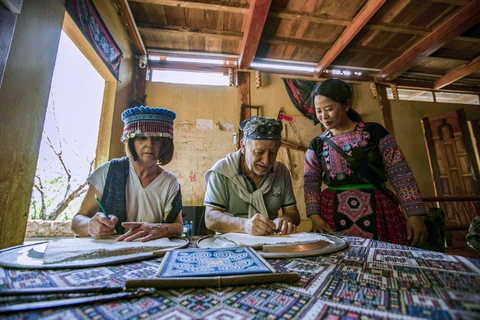
The Mong people in this area are known for their traditional crafts, which include weaving, embroidery, dyeing, bee wax painting, blacksmithing, and making paper from mulberry bark. Their culinary traditions are just as unique, with special dishes such as corn wine, "thang co" (a traditional Mong stew), "cai meo" (a type of local cabbage), chicken and pork from local breeds, sticky rice, and wild bamboo shoots.

In spring, the villages are covered in the pure white blossoms of plum and peach trees, adding delicate pink hues from ancient peach trees. This is also the time for the Mong’s New Year and the Gau Tao festival, the most significant event for the Mong community. The festival is marked by traditional games like crossbow shooting, tug-of-war, and playing the "khen" (a traditional reed instrument), and visitors can see the process of making "banh giay," sticky rice cakes pounded with giant wooden mallets.

The Vice Chairman of the Hang Kia Commune is Vang A Pao, who said that locals in the two regions have maintained their traditional architecture and endeavour to leave nature untouched.

Tourism potential explored

In recent years, the people of Hang Kia and Pa Co have moved away from outdated practices of shifting cultivation and settled into well-established communities. They are dedicated to preserving their natural beauty and traditional culture, while also embracing sustainable tourism. Both communes now host a growing number of homestays, offering local families an opportunity to earn a living while showcasing their rich cultural heritage.

As of now, over ten families in these communes operate homestay businesses, providing employment and steady income for hundreds of locals. The local government has supported the growth of community-based tourism, including cultural exchanges like the Mong night markets, the "cloud hunting" experience in Hang Kia, and stargasing camping trips in the same region.

Vice Chairman of the Hoa Binh People’s Committee Nguyen Van Toan said that the locality has implemented numerous solutions and strategic directions to support the people of Mai Chau District, particularly the residents of Hang Kia and Pa Co, in developing community-based tourism and experiential travel. These efforts aim to create competitive, high-quality tourism products that will help Hoa Binh attract more investors and become a prominent "hotspot" on the Vietnamese tourism map, said the official./.

VNA

See more

The installation of AI-powered camera systems on city streets are expected to enhance public awareness and compliance with traffic regulations. (Photo: VNA)

Ho Chi Minh City detects over 84,500 traffic violations through camera system

The Traffic Police Division (PC08) under the Ho Chi Minh City Department of Public Security, the unit currently manages and operates nearly 2,000 traffic surveillance cameras installed along key streets and major routes, including National Highway 1, which runs through Ho Chi Minh City from the border with Dong Nai province to the area adjacent to Tay Ninh province.

Students offer incense in memory of the 504 innocent civilians killed in the Son My Massacre 58 years ago. (Photo: VNA)

Quang Ngai marks 58th anniversary of Son My massacre

Today, the site where the massacre occurred has been preserved as a national historical relic, keeping evidence of the war crime. It has also become a destination of particular interest for both domestic and international visitors travelling to Quang Ngai.

A voter under treatment at the Ho Chi Minh City Hospital of Dermato-Venereology drops her ballot into a mobile ballot box on March 15. (Photo: VNA)

Vietnamese in Laos value role of NA, all-level People’s Councils

Nguyen Thi Thu Huyen, Chief of the Office of the Vietnamese People Association in Vientiane, expressed her hope that deputies in the new tenure will continue to enhance their sense of responsibility, maintain close contact with voters and contribute to policymaking for fast and sustainable national development.

Poor patients under treatment at the Ninh Thuan General Hospital receive meals from the "Hieu va Thuong" charity kitchen. (Photo: VNA)

Charity kitchen lends a hand to feed needy patients

For nearly two decades, the charity kitchen “Hieu va Thuong” (Understanding and Compassion) at the Ninh Thuan General Hospital, Khanh Hoa province, has kept its fires burning daily, providing free meals for poor patients and their relatives.

A working delegation from the Fire Prevention, Fighting and Rescue Police Department under the Ministry of Public Security pays a visit to Bratislava from March 9–12. (Photo: VNA)

Vietnam, Slovakia boost cooperation in firefighting and rescue

During the visit, the delegation led by Deputy Director of the department Colonel Hoang Ngoc Huynh worked with several Slovak institutions, including the command of the Fire and Rescue Force in Bratislava, an automobile installation and repair centre under the Ministry of Interior of Slovakia, and the Lest military training centre.

A transport infrastructure project in Ho Chi Minh City (Photo: VNA)

Ho Chi Minh City steps up actions to unlock private sector growth

Ho Chi Minh City’s authorities and businesses operating in the southern metropolis have stepped up strategic orientations and concrete action programmes to translate Resolution No.68-NQ-TW of the Politburo into practice and create conditions for the private sector to make breakthroughs and become a key growth driver.

Swiss Ambassador to Vietnam Thomas Gass (Photo: VNA)

Swiss ambassador hails Vietnam's 2026 election as milestone

The March 15 election is expected to be an important milestone for Vietnam. It is not only a constitutional exercise but also a means of ensuring that policies adopted at both national and local levels are enforced with a strong focus on citizens’ interests, said Swiss Ambassador to Vietnam Thomas Gass.

President of the Vietnamese Association in Mexico Nguyen Huu Dong (Photo: VNA)

Mexico-based scholar unveils ideas to optimise Vietnamese NA’s efficiency

Talking with Vietnam News Agency correspondents in Mexico City, Dong pointed to important strides in the NA’s outgoing tenure, including improvements to the institutional framework, operating methods and stronger oversight of major national issues. In his view, the NA has increasingly asserted its role as the highest representative body of the people and a central pillar in the process of building a socialist rule-of-law state.