Hanoi acts to protect “green belt”

Hanoi is home to nearly 27,100ha of forest and forestry land, including 18,577ha under forest, which is considered a "green belt" protecting the local ecological environment.

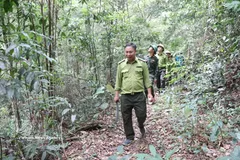
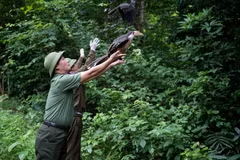
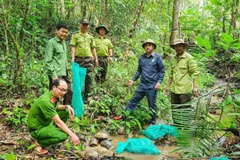
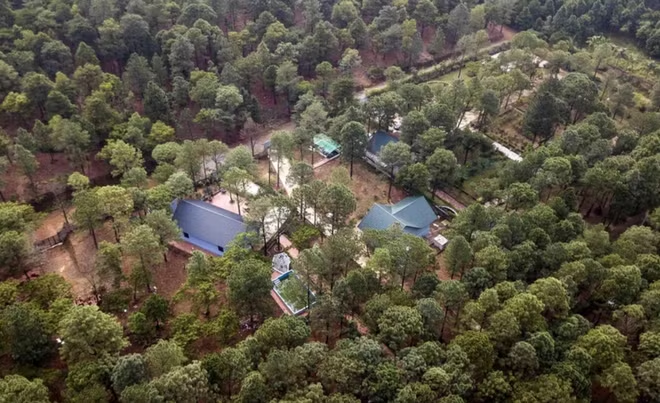
Hanoi’s forest coverage has reached 5.59%, mainly in Ba Vi, Soc Son, My Duc, Chuong My, Quoc Oai and Thach That districts and Son Tay town. (Photo: VNA)

Hanoi (VNA) – Hanoi is home to nearly 27,100ha of forest and forestry land, including 18,577ha under forest, which is considered a "green belt" protecting the local ecological environment.

The city’s forest coverage has reached 5.59%, mainly in Ba Vi, Soc Son, My Duc, Chuong My, Quoc Oai and Thach That districts and Son Tay town. Meanwhile, Hanoi still has 8,555 ha of forestry land that hasn't become forest.

In recent years, Hanoi has issued many guidance documents, assigned tasks to departments, agencies and the localities home to forest, and carried out many programmes and plans on forest care, protection and development to conserve biodiversity and expand forest coverage. As a result, relevant parties' sense of responsibility towards this work has been improved.

However, the local forest and forestry land area is now at serious risk of shrinking. The fact is blamed on an overlap between zoning plans on forest land, residential land and land of other purposes.

It is noteworthy that some localities are planning to propose municipal authorities remove overlapped areas from forest planning. If the proposal is approved, Hanoi's forest area will decrease sharply.

Therefore, protecting the existing forest area, the “green belt” of the capital, is an urgent task of each citizen and authorities at all levels.

Forest protection and development were also touched upon at a discussion about the draft revised Capital Law during the 15th National Assembly’s 7th session. Legislators suggested that Hanoi should focus on preserving and further developing the forest land area, and consider forest coverage expansion as a vital issue.
congvienyenso.jpeg
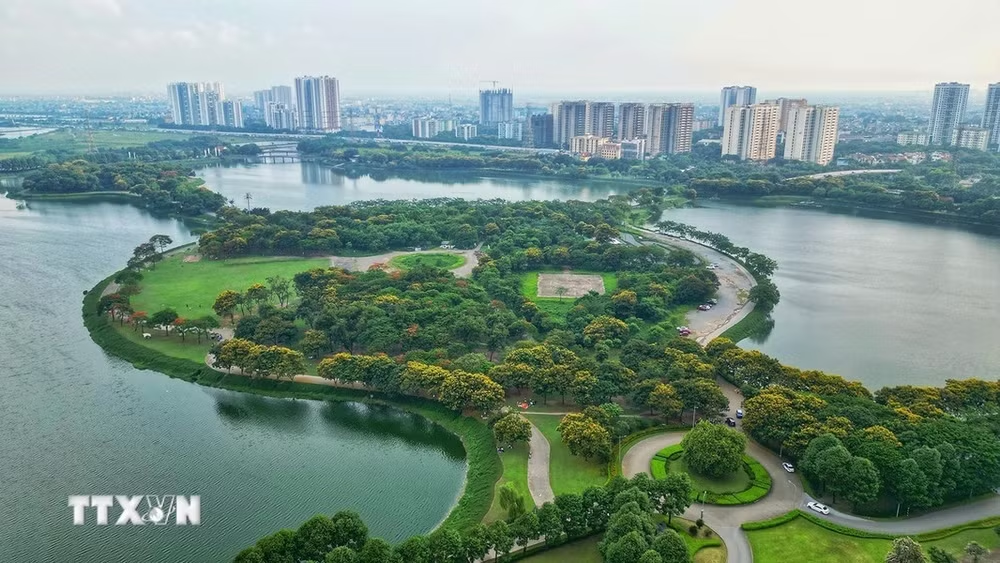
Covering 323ha, Yen So Park is favourite camping site for many families and young people in Hanoi (Photo: VNA)

Another proposed solution is to minimise the projects seeking land-use purpose conversion. It is also considered consistent with the city’s forestry development strategy for the 2022-2025 period and beyond, which targets the forest coverage rate kept stable at 5.67 - 6.2% by 2025.

To this end, it is necessary for agencies and localities to speed up reviewing the current status of forests and forestry land to serve as a basis for the city to adjust the planning of three types of forest, namely special-use, protection and production forest, and conduct forest boundary demarcation. Localities should properly manage and protect natural forests, gradually recover and improve the quality of existing forests, and strengthen forest owners' management capacity. Land allocation should be linked to forest allocation while cadres who lend a hand to violators be strictly dealt with.

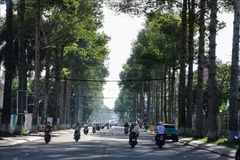
Under the 2024 socio-economic scheme issued by the municipal People’s Committee, Hanoi also plans to grow 200,000 - 250,000 trees along urban roads this year to help raise the tree coverage to 8-10 sq.m per person by 2025. There are about 1.8 million trees in local urban areas at present.

Regarding gardens and parks, the city has completed the renovation process of five gardens: Truc Bach in Ba Dinh district, Hoang Van Thu in Hoang Mai district, Dien Hong in Hoan Kiem district, Ngoc Lam in Long Bien district, and Le Truc in Ba Dinh district. Five new parks in the districts of Cau Giay, Ha Dong, Long Bien, and Nam Tu Liem have also been built while renovation plans for three major parks - Thong Nhat, Thu Le, and Bach Thao - have been approved./.

VNA

See more

Representatives of the People’s Committee of Ninh Bình province present the decision to establish the Kim Bang Delacour's Langur Species and Habitat Conservation Area. (Photo: VNA)

Ninh Binh establishes world's largest Delacour's langur sanctuary

The establishment of the Kim Bang Delacour's Langur Species and Habitat Conservation Area in Ninh Binh province provides a solid legal and scientific foundation for completing the dossier to seek UNESCO recognition of the Van Long–Kim Bang–Tam Chuc Cultural and Ecological Landscape Complex as a World Heritage Site.

Trees planted along Vo Truong Toan street in Cao Lanh ward, Dong Thap province. Urban tree species capable of reducing fine particulate matter will be planted to reduce air pollution. (Photo: VNA)

Urban trees capable of reducing fine dust to be planted

The Forestry and Forest Protection Department (FFPD) will lead the component on identifying crop and planting structures that help reduce air pollution, while also participating in the design of urban public-space landscapes.

Professor Yucheng Lin, an Assistant Professor at City University of Hong Kong (CityUHK). (Photo: VNA)

Hong Kong expert offers solutions to help Vietnam tackle sea-level rise

In an interview with the Vietnam News Agency’s correspondents in Hong Kong (China), Lin, an expert specialising in sea-level change and climate risk assessment, said Vietnam shared global drivers of sea-level rise with China’s coastal regions, but local conditions could lead to significant differences in the overall risks.

Typhoon Yagi caused severe losses in many provinces in Vietnam in 2024. (Photo: VNA)

Vietnam could face super typhoon like Yagi every seven years

If global average temperatures rise by two degrees Celsius, Vietnam could experience such a super typhoon once every 13 years on average. The frequency would increase to once every nine years under the three-degree warming scenario and once every seven years if temperatures rise by four degrees.

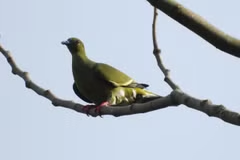
Six of the newly recorded species are of conservation significance, representing four orders and five families. (Photo published by VNA)

Dakrong Nature Reserve records 35 new bird species

Dakrong Nature Reserve in the central province of Quang Tri has recorded 35 bird species not previously documented, including several endangered and rare species listed on the International Union for Conservation of Nature (IUCN) Red List.

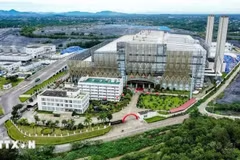
An overview of Soc Son waste-to-energy plant in the Nam Son Waste Treatment Complex, in Hanoi (Photo: VNA)

Hanoi targets collection and treatment of all industrial solid waste

Hanoi aims to ensure that all industrial solid waste from its hi-tech parks, industrial parks and industrial clusters is collected and treated in line with regulations under a new plan to strengthen waste management and tighten control on scrap collection, storage and recycling facilities across the capital.

UNICEF Representative in Vietnam Silvia Danailov (first, right) honours first winners of the teaching materials competition. (Photo: VNA)

Deputy minister urges early action on disaster risks

Rapidly shifting climate conditions and increasingly overlapping hazards mean disaster risk reduction can no longer stand alone; it must sit at the heart of sustainable development, tightly integrated with climate response, water security, social welfare and economic growth.

General Secretary of the Communist Party of Vietnam Central Committee and President To Lam speaks at the groundbreaking ceremony for a project to upgrade the Bac Hung Hai irrigation system. (Photo: VNA)

Hung Yen: Project to modernise Bac Hung Hai irrigation system launched

General Secretary of the Communist Party of Vietnam Central Committee and President To Lam stressed that the development of Bac Hung Hai must be integrated into broader efforts to ensure water security, protect the environment and promote sustainable development in the Red River Delta.

Illustrative image (Source: VNA)

Northern region to experience cold spell

The cold air is forecast to reach northeastern Vietnam from the evening and night of October 4 before spreading to other parts of the north and the area from Thanh Hoa to Hue. Winds will shift to the northeast at levels 2-3 inland and levels 3-4 along coastal areas.