Tourism effectiveness should be measured not only by visitor numbers and revenue, but also by spending, length of stay, repeat visits, job quality, visitor satisfaction and environmental carrying capacity, said experts.
The National Statistics Office under the Ministry of Finance reported that Vietnam welcomed nearly 2 million international visitors in August, up 19.7% from July and 18.4% year-on-year. The figure represented 63.6% of the tourism sector’s full-year target of 25 million arrivals.
Russian arrivals to Vietnam surpassed 1 million in the first eight months of 2026, representing a remarkable 165.7% increase year-on-year. This was the highest growth rate among Vietnam’s major international tourist markets.
China is currently Vietnam’s largest source market for international tourists. In the first seven months of 2026, approximately 3.08 million Chinese visitors travelled to Vietnam. Hanoi welcomed about 461,400 Chinese visitors staying overnight, making China one of the capital city’s key source markets.
Resolution No. 26-NQ/TW, issued on August 22, sets out a new vision, with a focus on fundamentally renewing the mindset, methods and approaches to tourism development and governance, shifting from quantity to quality and increasing the sector’s contribution to the national economy.
Vietnam's tourism industry served an estimated 6.5 million tourists during the five-day National Day holiday from August 29 to September 2, up 18.1% year-on-year.
The Ho Chi Minh City Department of Tourism said on late September 2 that the southern metropolis welcomed an estimated 1.65 million domestic visitors and 62,000 foreign tourists over the break.
Seasonality has long been a challenge for Vietnam’s tourism industry. In many localities, tourism peaks in summer but visitor numbers fall during the rainy months. Destinations are now seeking to restructure their tourism ecosystems and develop products that can operate year-round.
Running through October, it features a wide range of distinctive experiential activities, including a Mong flute performance contest, ethnic costume displays, a competition to create traditional patterns using beeswax, banh day (glutinous rice cake) pounding and lively street parades.
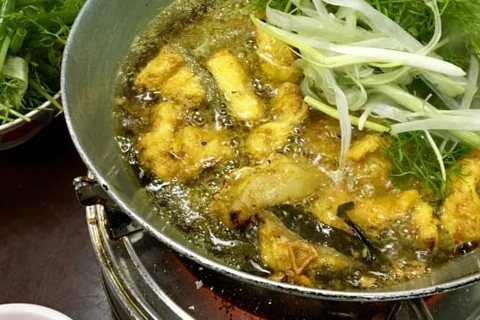
As travellers increasingly seek authentic local experiences, the central coastal city of Da Nang is stepping up efforts to integrate cuisine into tourism itineraries, linking culinary promotion with destination branding and cultural preservation.
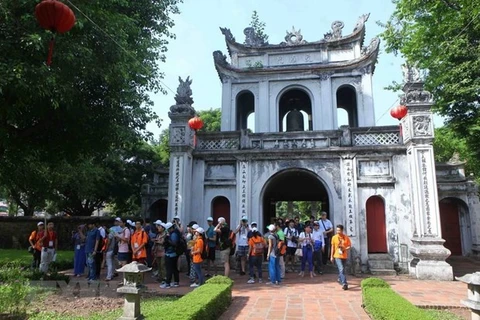
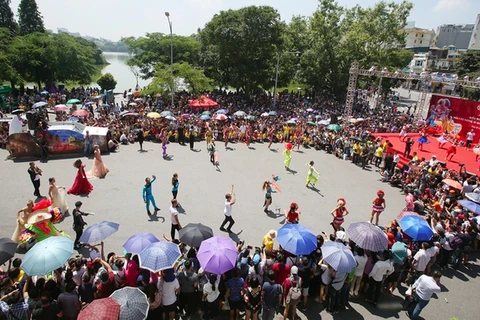
Hanoi’s tourism events are increasingly designed to inspire exploration beyond individual festivals. At the Hanoi Tourism Gift Festival, for instance, visitors can make handicrafts with artisans, explore destinations through virtual reality and discover new tours and tourism stimulus programmes.
The tourism market is shifting from sightseeing towards living and connecting with destinations. Visitors increasingly seek authentic and locally rooted experiences, interaction with local people, culture and nature, as well as small-group and personalised trips with limited environmental impact and clear benefits for communities.
Thanks to its unique ecological value, U Minh Ha is a priority wetland for conservation in the Mekong Delta. It is also a prime spot for research, environmental education and ecotourism.
The upgraded Lien Khuong Airport is also a major advantage for the local renowned destination of Da Lat in tapping promising international markets, including the Republic of Korea (RoK), Malaysia, India, Taiwan (China), Singapore and Russia.
Resolution 26-NQ/TW is seen as an important milestone, opening up new orientations and development opportunities for Vietnam’s tourism sector.
The 190-km route runs between Hue, Dong Ha, My Trach, Dong Hoi and Tho Loc stations, giving travellers access to destinations including the Complex of Hue Monuments, Quang Tri Ancient Citadel, Vinh Moc Tunnels, Hien Luong–Ben Hai historical site and Phong Nha-Ke Bang National Park.
Reports estimate that around 300,000 international visitors use medical services in Vietnam annually, generating 1-2 billion USD in spending on treatment, accommodation, transport and food.
A range of cultural and artistic activities will be held during the holiday. In Da Nang, the “Hoi An Memories” show will present its “Flag Hat” version from August 26 to September 2. Phu Quoc will host the “The Memory of Flowers” exhibition, while Thanh Hoa will organise the Sam Son Kite Festival 2026 from August 30 to September 1.
By linking tourism development with environmental protection and the preservation of traditional culture, Ta Van, following administrative restructuring, is emerging as a destination rich in cultural identity and natural resources.
Vietnam has consistently identified tourism as a spearhead economic sector, Deputy PM Pham Thi Thanh Tra stressed, adding that in the new development era, with the need for rapid and sustainable growth and a stronger national position, MICE should be positioned as a strategic tourism product, targeting high-quality visitors while generating additional momentum for trade and investment and enhancing national competitiveness.