Hanoi police seize biggest bear bile haul

Hanoi Police netted the largest haul of illegal bear bile in the country, according to a press release from the NGO Education for Nature Vietnam (ENV) on June 3.
Hanoi police seize biggest bear bile haul ảnh 1The bear bile bottles seized in the case in Hanoi on May 27, 2022. (Photo courtesy of ENV)
Hanoi(VNS/VNA) - Hanoi Police netted the largest haul of illegal bear bile in the country,according to a press release from the NGO Education for Nature Vietnam (ENV) onJune 3.

On May 27, 2022, the Unit No.2 of the Hanoi police department for environmentalcrimes in coordination with Dan Phuong district caught red-handed Nguyen VanThao trying to illegally transport 350 bottles of bear bile to thecustomers.

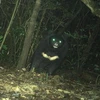
Thao, from Phung Thuong commune, Phuc Tho district, Hanoi confessed thatthe bear bile was all extracted from the seven Asian black bears (Ursusthibetanus), an endangered and protected species in Vietnam, that were beingkept in captivity in his own properties.

Hanoi continues to be the largest concentration of bears in captivity in Vietnamwith 149 bears being kept in private facilities, accounting for more than halfof the number of bears in captivity in the country.

It is estimated that 93 percent of bears in captivity in Hanoi are in PhucTho district.

Although the extraction and trading of bile bear are not very publiclyconducted, the situation remains in the district and has been reported by manydomestic and foreign news agencies for a long time.

The exceptionally large amount of bear bile seized in this case also confirmsthe complex and large-scale nature of the extraction and trading of bear bileat a number of bear breeding facilities in the city.

ENV called for harsh penalties against those involved in these illegalactivities as a deterrent, as well as step-up supervision and monitoring ofbear facilities, a complete ban on breeding activities in privately-runfacilities, and further awareness-raising efforts for the public on the use ofalternative substances for medicinal purposes in place of bear bile, whichtraditionally has been used for various ailments without clear science-backedeffectiveness.

Private bear keepers are also urged to hand over the bears to the Stateauthorities for care strictly without reimbursement./.
VNA
See more

The clouded monitor (Varanus nebulosus) weighs approximately two kilograms and measures around 70 centimetres in length. (Photo: VNA)

Quang Tri hands over rare clouded monitor to rescue centre

The animal was identified as a clouded monitor (Varanus nebulosus), weighing approximately two kilograms and measuring around 70 centimetres in length. The species belongs to Group IB — a category of endangered and rare forest wildlife species given the highest level of protection in Vietnam, with all forms of commercial exploitation and use strictly prohibited.

The female stump-tailed macaque undergoes a health check by authorities before being released back into the wild. (Photo published VNA)

Rare stump-tailed macaque released into the wild

The stump-tailed macaque, scientifically known as Macaca arctoides, is classified as a rare and endangered species under Group IIB in Vietnam’s regulations on endangered wildlife management.

A graphic image of the Nui Thoong high-tech waste treatment and waste-to-energy plant project. (Photo: hanoimoi.vn)

Hanoi breaks ground on 200-million-USD waste-to-energy plant

Designed to process 2,000 tonnes of waste per day and generate 45MW of electricity for the national grid, the project is the first high-tech waste-to-energy plant in southwestern Hanoi, where large-scale solid waste treatment facilities have long been lacking.

After undergoing health checks, all three sea turtles are released back into their natural habitat in the presence of authorities, local residents and tourists. (Photo: VNA)

Quang Tri authorities release three endangered sea turtles back to the wild

The three turtles, each weighing around 1.5 kilogrammes with shells measuring about 25 centimetres long and 20 centimetres wide, are green sea turtles. They were accidentally caught in fishing nets and found drifting at sea near Con Co waters on May 16 by fisherman Bui Dinh Thuy in Cua Viet commune during a fishing trip.

A rare turtle is transported to Cuc Phuong National Park for care and rehabilitation ahead of its eventual release back into the wild. (Photo published by VNA)

Rare turtles returned to Vietnam under CITES

The shipment includes several endangered Vietnamese species such as the Indochinese box turtle (Cuora galbinifrons), Bourret’s box turtle (Cuora bourreti), keeled box turtle (Cuora mouhotii), and black-breasted leaf turtle (Geoemyda spengleri), all considered highly endangered and increasingly threatened in the wild by habitat destruction, poaching, and illegal trade.

Representatives of the Ngoc Lam Border Guard Station under the Nghe An Border Guard Command and Son Lam commune's police hand over a pangolin voluntarily surrendered by a local resident to the wildlife conservation centre at Pu Mat National Park. (Photo: VNA)

Nghe An residents voluntarily hand over rare pangolins for conservation

On May 11, the Quy Chau Forest Protection Department, along with local police and authorities, took in a critically endangered pangolin, handed over by a resident. The animal was discovered a day earlier by Thai Doan Tuan, from Viet Huong village in Quy Chau commune, after it wandered into his garden. Recognising it as a protected Sunda pangolin, he contacted authorities for assistance.

A 2kg pangolin is released back into the wild at the Pu Huong Nature Reserve on May 6, 2026. (Photo published by VNA)

Nghe An releases rare pangolin back to the wild

Pangolins, scaly mammals capable of curling into a ball for self-defence, are classified as critically endangered and are strictly protected under both Vietnamese and international law.

At the working session (Photo: Vietnam Meteorological and Hydrological Administration)

Vietnam, Sri Lanka share experience in hydrometeorology

Both sides expressed confidence that continued dialogue and knowledge-sharing will deepen cooperation in hydrometeorology, helping enhance disaster response capacity and climate change adaptation in the years ahead.