Secretary of the Ho Chi Minh City Party Committee Nguyen Thien Nhan (centre) speaks at the meeting on February 3 (Photo: VNA)
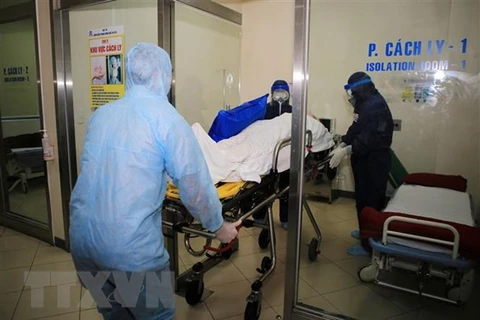
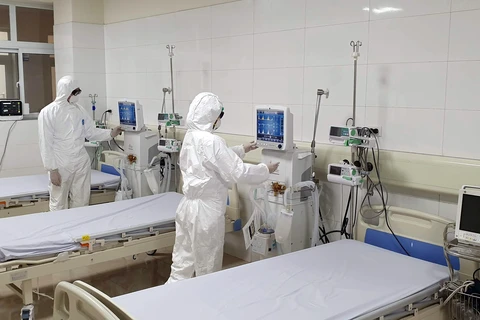
 HCM City (VNA) – Secretary of the Ho Chi Minh City Party Committee Nguyen Thien Nhan has underlined the need to build acute respiratory disease hospitals in response to the disease caused by the 2019 novel coronavirus (nCoV).
At a meeting on the nCoV prevention and control on February 3, he asked relevant sides to consider the locations and sizes of such hospitals to match the disease situation and ensure their efficient operation.
He suggested that at first, an acute respiratory disease hospital with about 200 – 250 beds should be built in the next two weeks, and another set up if risks escalate.
According to the draft plan of the municipal People’s Committee, acute respiratory disease hospitals will be put into use if there are more than 500 nCoV cases in the city at the same time, which might be beyond the capacity of isolation wards of local hospitals.
In case the number of infected cases surpasses acute respiratory disease hospitals’ capacity, the Pham Ngoc Thach Hospital should be transformed into the one specialising in receiving nCoV patients.
The municipal Department of Health said by the end of February 2, the city had recorded three nCoV cases, 12 tested negative for the virus, and 15 put under health quarantine as they had had close contact with the infected people.
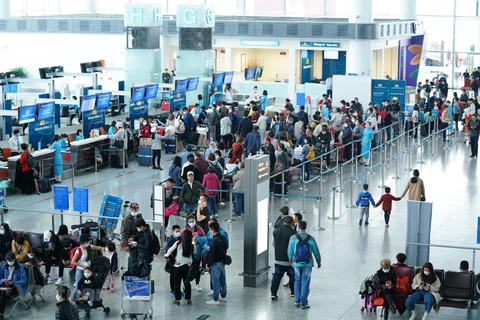
Department Director Nguyen Tan Binh said with a high population density and great frequency of trading and travelling activities with Vietnamese localities and countries around the world, HCM City faces high risks of nCoV infection and spreading.
Meanwhile, as the disease has a long incubation period and the time needed to travel from nCoV-hit areas to the city is very short (only several hours), the possibility of detecting infected cases at points of entry is limited, he noted.
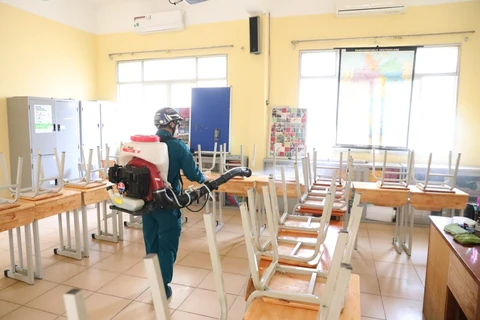
At the meeting, Nhan asked authorities to promptly carry out solutions to contain the virus spread, including temporarily isolating people from nCoV-affected areas and increasing communications to raise public awareness of disease prevention./.
VNA