HCM City seeks to solve shortage of medical staff

Public hospitals in Ho Chi Minh City will be allowed to employ doctors and other health staff members without the city’s household registration book starting in November.
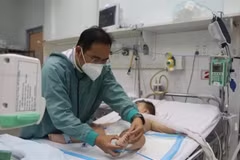
HCM City seeks to solve shortage of medical staff ảnh 1Doctors of Trung Vuong Hospital in HCM City’s District 10 perform an endovascular intervention on a patient​ (Source: VNA)

HCM City (VNA) - Public hospitals in Ho Chi Minh City willbe allowed to employ doctors and other health staff members without the city’shousehold registration book starting in November, helping them solve a shortageof medical staff, according to the city Department of Health.

The current regulation whichallows state offices, departments and public establishments including hospitalsto employ only staff with an HCM City’s household registration book, had causeddifficulties for them in hiring.

The Department of Healthsaid that public hospitals, such as Pham Ngoc Thanh Hospital, Hospital forTropical Diseases, Cu Chi and Can Gio district hospitals, have not been able tohire doctors and other medical staff due to this regulation in spite that theywere in a severe shortage of the staff.

Dr Huynh Van Luyen, head ofthe Can Gio District Hospital, told Sai Gon Giai Phong (LiberatedSai Gon) newspaper that the Department of Health had sent doctors of cityhospitals to work turn-by-turn at the hospital to help ensure enough doctors toserve local demand for health examination and treatment.

The hospital also hassigned short-term contracts with retired doctors, Luyen said.

Nha Be District Hospitalhas not employed enough doctors to meet demand, Dr Nguyen Huu Tho, thehospital’s head, said, adding that it needs to hire 10 additional doctors eachyear, but only two or three doctors have been employed.

Moreover, representativesof public hospitals said that many qualified medical graduates who come fromother provinces and want to work at public hospitals in the city are notallowed to.

On August 24, the cityPeople’s Committee issued the decision on abolishing the regulation.

According to Luyen, the newdecision will help his hospital hire enough qualified doctors.

However, managers of publichospitals in provinces are worried because they will face a shortage ofqualified doctors.

They are worried aboutwhether qualified doctors, who are working at their hospitals, will quit jobsand go to work at public hospitals in the city.

Nguyen Thanh Tung, head ofHau Giang province’s Department of Health, said that most medical studentswanted to stay in the city to work after graduating because of higher incomeand better incentives as well as chances for accessing advanced medicaltechniques to improve their skills.

"Only a few of them goback to their native province to work," Tung said.

Dr Nhan To Tai, head of theDistrict 12 Hospital, said that if hospitals in provinces failed to have enoughdoctors, local residents would continue going straight to health facilities inHCM City for health examination and treatment, leading to more overcrowding ofpatients, which the city has tried to solve many times.

According to Nguyen Thi HuynhMai, chief of the city’s Department of Health’s Secretariat, public hospitalsshould develop good working environments and provide better incentives to helpdoctors have chances to improve their skills in order to avoid the doctorsquitting.-VNA
VNA

See more

Male plastic surgery: Why masculine aesthetics require a different approach

Male plastic surgery: Why masculine aesthetics require a different approach

Plastic surgery has long been associated with procedures for women, but men also seek treatment for abdominal fat, enlarged breasts and age-related changes around the eyes and face. The American Society of Plastic Surgeons (ASPS) includes liposuction, gynecomastia surgery and eyelid surgery among procedures performed on male patients.

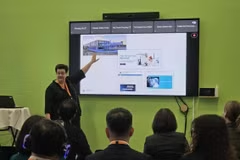
A speaker delivers presentations at the conference (Photo published by VNA)

Vietnam, Denmark expand cooperation in high-tech healthcare

Ambassador Nguyen Le Thanh called on Vietnamese and Danish partners to identify priority areas and promote research and training programmes, knowledge transfer and technology application in line with Politburo's Resolution No. 57-NQ/TW on breakthroughs in science – technology development, innovation and national digital transformation.

Ho Chi Minh City has favourable conditions for developing the ecosystem, including a large population, diverse healthcare needs and an extensive public and private medical network. (Illustrative photo: VNA)

Ho Chi Minh City develops multi-tier elderly care network amid population ageing

Dr. Huynh Minh Chin, Deputy Director of the department, said rising elderly care needs are putting pressure on traditional family-based care, as older people increasingly face multiple chronic illnesses, mobility problems, malnutrition, dementia and depression, requiring continuous support and closer coordination among hospitals, grassroots healthcare facilities, families and social support institutions.

Local residents in Mondulkiri province, Cambodia, receive free medical check-ups and health consultation. (Photo: VNA)

Free medical examinations provided to remote communities in Cambodia

Vietnamese Ambassador Nguyen Minh Vu said the programme has been jointly organised by the embassy and the hospital annually in various Cambodian localities to provide healthcare support to disadvantaged households and contribute to the Cambodian Government’s efforts to improve public health. The initiative also reflects close cooperation in healthcare and the strong bonds between the people of Vietnam and Cambodia.

With the assistance of robotic-assisted laparoscopic surgery, doctors successfully perform a complex operation (Photo: VNA)

Vietnam advances towards high-quality, specialised healthcare

Recent developments in Hanoi and other localities highlight efforts to develop specialised treatment, standardise professional practices and apply artificial intelligence (AI) and advanced medical techniques, towards a more modern healthcare system.

Collecting a sample from a pediatric patient for influenza testing (Photo: VNA)

Ho Chi Minh City acute respiratory infections surge over 64%

According to the Ho Chi Minh City Centre for Disease Control (HCDC), influenza viruses are are among the fastest-rising pathogens, with 151 positive samples in a single week. Influenza A is the dominant strain, with A/H1N1pdm09 in 116 samples, or nearly 77%.