HCM City struggles to set up clinics for HIV patients

To ensure delivery of HIV treatment services, the health sector in Ho Chi Minh City is accelerating coverage of health insurance for HIV patients as donor funding for antiretroviral (ARV) drugs and treatment will end in a few years now that Vietnam Nam has reached lower middle-income status as classified by the World Bank.
HCM City struggles to set up clinics for HIV patients ảnh 1An HIV patient receives free antiretroviral (ARV) drugs at District 11’s Medical Centre in HCM City. Photo: VNA)

HCM City (VNA) - Toensure delivery of HIV treatment services, the health sector in Ho Chi MinhCity is accelerating coverage of health insurance for HIV patients asdonor funding for antiretroviral (ARV) drugs and treatment will end in a fewyears now that Vietnam has reached lower middle-income status as classifiedby the World Bank.

The supply of ARV drugs funded by internationaldonors is expected to be used up by the end of next year, said Nguyen Huu Hung,deputy director of the city’s Department of Health.

Health insurance will have to cover the cost ofARV drugs starting in early 2019, Hung said at a conference held on October 18in HCM City.

The city’s Department of Health has told medicalcentres in all districts to establish general clinics to provide health examinationsand treatment for insured HIV patients.

However, medical centres in several districtsare ineligible to establish general clinics because of a lack of specialiseddoctors and medical equipment.

Pham Thi Kim Hoa, director of Can Gio district’sMedical Centre, said that its public health consulting and support departmenthad long been responsible for providing free health check-ups and treatment forHIV patients.

The public health consulting and supportdepartment, however, is not eligible to sign contracts with social insuranceagencies to provide health check-ups and treatment for insured HIV patients.

Therefore, the centre has to set up a generalclinic which has legal rights to sign contracts with social insurance agencies,according to Hoa.

The centre said it had sought approval forsetting up a general clinic, but it was refused because of it lackedspecialised doctors, she said.

It plans to transfer treatment of 112 patientsto Can Gio Hospital by the second quarter of next year.

District 1’s Medical Centre is in the samesituation as it is struggling to set up a general clinic to provide health careservices for HIV patients with insurance cards, said Nguyen Van The, directorof the centre.

Lack of medical equipment and doctors, amongother reasons, have made it impossible for the centre to establish a generalclinic, according to The.

Around 1,200 HIV patients are being treated atDistrict 1’s Medical Centre, he said.

Tieu Thi Thu Van, director of the HCM CityHIV/AIDS Prevention Centre, has proposed setting up HIV-treatment clinics atdistrict-level hospitals instead of general clinics at medical centres.

Under the proposal, district hospitals wouldsign contracts with social insurance agencies to provide health care servicesfor HIV patients with health insurance cards.

More than 31,000 HIVpatients in HCM City receive regular examinations and treatment at medicalcentres. -VNA

See more

A speaker delivers presentations at the conference (Photo published by VNA)

Vietnam, Denmark expand cooperation in high-tech healthcare

Ambassador Nguyen Le Thanh called on Vietnamese and Danish partners to identify priority areas and promote research and training programmes, knowledge transfer and technology application in line with Politburo's Resolution No. 57-NQ/TW on breakthroughs in science – technology development, innovation and national digital transformation.

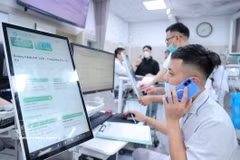
Ho Chi Minh City has favourable conditions for developing the ecosystem, including a large population, diverse healthcare needs and an extensive public and private medical network. (Illustrative photo: VNA)

Ho Chi Minh City develops multi-tier elderly care network amid population ageing

Dr. Huynh Minh Chin, Deputy Director of the department, said rising elderly care needs are putting pressure on traditional family-based care, as older people increasingly face multiple chronic illnesses, mobility problems, malnutrition, dementia and depression, requiring continuous support and closer coordination among hospitals, grassroots healthcare facilities, families and social support institutions.

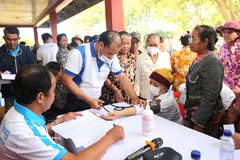
Local residents in Mondulkiri province, Cambodia, receive free medical check-ups and health consultation. (Photo: VNA)

Free medical examinations provided to remote communities in Cambodia

Vietnamese Ambassador Nguyen Minh Vu said the programme has been jointly organised by the embassy and the hospital annually in various Cambodian localities to provide healthcare support to disadvantaged households and contribute to the Cambodian Government’s efforts to improve public health. The initiative also reflects close cooperation in healthcare and the strong bonds between the people of Vietnam and Cambodia.

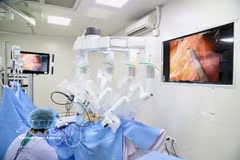
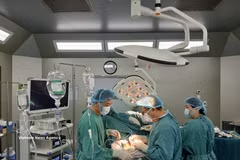
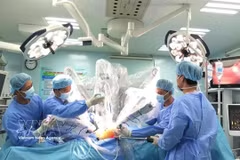
With the assistance of robotic-assisted laparoscopic surgery, doctors successfully perform a complex operation (Photo: VNA)

Vietnam advances towards high-quality, specialised healthcare

Recent developments in Hanoi and other localities highlight efforts to develop specialised treatment, standardise professional practices and apply artificial intelligence (AI) and advanced medical techniques, towards a more modern healthcare system.

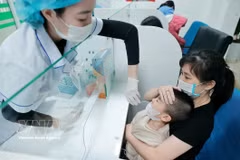
Collecting a sample from a pediatric patient for influenza testing (Photo: VNA)

Ho Chi Minh City acute respiratory infections surge over 64%

According to the Ho Chi Minh City Centre for Disease Control (HCDC), influenza viruses are are among the fastest-rising pathogens, with 151 positive samples in a single week. Influenza A is the dominant strain, with A/H1N1pdm09 in 116 samples, or nearly 77%.

A doctor at Trung Nguyen Medical Station in Te Lo commune, Phu Tho province, examines a child patient. (Photo: VNA)

Phu Tho builds hospital culture to improve patient satisfaction

In recent years, alongside efforts to improve the quality of medical examinations and treatment, Phu Tho province’s health sector has focused on creating civilised, friendly hospital environments and strengthening healthcare workers’ sense of responsibility and service-oriented attitudes, with the aim of earning patients’ trust and satisfaction.

An overview of the meeting between Deputy Prime Minister Pham Thi Thanh Tra and César Louis-Philip Marseille, Managing Director of VAMED Engineering GmbH of Austria and member of the Board of Directors of VAMED+WWH Group of Germany,in Hanoi on October 7. (Photo: VNA)

Deputy PM suggests studying long-term development of hospital ship model

Vietnam is one of VAMED’s important partners in Southeast Asia. The group plans to invest 1.2 billion EUR in Vietnam over the next five years, creating jobs for thousands of workers and promoting knowledge and technology transfer. It also wishes to expand cooperation through preferential credit projects, public-private partnerships (PPPs) and partnerships with private enterprises; and supply medical products from Austria and Germany for Vietnamese partners.