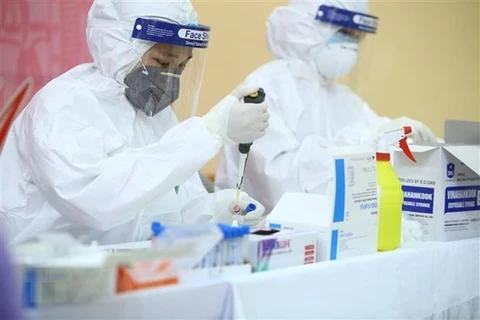
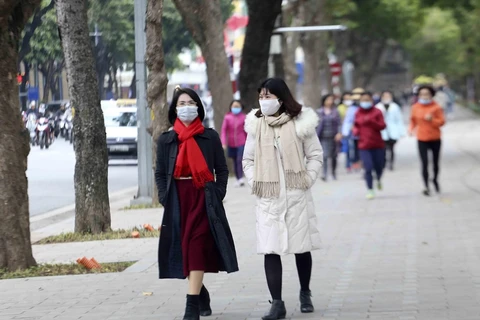
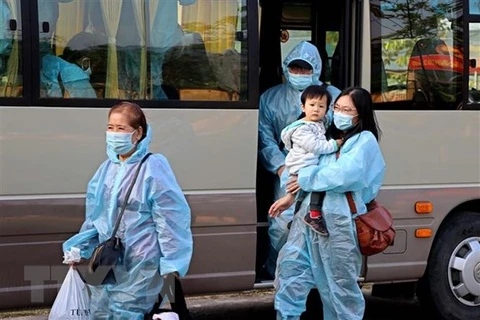
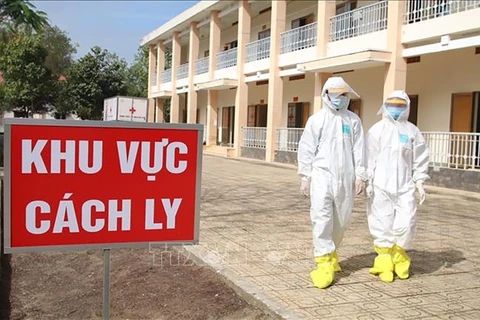
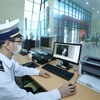
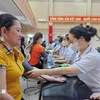
An inspection team for pandemic prevention at the Cat Lai Port in HCM City. (Photo: sggp.org.vn)
 HCM City (VNS/VNA) – Ho Chi Minh City’s Department of Health has ordered stricter implementation of anti-pandemic measures at ports.
It has called on the International Medical Quarantine Centre, HCM City Maritime Port Administration and HCM City Border Guard Command to step up monitoring and inspection at ports in the city.
They have been asked to regularly report on the results of anti-pandemic measures and advise the department on allowing sailors to come ashore after a sufficient period of isolation on their ships.
The department instructed the HCM City Centre for Disease Control to provide training in pandemic prevention to officers working at ports and disseminate information related to pandemic prevention to all port employees.
It said captains and sailors of foreign ships should be clearly informed about Vietnamese regulations on pandemic prevention, and the former must be held responsible if any of their crew is found violating them.
Violations must be properly handled, it said.
Supervision of people entering and leaving ports must be enhanced to ensure compliance with pandemic prevention regulations, it said.
Prime Minister Nguyen Xuan Phuc recently ordered the tightening of borders to prevent illegal entry by people.
He also instructed the Ministry of National Defence and its health, public security and foreign affairs counterparts to ensure everyone entering Vietnam is quarantined.
He earlier called on all citizens to report illegal entrants and stay vigilant against them since they could pose a risk of COVID infection.
People entering the country illegally must be suitably penalised, he added./.
It has called on the International Medical Quarantine Centre, HCM City Maritime Port Administration and HCM City Border Guard Command to step up monitoring and inspection at ports in the city.
They have been asked to regularly report on the results of anti-pandemic measures and advise the department on allowing sailors to come ashore after a sufficient period of isolation on their ships.
The department instructed the HCM City Centre for Disease Control to provide training in pandemic prevention to officers working at ports and disseminate information related to pandemic prevention to all port employees.
It said captains and sailors of foreign ships should be clearly informed about Vietnamese regulations on pandemic prevention, and the former must be held responsible if any of their crew is found violating them.
Violations must be properly handled, it said.
Supervision of people entering and leaving ports must be enhanced to ensure compliance with pandemic prevention regulations, it said.
Prime Minister Nguyen Xuan Phuc recently ordered the tightening of borders to prevent illegal entry by people.
He also instructed the Ministry of National Defence and its health, public security and foreign affairs counterparts to ensure everyone entering Vietnam is quarantined.
He earlier called on all citizens to report illegal entrants and stay vigilant against them since they could pose a risk of COVID infection.
People entering the country illegally must be suitably penalised, he added./.
VNA