Health insurance barriers for HIV patients discussed

Health experts discussed ways to tackle barriers and find solutions to provide social health insurance (SHI) to people living with HIV (PLHIV) at a workshop on Aug 30 in HCM City.
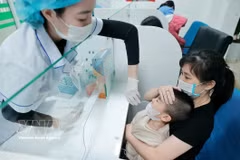
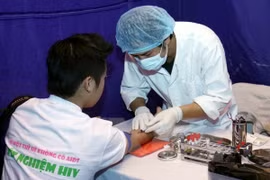
Health insurance barriers for HIV patients discussed ảnh 1People living with HIV/AIDS arrive at healthcare centre for ARV treatment and consultation (Source: VNA)

HCM City (VNA) - Health experts discussed ways to tackle barriers and find solutions to provide social health insurance (SHI) to people living with HIV (PLHIV) at a workshop on August 30 in HCM City.

The event was jointly organised by the Vietnam Network of People Living with HIV/AIDS with support from the HCM City Provincial AIDS Centre (HCMC PAC) and the US Agency for International Development through its Sustainable Management of the HIV/AIDS Response and Transition to Technical Assistance project implemented by FHI 360.

The workshop opened with testimonials from PLHIV, who revealed the challenges they faced with respect to enrolment in SHI to obtain coverage for HIV treatment.

At the event, participants debated ways to overcome the challenges and to mobilise PLHIV to enroll in social health insurance. The workshop kicked off a series of events that focused on SHI access and utilisation among PLHIV that will culminate in a “Red Ribbon” event at the end of the year.

Representatives of the PLHIV community identified the cost of enrolling their families in social health insurance, the lack of a registered permanent residence and identity cards and the fear of disclosure of their HIV status as key barriers to SHI enrollment.

“The HCMC PAC will put all its effort to sustain 30,000 HIV patients currently undergoing HIV antiretroviral (ARV) treatment. We will work closely with the Vietnam Social Security to mobilize resources and overcome the barriers to enrollment,” said Doctor Van Hung, head of Treatment Management Department, HCM PAC.

“The lessons learned from HCMC can be shared with other provinces encountering similar situations,” Hung added.

According to HCMC PAC statistics, as of June 2016, only 10,544 PLHIV, or 36 per cent of all ARV patients, in HCMC have health insurance cards. Moreover, just over a third of those PLHIV who have health insurance cards have used them to obtain HIV services. One out of every three Vietnamese HIV patients lives in HCM City.

ARV drugs are an effective solution to safeguard the health of people living with HIV and to protect communities from the spread of the epidemic, as ARV treatment can reduce viral loads to negligible levels. According to the Vietnam Administration of HIV/AIDS Control’s statistics, up till the end of June, there were over 110,000 patients being treated with ARV drugs nationwide.

Until now, ARV treatment has been made available free of charge due to international donor support. However, with Vietnam emerging as a “middle income developing country,” donors have begun phasing out assistance, mandating SHI to cover and sustain the delivery of HIV treatment services. The Government of Vietnam aims to enroll at least 80 per cent of all people in social health insurance by 2020.-VNA
VNA

See more

Male plastic surgery: Why masculine aesthetics require a different approach

Male plastic surgery: Why masculine aesthetics require a different approach

Plastic surgery has long been associated with procedures for women, but men also seek treatment for abdominal fat, enlarged breasts and age-related changes around the eyes and face. The American Society of Plastic Surgeons (ASPS) includes liposuction, gynecomastia surgery and eyelid surgery among procedures performed on male patients.

A speaker delivers presentations at the conference (Photo published by VNA)

Vietnam, Denmark expand cooperation in high-tech healthcare

Ambassador Nguyen Le Thanh called on Vietnamese and Danish partners to identify priority areas and promote research and training programmes, knowledge transfer and technology application in line with Politburo's Resolution No. 57-NQ/TW on breakthroughs in science – technology development, innovation and national digital transformation.

Ho Chi Minh City has favourable conditions for developing the ecosystem, including a large population, diverse healthcare needs and an extensive public and private medical network. (Illustrative photo: VNA)

Ho Chi Minh City develops multi-tier elderly care network amid population ageing

Dr. Huynh Minh Chin, Deputy Director of the department, said rising elderly care needs are putting pressure on traditional family-based care, as older people increasingly face multiple chronic illnesses, mobility problems, malnutrition, dementia and depression, requiring continuous support and closer coordination among hospitals, grassroots healthcare facilities, families and social support institutions.

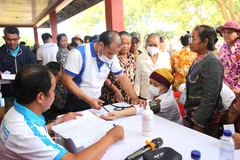
Local residents in Mondulkiri province, Cambodia, receive free medical check-ups and health consultation. (Photo: VNA)

Free medical examinations provided to remote communities in Cambodia

Vietnamese Ambassador Nguyen Minh Vu said the programme has been jointly organised by the embassy and the hospital annually in various Cambodian localities to provide healthcare support to disadvantaged households and contribute to the Cambodian Government’s efforts to improve public health. The initiative also reflects close cooperation in healthcare and the strong bonds between the people of Vietnam and Cambodia.

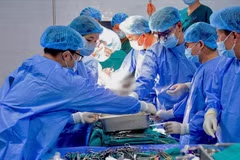
With the assistance of robotic-assisted laparoscopic surgery, doctors successfully perform a complex operation (Photo: VNA)

Vietnam advances towards high-quality, specialised healthcare

Recent developments in Hanoi and other localities highlight efforts to develop specialised treatment, standardise professional practices and apply artificial intelligence (AI) and advanced medical techniques, towards a more modern healthcare system.

Collecting a sample from a pediatric patient for influenza testing (Photo: VNA)

Ho Chi Minh City acute respiratory infections surge over 64%

According to the Ho Chi Minh City Centre for Disease Control (HCDC), influenza viruses are are among the fastest-rising pathogens, with 151 positive samples in a single week. Influenza A is the dominant strain, with A/H1N1pdm09 in 116 samples, or nearly 77%.

A doctor at Trung Nguyen Medical Station in Te Lo commune, Phu Tho province, examines a child patient. (Photo: VNA)

Phu Tho builds hospital culture to improve patient satisfaction

In recent years, alongside efforts to improve the quality of medical examinations and treatment, Phu Tho province’s health sector has focused on creating civilised, friendly hospital environments and strengthening healthcare workers’ sense of responsibility and service-oriented attitudes, with the aim of earning patients’ trust and satisfaction.