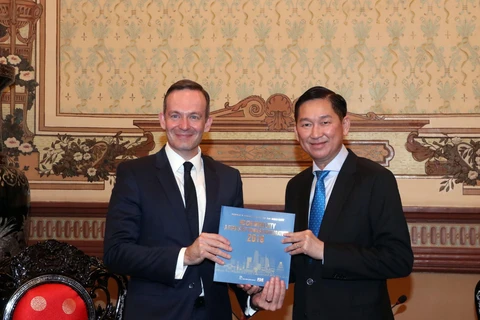
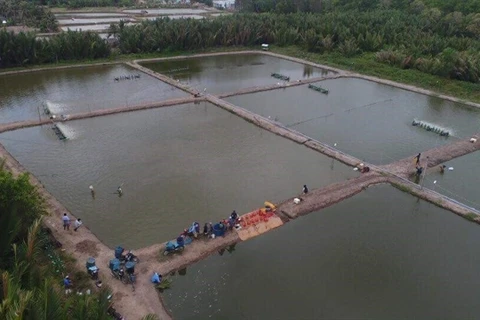
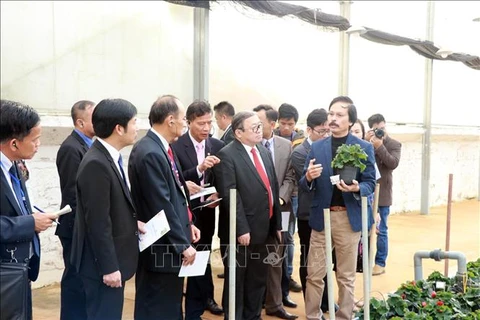
At the event (Photo: VNA)
 HCM City (VNA) – New technologies are key to advancing the agriculture sector since they can boost the value of products to make them more competitive on the global market, experts said.
Speaking at a conference on the use of high technology in the agricultural supply chain in Ho Chi Minh City on December 17, they said advanced technologies like blockchain could help companies, organisations and households in the agricultural sector raise productivity, save costs and create higher-quality products.
Dao Ha Trung, Chairman of the HCM City High Technology Association, said many of Vietnam’s famous agricultural products such as potatoes, carrots, persimmons, strawberries, onions and other vegetables were affected by poor-quality fakes from foreign countries.
Blockchain technology helps make product origins transparent and facilitates protection of the domestic market by enabling the public to identify genuine Vietnamese products, Trung said.
So the city is fostering blockchain technologies in agriculture to connect Vietnamese products with the world market.
Since e-commerce is developing rapidly and new trading platforms are used across the world, agricultural outputs must meet customers’ needs and ensure the quality of the whole production chain, he said.
The Vietnamese agricultural sector was trying to integrate into the world market, but had faced challenges related to product quality, supply chains and transparency, he said.
Development of high-tech agriculture was the right policy and should be done soon, and this dovetailed with current global trends and would also help Vietnam’s agriculture sector resolve its problems like lack of value-added products for export, low global competitiveness and inconsistency in quality, he added.
By using blockchain technology, firms could cut back on the cost of product origin management to near zero, Vu Truong Ca, chairman of agricultural supply chain company Lina Network, said.
But the Vietnamese agricultural sector had yet to understand the importance of a well-functioning value chain or the advantage of using such a modern technology, he said.
He said investment in the agricultural field was limited because of the high risks due to Vietnam’s climate change threat and under-developed infrastructure in remote and rural areas.
In order for farmers to sustainably develop agricultural value chains, he advised strengthening linkages between rural agricultural co-operatives and distributors and creating public-private partnerships to develop infrastructure.
The Government should offer businesses incentives such as low-interest loans and subsidies while zoning large-scale agricultural production areas in a concentrated and modern manner, he added./.
Speaking at a conference on the use of high technology in the agricultural supply chain in Ho Chi Minh City on December 17, they said advanced technologies like blockchain could help companies, organisations and households in the agricultural sector raise productivity, save costs and create higher-quality products.
Dao Ha Trung, Chairman of the HCM City High Technology Association, said many of Vietnam’s famous agricultural products such as potatoes, carrots, persimmons, strawberries, onions and other vegetables were affected by poor-quality fakes from foreign countries.
Blockchain technology helps make product origins transparent and facilitates protection of the domestic market by enabling the public to identify genuine Vietnamese products, Trung said.
So the city is fostering blockchain technologies in agriculture to connect Vietnamese products with the world market.
Since e-commerce is developing rapidly and new trading platforms are used across the world, agricultural outputs must meet customers’ needs and ensure the quality of the whole production chain, he said.
The Vietnamese agricultural sector was trying to integrate into the world market, but had faced challenges related to product quality, supply chains and transparency, he said.
Development of high-tech agriculture was the right policy and should be done soon, and this dovetailed with current global trends and would also help Vietnam’s agriculture sector resolve its problems like lack of value-added products for export, low global competitiveness and inconsistency in quality, he added.
By using blockchain technology, firms could cut back on the cost of product origin management to near zero, Vu Truong Ca, chairman of agricultural supply chain company Lina Network, said.
But the Vietnamese agricultural sector had yet to understand the importance of a well-functioning value chain or the advantage of using such a modern technology, he said.
He said investment in the agricultural field was limited because of the high risks due to Vietnam’s climate change threat and under-developed infrastructure in remote and rural areas.
In order for farmers to sustainably develop agricultural value chains, he advised strengthening linkages between rural agricultural co-operatives and distributors and creating public-private partnerships to develop infrastructure.
The Government should offer businesses incentives such as low-interest loans and subsidies while zoning large-scale agricultural production areas in a concentrated and modern manner, he added./.
VNA