Hospital successfully performs double forearm transplant

The Hanoi-based Military Central Hospital 108 has become the first medical facility in Vietnam and Southeast Asia to successfully perform a double forearm transplant.
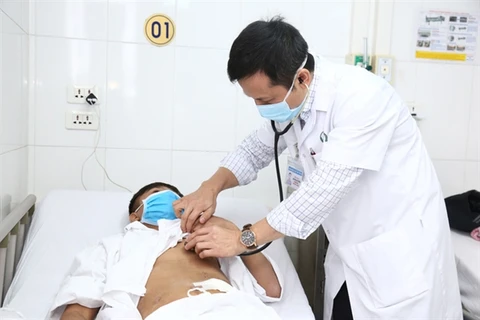
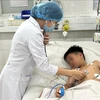
Hospital successfully performs double forearm transplant ảnh 1The patient can move and hold things after the forearms are successfully transplanted (Photo courtesy of the Military Central Hospital 108)

Hanoi (VNS/VNA) -
The Hanoi-based Military Central Hospital 108 hasbecome the first medical facility in Vietnam and Southeast Asia to successfullyperform a double forearmtransplant.

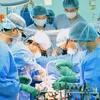
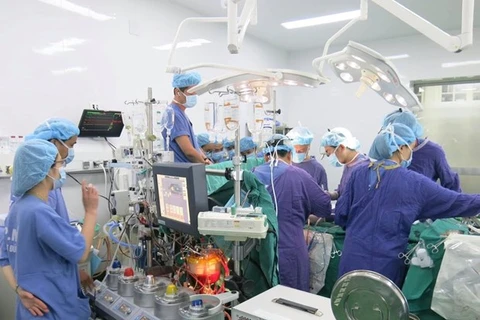
Thesurgery was part of multiple organ transplants the hospital conducted onSeptember 16. 

Thisis the fourth time the hospital has implemented organ procurement andtransplant at the same time. The organs, which were taken from a brain-deaddonor, were transplanted to six patients.

Thepatient who received the forearm transplant is an 18-year-old man who lost hisforearms three years ago due to injuries he sustained in an accidentalexplosion. 

Sincethen, he has faced difficulties in his daily life and been unable topursue his educational dreams.

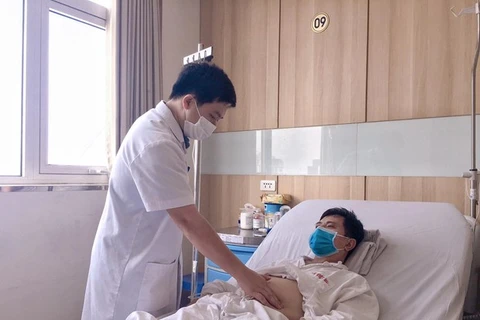
Now,nearly two months after the surgery, the patient’s wounds have healed andthe limbs are adapting well. The patient is able to hold things and use amobile phone. He still needs to undergo more physical therapy to improve hisrange of movement.

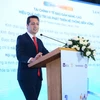
DrMai Hong Bang, Director of the Military Central Hospital 108, said the surgerywas an outstanding success in the field of limb transplantation in Vietnamafter the success of the first limb transplant from a live donor this January.

Thehospital successfully performed five other transplants on the same day. 

Alung transplant was carried out on a 54-year-old male patient diagnosed withprimary pulmonary fibrosis, a liver transplant was carried out for apatient with acute liver failure against a background of cirrhosis due to ahepatitis B virus infection and two kidney transplants were done fortwo separate patients with end-stage chronic renal failure.

Thehospital, in coordination with the National Coordinating Centre for Human OrganTransplantation, also carried out a heart transplant for a patient withend-stage dilated myocarditis at the Hanoi-based Vietnam-GermanyFriendship Hospital.

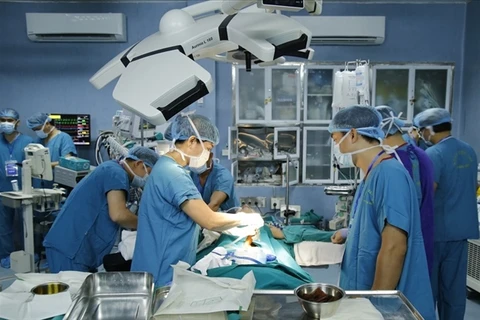
Bangsaid the 10-hour long surgery to transplant organs for the six patientsrequired very close co-ordination and implementation among specialists in thehospital.

“Twelveoperating tables were operating simultaneously with the participation of morethan 150 doctors, nurses, pharmacists and technicians. In particular,the lung transplant case was coordinated by a team of experts from the CentralLung Hospital,” he said. 

Afterthe transplants, all the patients are in stable health condition. The liver andkidney transplant patients were discharged three weeks after surgery, and thelung transplant patients were discharged four weeks after the procedure./.
VNA
See more

The DAV asks pharmacy producers and distributors to increase medicine supply capacity during Tet to meet increasing demand (Photo: VNA)

Measures rolled out to ensure adequate medicine supply during Tet

Accordingly, provincial and municipal health departments are required to direct hospitals, centres for disease control and health care facilities to urgently develop plans and carry out medicine procurement to ensure sufficient supply, absolutely avoiding shortages. Medicines must meet quality standards and be sold at reasonable prices, with no sudden price increases allowed.

Military doctors conduct ultrasound examinations for residents in Dong Dang town, Cao Loc district, Lang Son province. (Photo: VNA)

Resolution 72 opens path to a modern, sustainable healthcare system

To build a resilient healthcare system capable of meeting the challenges of ageing, emerging diseases and rising expectations for quality care, Vietnam must continue to strengthen primary and preventive care, invest in human resources, accelerate digitalisation and big data development, and refine healthcare financing mechanisms.

Vietnam steps up Nipah virus prevention at border gates (Photo: suckhoedoisong.vn)

Vietnam tightens Nipah virus prevention at border gates

Local authorities have been instructed to strengthen disease prevention and control measures at border gates, medical facilities and in the community, stay updated with global disease information, and closely monitor inbound travellers.

Nipah virus infection is designated a Group A infectious disease, with reported fatality rates of between 40 and 75%. (Photo: moh.gov.vn)

Health sector steps up preparedness against Nipah virus disease

Nipah virus infection is designated a Group A infectious disease, with reported fatality rates of between 40 and 75%. At present, no vaccine or specific antiviral treatment is available. The virus is mainly transmitted from animals to humans or through contact with contaminated food and objects, and can also spread between people via direct contact with bodily fluids and secretions of infected patients.

Member of the Party Central Committee and Minister of Health Dao Hong Lan (Photo: VNA)

Health minister highlights comprehensive, people-centred healthcare orientation

Member of the Party Central Committee and Minister of Health Dao Hong Lan said the Politburo's Resolution No. 72 provides a breakthrough orientation for the protection, care and improvement of the people’s health. It places the people’s health at the centre of all healthcare policies and services, while aiming to address long-standing bottlenecks in the health sector that have yet to be fundamentally resolved.

Elderly people do morning exercises in the Hoan Kiem Lake area in Hanoi. (Photo: VNA)

Strategic roadmap for healthier future

As Vietnam’s population ages rapidly, Dr Angela Pratt, WHO Representative in Vietnam, identified two strategic priorities: strengthening primary healthcare and developing a formal long-term care system. These measures are essential not only for healthy ageing, but also as long-term investments with wide-ranging socio-economic returns.

Professor Dr Tran Van Thuan, Deputy Minister of Health. (File photo: VNA)

More than 300 medical staff assigned to serve 14th National Party Congress

Deputy Minister of Health Tran Van Thuan called on experts and healthcare workers to uphold a strong sense of responsibility, professionalism and expertise to ensure that medical services for the 14th National Party Congress are delivered safely, effectively and with the highest level of care.

Health check-up offered to citizens in Gia Lai province. (Photo: VNA)

Health ministry maps out three phases for hospital fee exemption

Health insurance participants from near-poor households and those aged 75 and above who are receiving social pension allowances will be entitled to 100% coverage of medical examination and treatment costs within the scope of health insurance benefits.

A patient pays hospital fees using cashless transactions (Photo: qdnd.vn)

Hanoi aims for modern healthcare system

Hanoi's health sector will continue to expand the comprehensive use of digital technology in professional practices to improve management efficiency and service quality, aiming to develop a modern, transparent, and people-centred healthcare system.