Hanoi (VNA) - The Hong Kong-Shanghai Banking Corporation (HSBC) has raised its 2024 GDP growth forecast for Vietnam to 7% from 6.5% on stronger-than-expected growth in Q3 despite the devastation left by Super Typhoon Yagi.
A spectacular comeback
From a challenging 2023 and Q1, Vietnam is clearly back as ASEAN’s growth star, the bank said in its update “Vietnam at a glance: In its own league” released on October 11.
Q3 growth came in at 7.4% year-on-year, beating HSBC and consensus expectations of 6.2% and 6.1%, respectively, it said.
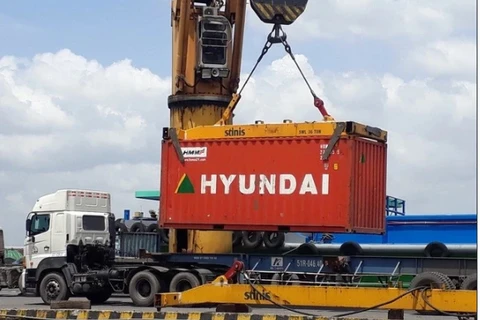
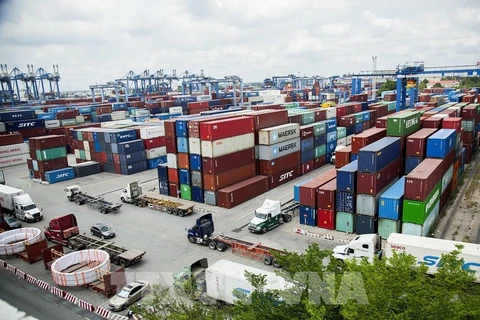
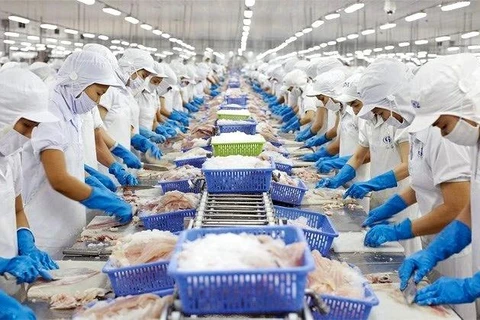
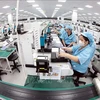
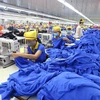
The outperformance continued to be led by manufacturing, which grew 11.4% year-on-year, according to HSBC. This was corroborated by healthy trade data, with exports rising 15.3% year-on-year in Q3.
The bank noted that trade recovery centred around electronics is showing signs of broadening, with textiles and footwear exports rising 16.7% year-on-year.
HSBC experts held that while Typhoon Yagi likely played a role in weighing on export growth in September, the impact is expected to be short-lived.
Manufacturing PMI fell sharply in September, indicating a deterioration from the previous month as businesses assessed damage to production.
Although there have been some hurdles in global trade, leading indicators such as manufacturing industrial production and imports continued to post double-digit year-on-year growth, supporting the view that the manufacturing sector will remain firm.
In contrast, growth in the agro-forestry-fisheries sector moderated as a reflection of Typhoon Yagi’s larger impact. The recovery in domestic-oriented services continued to remain relatively muted, with the spillover from a rebounding external sector not being as pronounced. Retail sales growth showed little sign of accelerating, while monthly international tourist arrivals have stalled amidst rising regional competition to draw travellers.

However, financial services and real estate accelerated in Q3. The revised Land Law, effective in August, will buttress improving sentiment seen in the real estate sector, while ongoing government measures such as tax cuts should also support the domestic retail sector in time, said the bank.
Reducing inflation, promoting growth
Regarding FDI, HSBC said Vietnam continued to attract foreign inflows as fundamental prospects remain positive. Although growth in newly registered FDI moderated in Q3/24, sectors beyond manufacturing such as real estate and energy saw increases in investment. According to the bank, capital flows into manufacturing are likely to remain resilient in the future, as Party General Secretary and State President To Lam's visit to the US has attracted interest from various companies such as Meta.
It went on to say that continued efforts to deepen ties with international partners will also act as a tailwind for further investment inflows, with Vietnam recently upgrading relations with France to a Comprehensive strategic partnership.
Inflation has shown a notable decline in recent months, thanks to the stability of commodity prices and exchange rates. Given falling global energy prices and a reversal in the global monetary policy cycle, inflation is expected to remain below the State Bank of Vietnam’s target ceiling of 4.5%.
HSBC kept its 2025 GDP growth forecast unchanged at 6.5%. With the recovery still uneven, experts from the bank expect the State Bank of Vietnam to maintain its accommodative stance and the policy interest rate at 4.5% until the end of 2025./.