Indonesia urges APEC to reduce tariff for “development goods”

Of the 21 economies of the Asia Pacific Economic Cooperation Forum (APEC), Vietnam, Indonesia, Peru and Papua New Guinea have pioneered the concept on “development goods”,
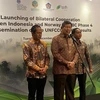
Indonesia urges APEC to reduce tariff for “development goods” ảnh 1At a meeting in Manila on November 16 (Source: VNA)

Jakarta (VNA) - Of the 21 economies of the Asia Pacific Economic Cooperation Forum (APEC), Vietnam, Indonesia, Peru and Papua New Guinea have pioneered the concept on “development goods”, according to Indonesia’s Antara news agency on November 17.

Indonesia will call for the introduction of a policy for reduced tariff on products that contribute to rural development, which are classified as "development goods", at the APEC Economic Leaders Week (AELW).

Indonesian Trade Minister Thomas Lembong said if the concept is approved by the APEC economies, a number of commodities categorised as “development goods” would attract lower tariff. He added that the plan was put forth before all APEC members but negotiations did not always run smoothly.

According to the Indonesian Trade Ministry, no less than 157 products could be categorised as “development goods”. Among these, Indonesia would fight for certain goods, including palm oil, rubber, aquaculture and forestry products. These products involve farmers and also small businesses and are related to poverty alleviation.

A tariff of an average 13.5 percent is still being imposed on the products under the “development goods” category while an average tariff of around 5.8 percent is imposed on the APEC economies.

Various issues are being discussed at the APEC 2015 meetings, including multilateral trade system, service trade, small and medium businesses, health, energy resilience and anti-corruption.

On the agenda are also the realisation of Free Trade Area of the Asia-Pacific (FTAAP), the implementation of the agreement to reduce tariffs on environmental goods or the APEC Environmental Goods List (EGs List).-VNA

VNA

See more

Indonesia to halt diesel imports from July

Indonesia to halt diesel imports from July

The move is part of the Indonesian Government’s efforts to strengthen national energy independence by utilising palm oil as an alternative fuel, said Agriculture Minister Andi Amran Sulaiman.

Malaysia’s growing microplastics crisis is largely self-inflicted, driven by domestic waste, weak recycling practices and everyday plastic use, said experts. (Photo: New Straits Times)

Malaysia seeks solutions to microplastic crisis

Microplastics originating from domestic waste and wastewater are increasingly entering the food chain, posing serious threats to seafood safety and the livelihoods of coastal communities.

The new mass emergency alert system SG Alert, which will be used during emergencies such as major fires, chemical or terror incidents, seen on an Apple and Android device on Apr 17, 2026. (Photo: CNA)

Singapore launches new national emergency alert system

SG Alert in Singapore uses cell broadcast technology, enabling alerts to be delivered within seconds without requiring mobile data or collecting personal information. Unlike conventional SMS, which may be delayed during network congestion or depend on internet connectivity, the system ensures fast and reliable message delivery. Alerts can be sent islandwide or targeted to specific affected areas.

Malaysia establishes ‘war room’ to ensure water security

Malaysia establishes ‘war room’ to ensure water security

The establishment of the war room reflects the Malaysian government’s commitment to shift from a reactive approach to a more proactive, data-driven one in managing national water challenges, particularly amid increasingly unpredictable weather conditions caused by global climate change

Indonesia diversifies supply sources to ensure energy security

Indonesia diversifies supply sources to ensure energy security

Indonesia is facing significant supply pressure as crude oil consumption reaches approximately 1.6 million barrels per day, much lower than the domestic production at only around 600,000 barrels per day, forcing the country to rely heavily on imports.

Indonesian-branded cosmetic and personal care products are available at supermarkets and shopping malls (Photo: VNA)

Indonesia aims to master cosmetics industry value chain

Key drivers include its large population, expanding middle class, and rapidly rising demand for beauty products, especially among young consumers. The market has reached billions of US dollars and is projected to maintain strong growth in the medium term.

The Anthropic logo is seen in this illustration taken on Mar 1, 2026. (File photo: Reuters)

Singapore warns of cyber risks from Frontier AI models

According to CSA, advanced AI models – among the most cutting-edge systems today – can significantly shorten the time needed to identify system vulnerabilities and develop exploitation tools, reducing the process from months to just hours.