VNA

Vietnam wishes to strengthen cooperation with leading partners such as Nokia in technology research and transfer, human resource training, and the development of advanced telecommunications solutions.

Vietnam’s national brand value reached 462.28 billion USD in 2026, up 45.14% from 2020 and ranking 32nd among 193 countries, according to Brand Finance. The challenge, however, goes beyond climbing the rankings or scaling up. It is turning those gains into lasting competitiveness and getting Vietnamese firms deeper into global value chains.

Vietnam has 947 social housing projects in the pipeline, totalling 910,933 units and an estimated 841.338 trillion VND (32.35 billion USD) in investment, according to the Ministry of Construction.

With the current trading band of +/- 5%, the ceiling rate applicable for commercial banks during the day is 26,919 VND/USD, and the floor rate 24,355 VND/USD.

Alongside a stronger legal framework, adequate liquidity, effective distribution channels and improved investor knowledge are essential to ensuring that new products attract participants and operate efficiently.
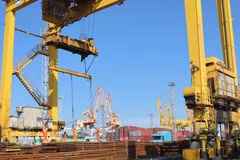
According to the Hai Phong Maritime Administration, inland waterways carry coal, agricultural products, ores, stone, cement and other bulk cargoes, helping ease pressure on roads, particularly those connecting seaports and industrial parks.
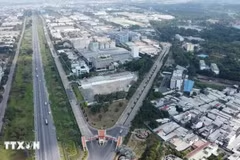
Two-way trade topped 80 billion USD in the first eight months of 2026, the highest for that period in any previous year. That builds momentum toward a goal of exceeding 100 billion USD for the first time this year and reaching 150 billion USD by 2030.
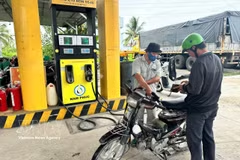
The ministries also drew 500 VND per kg from the fund for fuel oil, financed by a temporary advance from the State budget.

Vietnam and Australia should focus on promoting two-way investment, expanding cooperation linked to APEC 2027 and making better use of people-to-people connections. Vietnam needs capital, skills, technology, infrastructure, and energy transition expertise - areas where Australia could offer valuable support.

Tay Ninh’s GRDP grew 10.3% in the first nine months of 2026, the fastest in the southern region and 10th among the country’s 34 cities and provinces. Of which, industry and construction expanded 14%, trade and services 8.49%, and agriculture, forestry and fisheries 3.23%.
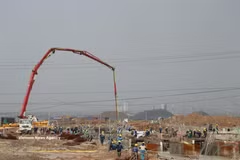
The Government is prioritising cleared land, digitalised data and streamlined land procedures to draw a new generation of foreign investors.

From January 1, 2027, PPP project proposals must be submitted through the National E-Procurement System. From September 1, 2027, investor selection for PPP projects tendered through open bidding will move fully online.
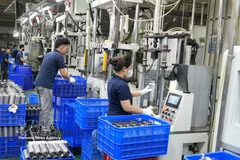
The survey found that 64% of respondents described their current business conditions as good or very good, while 28% maintained a neutral or cautious outlook, reflecting a wait-and-see attitude as international demand remains flat and businesses look for policy momentum to translate into faster procedures and more predictable outcomes.
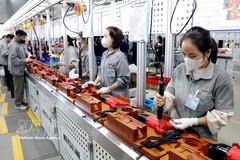
Vietnam is shifting its FDI attraction strategy from expanding investment volumes to prioritising capital inflows that brings technology, knowledge, modern management practices and stronger links with domestic businesses, particularly in semiconductors, artificial intelligence (AI), chips and renewable energy.

Vietnam supports an open, rules-based multilateral trading system and is committed to strictly controlling goods’ origin, preventing origin fraud and combating illegal transshipment, said Deputy Minister of Foreign Affairs Nguyen Minh Hang.
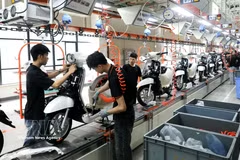
Incentives will increasingly hinge on investors’ performance and commitments, not just on landing projects. Key commitments include transferring technology to Vietnamese firms, training workers, providing technical support and opening FDI supply chains to domestic companies.
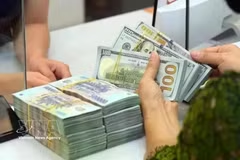
With the current trading band of +/- 5%, the ceiling rate applicable for commercial banks during the day is 26,924 VND/USD, and the floor rate 24,360 VND/USD.
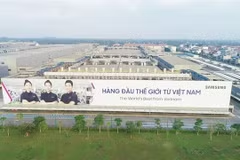
China was the largest destination, with exports valued at 11.3 billion USD, followed by the US at 9.48 billion USD and the Republic of Korea at 5.4 billion USD.
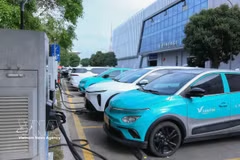
The move brings Green SM into one of the world’s most dynamic and demanding markets. It also marks another step in the international expansion of the Vietnamese mobility brand, following its rapid growth across markets in Asia and Europe.

The Vietnamese Governor underscored the complementary roles of global and regional financial cooperation mechanisms, including the Chiang Mai Initiative Multilateralisation (CMIM) and the ASEAN+3 Macroeconomic Research Office (AMRO). He also highlighted the importance of technical assistance in fintech, digital transformation, cybersecurity and risk management.