Initiative to spur on green energy

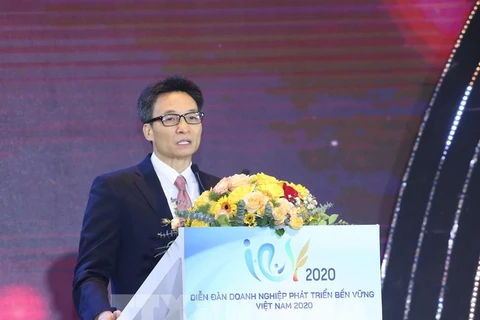
The Vietnam Corporate Energy Leaders (VCEL) initiative has been announced at the Vietnam Corporate Sustainability Forum 2020, promoting the use of renewable energy in driving greener production and sustainable growth in a globally competitive Vietnam.
Initiative to spur on green energy ảnh 1A solar power and wind power farm is put into operation in the south central Ninh Thuan province. (Photo: VNA)

Da Nang (VNS/VNA) - The Vietnam Corporate Energy Leaders (VCEL)initiative has been announced at the Vietnam Corporate Sustainability Forum2020, promoting the use of renewable energy in driving greener production andsustainable growth in a globally competitive Vietnam.

WWF-Vietnam said the new initiative was co-founded by WWF and the VietnamBusiness Council for Sustainable Development under the Vietnam Chamber of Commerceand Industry (VCCI), in partnership with the Clean Energy InvestmentAccelerator (CEIA).

“I am very proud to announce the Viet Nam Corporate Energy Leaders initiativetoday,” said Dr Benjamin Rawson, Conservation and Programme DevelopmentDirector at WWF-Vietnam.

“We welcome all international and domestic companies and banks in Vietnam withrenewable energy ambitions to join VCEL. Your renewable energy future awaits”

Often energy is treated as merely a cost to be managed, even in companies thatspend millions or more on it each year. But more firms are embracing renewableenergy as an affordable solution that delivers a competitive edge in a globalmarket where customers and the public are increasingly interested insustainable production and environmental performance.

Non-hydro renewable energy deployment has rapidly ramped up in recent years,growing to about 12.5 percent and far exceeding the target set in Vietnam’spower development plan. However, 100 percent renewable energy by 2050 to supportsustainable development is entirely feasible for Vietnam, according to the WWF.

To help achieve this goal, VCEL engages and supports companies to unlockopportunities for renewable energy. VCEL and its members will help Vietnamreduce emissions to meet the goals of the Paris Agreement, create green jobsand drive the transition to a greener economy powered by renewable energy.

“Companies have a unique opportunity to lead the transition to renewable energyand more ambitious climate action. In recent years, Government policies havemade conditions more favourable for renewable energy, but there are stillchallenges for companies that have growing demands for renewable energy, “saidNguyen Quang Vinh, Secretary-General cum Vice President, Vietnam BusinessCouncil for Sustainable Development (VBCSD).

“VCEL will bring businesses, experts, financial institutions and investorstogether to overcome barriers to build a renewable energy future in Vietnam,”he said.

According to VCCI, VCEL will create a corporate community to share information,experience and learning, while providing market intelligence and localexpertise to inform decision making and build renewable energy awareness andcapacity.

It also helps build strong local relationships to channels buyers’ collectivevoice and needs into decision-making processes, informing companies on greenfinancing opportunities.

VCEL will also recognise renewable energy leadership as companies set and worktowards ambitious sustainability commitments.

VCEL is the latest chapter of WWF’s global Climate Business Hub and CorporateRenewable Energy programme, which are local-to-global networks that supportcompanies to drive the transition to a sustainable future powered by renewableenergy.

Current VCEL members include H&M, Adidas, Puma, Luc Dong, Vietnam BankingAssociation, DEEP C, TPSC and EnergyEstate, all of whom commit to takingconcrete action to support renewable energy deployment./. 
VNA
See more

Ca Mau companies and households use rooftop solar to cut expenses. (Photo: VNA)

Vietnam raises rooftop solar sales cap to 50%, widens direct power deals

Rooftop solar power is entering a new phase of development with a more solid foundation. When integrated with energy storage systems and direct power purchase mechanisms, it not only contributes to supplementing distributed energy sources and reducing pressure on the national power system, but also serves as a driving force for green growth, enhances the competitiveness of the economy, and ensures energy security.

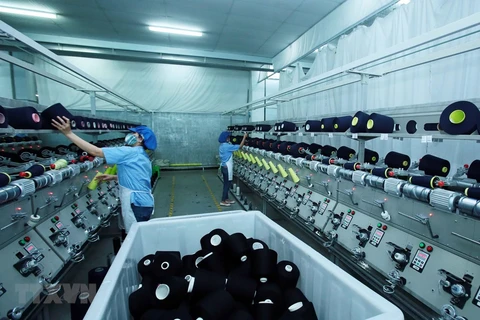
Production of electrical wiring harnesses at Bandai Vietnam Co., Ltd. in the Left Bank Industrial Park, Phu Tho province. (Photo: VNA)

Record FDI Inflows signal strong investor confidence, but absorptive capacity remains key

Vietnam's competitive advantages are evolving. Rather than relying primarily on low labour costs and tax incentives, the country's future competitiveness will increasingly depend on structural and long-term factors, including transparent institutions, policy predictability and an investment environment capable of supporting long-term strategic investors.

Vietnamese Ambassador to the RoK Vu Ho (first, left) and other participants in the conference in Seoul on July 14 (Photo: VNA)

Vietnam, RoK strengthen investment links at Seoul conference

Vietnamese Ambassador to the RoK Vu Ho said bilateral relations are currently enjoying the best conditions, underpinned by what he described as the three key factors of “favourable timing, geographical advantages, and strong public support”.

Electricity generation is monitored at the plant of the Hai Phong Thermal Power Joint Stock Company. (Photo: VNA)

Energy security “shield” must be built in layers: Expert

In an interview recently granted to the Vietnam News Agency, Dr Nguyen Van Tu, General Director of the Vietnam Petroleum Institute (VPI), said petroleum reserves are a critical line of defence, but a genuine energy security “shield” must be built in layers.

Reducing emissions is not only essential for tackling climate change but also brings tangible benefits to farmers and businesses. (Photo: VNA)

Vietnam steps up low-emission farming to support green growth

Vietnam is among the world's leading producers and exporters of agricultural products, including rice, coffee and a wide range of fruits. However, key export markets such as the US, the European Union (EU) and Japan are tightening sustainability requirements for agricultural products, making the transition to low-emission farming increasingly important.

Fresh fruit products of Vietnam are introduced to German customers. (Photo: VNA)

"Live data" paves way for Vietnamese farm exports

Achieving Vietnam's target of more than 74 billion USD in agricultural, forestry and fishery exports in 2026 will require stronger traceability systems, initially focusing on key export commodities, high-value products and major markets such as the EU, the US and China.

An enterprise in the southern province of Dong Thap invests in modern technologies and machinery for production. (Photo: VNA)

Broadening financing channels key to unlocking SME growth

As the private sector takes on a more central role under the Politburo's Resolution No. 68-NQ/TW, experts and business representatives say Vietnam needs a more comprehensive approach to supporting SMEs. This includes improving institutions, making financial support tools more effective and reshaping the financial system to better suit the characteristics of SMEs.

Phase 1 and Phase 2 of the Tan Thuan Wind Power Plant in Tan Thuan commune, Ca Mau province, have a combined installed capacity of 75 MW, comprising 18 wind turbines. (Photo: VNA)

Energy storage unlocks renewable power potential, cuts emissions

Energy transition is not simply about replacing fossil fuels with wind and solar power. It also requires building a sustainable energy ecosystem in which clean power generation, energy storage, smart grids and material recycling chains develop in parallel. Such an integrated approach will improve energy efficiency, further reduce greenhouse gas emissions and help Vietnam achieve green growth and net-zero emissions targets by 2050.

Vietnamese food is increasingly diverse in varieties and packaging, meeting domestic demand. (Photo: VNA)

Government urges vigilance as inflation pressures mount in H2

The Government's inflation target remains within reach despite mounting headwinds. Several forecasts suggest inflation can stay below 4.5% this year if international oil prices continue to retreat. Extending domestic fuel tax incentives through year-end, along with stable electricity prices, healthcare fees and exchange rates, would offer additional relief.

Construction is underway at the Tu Lien Bridge project in Hanoi. (Photo: nhandan.vn)

Public investment drives Hanoi’s growth momentum

In the first half of 2026, Hanoi disbursed 64 trillion VND (2.4 billion USD) in public investment, equivalent to more than 53% of the annual plan assigned by the Prime Minister – the highest mid-year disbursement rate recorded in many years.