International partners value auditor’s independent role

Development partners of the State Audit of Vietnam (SAV) have affirmed the important role of independent verification played by the audit agency in implementing disbursements and providing financial resources for projects in Vietnam.
International partners value auditor’s independent role ảnh 1

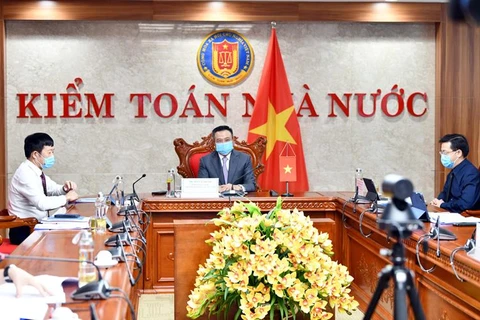
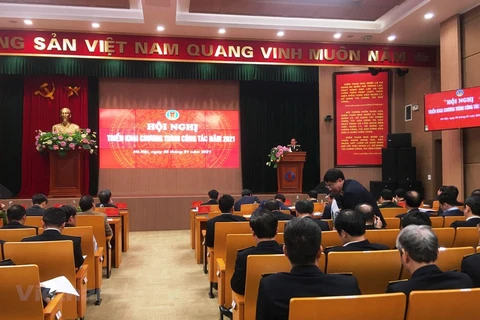
Conference with development partners of the SAV in 2022 (Photo: VietnamPlus)

Hanoi (VNA) - Development partners of the State Audit of Vietnam (SAV) have affirmed the important role of independent verification played by the audit agency in implementing disbursements and providing financial resources for projects in Vietnam.

Audits help improve confidence in the proper use of capital for projects

The SAV has independently audited many projects funded by the WB, stated Serdar Yilmaz, lead public sector specialist at the Governance Global Practice at the World Bank (WB), at a conference of the SAV with its development partners in 2022.

In its audit performance, the SAV has focused not only on the financial aspect, but also compliance and project efficiency, he said. He added that the SAV contributes to improving the understanding of stakeholders as well as project management agencies.

Serdar Yilmaz emphasised the important role of independent verification played by the SAV in the disbursement programmes using WB capital. He said that the WB will make disbursements and provide financial resources for projects based on the audit performed by the SAV.

The SAV’s involvement in WB projects represents the bank’s efforts in making the most of national resources to manage ODA projects, he said.

Sharing Serdar Yilmaz’s viewpoint, Andrew Jeffries, Country Director for Vietnam at the Asian Development Bank (ADB) affirmed the audit agency has contributed to improving confidence in the proper use of capital in projects.

A high level of social trust is a crucial criterion which helps Vietnam develop its economy, he noted.

Auditing contributes to improving the efficiency of capital use in the public sector, he said. Vietnam’s public spending must meet financial requirements to help Vietnam achieve its goals of high economic growth and its ambition to become a country with high middle income by 2030, Jeffries said.


Prioritising human resources development

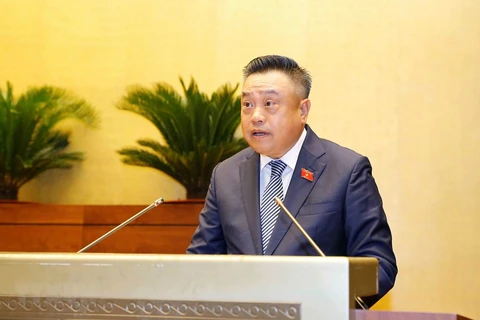
Addressing the event, State Auditor General of Vietnam Tran Sy Thanh briefed development partners on the SAV’s outstanding results in implementing its development strategy in the 2010-2020 period. He stressed that the conference aims to introduce development partners the SAV’s development strategy to 2030 and priority activities to be implemented in the coming time.

Thanh suggested the SAV’s development partners give priority to coordinating in implementing activities in developing human resources and improving the audit quality among seven development aspects of the strategy. He also suggested completing the legal basis for organisations and operations, developing the organisational system, and improving audit quality. He went further suggesting the development of international integration and cooperation, facilities, and promoting information and communications and scientific research.

He proposed cooperation with the parties in organising training courses, surveys, research and experience-learning activities from supreme audit institutions (SAIs). These have strengths in auditing news fields such as information technology, environment; climate change, management of mineral-resource exploitation; and the audits of emerging fields including pandemic response, implementing sustainable development goal, and assessing monetary policy to ensure a transparent and sustainable national finance.

The SAV wishes to cooperate and be supported in training and developing a team of experts in each field who will help better the quality of human resources for the audit sector, towards establishing an academy of auditing in the future, Thanh said.

According to Thanh, with the orientation to switch from traditional audit to remote audit on the basis of information technology application, the SAV is focusing on cooperating with stakeholders in hiring domestic and foreign experts in providing consultation on overall design of technological structure systems, and application of support software.

The SAV is committed to giving the highest priority in cooperating with development partners to realize the above-mentioned goals in its development strategy for the 2021-2030 period. This is in line with policies and operational priorities of organisations in Vietnam, said Thanh.

Representatives of the SAV’s development partners made proposals on technical support plans for the SAV in the coming time.

WB Country Director for Vietnam Carolyn Turk said development partners should work together to support the SAV to avoid overlap, and generate great impacts./.
VNA

See more

Illustrative image (Photo: VNA)

Australia announces import conditions for Vietnamese pomelos

Australia’s formal publication provides an important legal basis, marking the completion of the review, assessment and agreement on technical requirements for fresh Vietnamese pomelos. This represents a significant step forward in market access, creating favourable conditions for relevant agencies, localities and businesses to prepare for export activities in the coming time.

Containers of fresh Vietnamese durian for export are subject to a full-chain traceability system. (Photo: VNA)

First “green lane” durian shipment exported to China

​Under the “green lane” process, quality control begins at the cultivation stage, including soil sampling and monitoring, and continues through harvesting and processing, with traceability labels attached to trees and applied to fruit at the time of picking. It also allows plant quarantine procedures and the issuance of certificates of origin (C/O) directly in the localities where the orchards are located.

Delegates at the Vietnam Expo 2026 (Photo: VNA)

Vietnam pushes for deeper auto supply chain ties with RoK

The RoK stood as Vietnam’s largest foreign investor with more than 95.2 billion USD in registered capital as of February 2026, or about 18% of all foreign cash flowing in, with thousands of active projects. In January-February alone, the RoK led the pack with nearly 2 billion USD in pledges, grabbing a whopping 32.7% of total registered capital and showing no signs of slowing down.

More than 600 tourism firms, 15 countries and territories, and 34 provinces and cities are promoting destinations and introducing tourism products at the fair (Photo: VNA)

Digital transformation key to elevating Vietnam’s tourism: official

Speaking at the opening of the Vietnam International Travel Mart (VITM) 2026 in Hanoi on April 10, Deputy Minister of Culture, Sports and Tourism Ho An Phong noted that despite challenges in 2025, Vietnam largely fulfilled its socio-economic development goals. Tourism remained a bright spot, recording 21.5 million foreign arrivals and 135.5 million domestic visitors, with total revenue exceeding 1 quadrillion VND (37.9 billion USD).

A drone sprays fertiliser over rice fields. (Photo: VNA)

Low-altitude economy emerges as new growth driver for Vietnam

The UAV technology is particularly effective in addressing challenges faced by ground infrastructure, especially in densely populated urban areas and remote regions. Smart aerial devices also enable real-time data collection, improving governance, decision-making and digital transformation across industries.

Passengers at Cat Bi Airport in Hai Phong city (Photo: VNA)

Aviation sector ensures fuel supply for April 30–May 1 peak

Aviation fuel suppliers are actively negotiating and diversifying supply sources both domestically and internationally, while strengthening coordination, storage and distribution capacity to meet immediate demand. These efforts aim to support airlines in optimising operations and maintaining stable flight schedules.

A session at the Vietnam–Australia Green Transition Forum 2026. (Photo: VNA)

Green transition offers opportunities for stronger Vietnam–Australia cooperation

Under the theme "Accelerating decarbonisation in agriculture and manufacturing – Unlocking trade and investment opportunities", the forum gathered nearly 200 researchers, experts and businesses involved in policy development, investment, research and innovation. Participants exchanged insights and explored ways to translate the cooperation potential between Vietnam and Australia into practical business opportunities.

Household businesses and individual entrepreneurs with annual revenue of 500 million VND or less are not subject to personal income tax and are only required to declare their actual revenue. (Photo: VNA)

Expanding personal income tax exemptions to drive knowledge economy

The Ministry of Finance has recently released the draft for public feedback, with the decree expected to take effect from July 1. The draft specifies 21 categories of tax-exempt income, adding five, aimed at encouraging individuals working in priority sectors aligned with national development strategies.​