Hanoi (VNA) — Japan’s Juroku Bank Ltd will open a representative office in Hanoi in the time ahead after getting a licence from the State Bank of Vietnam (SBV) in early February.
On February 2, SBV issued License No 32/GP-NHNN, permitting Juroku Bank to establish its representative office in Hanoi for five years.
Accordingly, the office will function as a liaison office for market research and promotion of investment projects of Juroku Bank in Vietnam.
The office will promote and monitor the implementation of contracts and agreements signed between the bank and credit institutions and businesses, as well as the bank’s financed projects in Vietnam.
It will also address the demand for loans from Japanese companies operating in Vietnam, especially those in the Tokai sub-region, where the bank’s headquarters is located.
The opening of the bank is a new opportunity for Japanese investment in Vietnam in 2018, with a predicted wave of investment coming from local, small and medium enterprises instead of giant corporations.
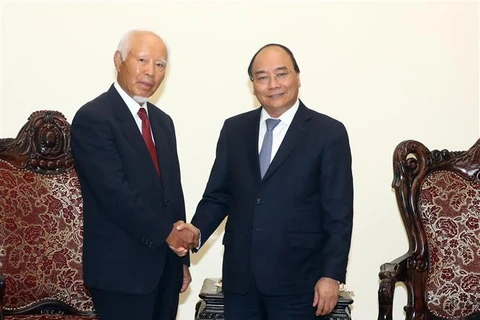
In a recent interview to the Vietnam Government Portal, Karashima Hiroshi, President of Japan Business Association in Vietnam (JBAV), said Vietnam was emerging as the No. 1 market in Asia for Japanese investors, as evident from a survey by Japan Bank for International Cooperation. The number of JBAV’s member enterprises investing and operating in Vietnam has increased by 1,750 companies (second only to Japanese firms in Thailand).
This partly shows that the business efficiency of Japanese firms in Vietnam is approaching closer to and catching up with those operating in Thailand, Hiroshi said.
Last year, Japan was the largest investor in Vietnam among 115 countries and territories with investment projects worth 9.11 billion USD in the country. -VNA
On February 2, SBV issued License No 32/GP-NHNN, permitting Juroku Bank to establish its representative office in Hanoi for five years.
Accordingly, the office will function as a liaison office for market research and promotion of investment projects of Juroku Bank in Vietnam.
The office will promote and monitor the implementation of contracts and agreements signed between the bank and credit institutions and businesses, as well as the bank’s financed projects in Vietnam.
It will also address the demand for loans from Japanese companies operating in Vietnam, especially those in the Tokai sub-region, where the bank’s headquarters is located.
The opening of the bank is a new opportunity for Japanese investment in Vietnam in 2018, with a predicted wave of investment coming from local, small and medium enterprises instead of giant corporations.
In a recent interview to the Vietnam Government Portal, Karashima Hiroshi, President of Japan Business Association in Vietnam (JBAV), said Vietnam was emerging as the No. 1 market in Asia for Japanese investors, as evident from a survey by Japan Bank for International Cooperation. The number of JBAV’s member enterprises investing and operating in Vietnam has increased by 1,750 companies (second only to Japanese firms in Thailand).
This partly shows that the business efficiency of Japanese firms in Vietnam is approaching closer to and catching up with those operating in Thailand, Hiroshi said.
Last year, Japan was the largest investor in Vietnam among 115 countries and territories with investment projects worth 9.11 billion USD in the country. -VNA
VNA