Vietnamese students attend a Japanese language course before going to Japan to work as care workers (Photo: Kyodo)
 Hanoi (VNS/VNA) - Vietnam expects to send more workers to Japan and the workers could earn more in the country thanks to Japan’s new policy on specified skills visa.
The policy launched on April 1 introduces two new categories that allow foreign workers employed in 14 types of jobs including nursing care, restaurants and construction, to remain in the country for up to five years.
Under the new law, those in a category of “specified skilled workers” can stay for up to five years but cannot bring family members. Another category is for more skilled non-Japanese nationals and allows them to bring relatives as well and stay in the country for longer.
This is part of Japan’s efforts to ease the country’s tightest job market in decades. In the next five years, Japan expects to receive about 345,500 foreign blue-collar workers.
By the end of 2018, the total number of foreign technical trainees in Japan was 328,000, of which the number of Vietnamese technical interns accounted for about 50 percent, surpassing China (24 percent) and two other ASEAN countries – the Philippines at 9 percent and Indonesia at 8 percent.
Japan’s new visa policy to attract more skilled workers is said to create an opportunity for labour exporters, particularly Vietnam.
Last year, Vietnam sent more than 68,000 workers to Japan as interns, which made Japan the largest recipient of Vietnamese workers. Taiwan was the runner-up, receiving about 60,000 Vietnamese workers. A total of 142,860 Vietnamese workers were sent to over 140 countries and territories across the world.
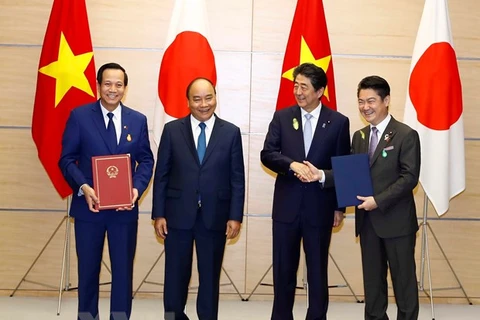
In a related development, on July 1, during Prime Minister Nguyen Xuan Phuc’s visit to Japan, Vietnamese Minister of Labour, Invalid and Social Affairs Dao Ngoc Dung and Japanese Minister of Justice Yamashi Takashi signed a Memorandum of Co-operation (MoC) on implementing the specified skills labour programme.
Nguyen Gia Liem, Deputy Director General of the Department of Overseas Labour Management said that under the MoC, Japan would only receive Vietnamese workers who completed all required procedures in accordance with Vietnam’s laws and they must be verified.
Verified workers are those sent to work overseas by companies that the ministry granted licences to send “specified skills” workers.
Besides high-skilled workers living in Vietnam, two other groups of workers eligible for the programme are Vietnamese interns and overseas students who finished their courses in Japan.
Japan would provide Vietnamese workers with funds for travel, language lessons and skills tests while Vietnam would supervise to avoid disadvantages for its workers, Liem said.
“The implementation of the MoC is expected to help curb illegal brokers and violations relating to labour exports,” Liem said.
Tran Van Ha, head of the Communication Desk at the Department of Overseas Labour, told Nong thon ngay nay (Countryside Today) newspaper that as soon as Vietnam started the programme on sending specified skill workers to Japan, some companies also started to recruit workers, advertising jobs with high salaries of 4,000-5,000 USD, good welfare and that workers can take their family along to Japan.
Ha warned workers about possible fraudulent brokers. She said only companies that were given licences by the labour ministry could send such workers.
Vietnamese interns working in Japan could get limited social welfare because they were not official employees while overseas students in Japan were allowed to work a maximum of 20 hours per week.
“Both interns and overseas students must spend at least two years working and staying in Japan before they can shift to the status of specified skills workers,” Ha said.
She strongly advised people who want to apply for the specified skills visa to seek reliable information, for example from Ha’s department or the departments of labour in provinces and cities.-VNS/VNA
The policy launched on April 1 introduces two new categories that allow foreign workers employed in 14 types of jobs including nursing care, restaurants and construction, to remain in the country for up to five years.
Under the new law, those in a category of “specified skilled workers” can stay for up to five years but cannot bring family members. Another category is for more skilled non-Japanese nationals and allows them to bring relatives as well and stay in the country for longer.
This is part of Japan’s efforts to ease the country’s tightest job market in decades. In the next five years, Japan expects to receive about 345,500 foreign blue-collar workers.
By the end of 2018, the total number of foreign technical trainees in Japan was 328,000, of which the number of Vietnamese technical interns accounted for about 50 percent, surpassing China (24 percent) and two other ASEAN countries – the Philippines at 9 percent and Indonesia at 8 percent.
Japan’s new visa policy to attract more skilled workers is said to create an opportunity for labour exporters, particularly Vietnam.
Last year, Vietnam sent more than 68,000 workers to Japan as interns, which made Japan the largest recipient of Vietnamese workers. Taiwan was the runner-up, receiving about 60,000 Vietnamese workers. A total of 142,860 Vietnamese workers were sent to over 140 countries and territories across the world.
In a related development, on July 1, during Prime Minister Nguyen Xuan Phuc’s visit to Japan, Vietnamese Minister of Labour, Invalid and Social Affairs Dao Ngoc Dung and Japanese Minister of Justice Yamashi Takashi signed a Memorandum of Co-operation (MoC) on implementing the specified skills labour programme.
Nguyen Gia Liem, Deputy Director General of the Department of Overseas Labour Management said that under the MoC, Japan would only receive Vietnamese workers who completed all required procedures in accordance with Vietnam’s laws and they must be verified.
Verified workers are those sent to work overseas by companies that the ministry granted licences to send “specified skills” workers.
Besides high-skilled workers living in Vietnam, two other groups of workers eligible for the programme are Vietnamese interns and overseas students who finished their courses in Japan.
Japan would provide Vietnamese workers with funds for travel, language lessons and skills tests while Vietnam would supervise to avoid disadvantages for its workers, Liem said.
“The implementation of the MoC is expected to help curb illegal brokers and violations relating to labour exports,” Liem said.
Tran Van Ha, head of the Communication Desk at the Department of Overseas Labour, told Nong thon ngay nay (Countryside Today) newspaper that as soon as Vietnam started the programme on sending specified skill workers to Japan, some companies also started to recruit workers, advertising jobs with high salaries of 4,000-5,000 USD, good welfare and that workers can take their family along to Japan.
Ha warned workers about possible fraudulent brokers. She said only companies that were given licences by the labour ministry could send such workers.
Vietnamese interns working in Japan could get limited social welfare because they were not official employees while overseas students in Japan were allowed to work a maximum of 20 hours per week.
“Both interns and overseas students must spend at least two years working and staying in Japan before they can shift to the status of specified skills workers,” Ha said.
She strongly advised people who want to apply for the specified skills visa to seek reliable information, for example from Ha’s department or the departments of labour in provinces and cities.-VNS/VNA
VNA