Khmer people to receive more support

Khmer ethnic people in southern Vietnam are set to benefit from more support in educational, training, cultural, medical and religious affairs in the future.
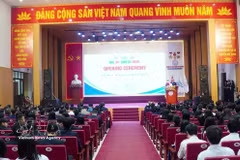
Khmer people to receive more support ảnh 1The workshop on June 28 reviews and sets plans for Khmer-related works in the southern region until 2020 (Photo: VNA)

Can Tho (VNA) – Khmer ethnic people in southernVietnam are set to benefit from more support in educational, training,cultural, medical and religious affairs in the future.

The Steering Committee for the SouthwesternRegion and the Government’s Committee for Ethnic Minority Affairs held aworkshop in Can Tho city on June 28 to review and set plans for Khmer-relatedworks in the southern region until 2020. The event was attended by officials ofthe boards of ethnic minority affairs in Soc Trang, Tra Vinh, An Giang and KienGiang provinces, Can Tho city and Ho Chi Minh City.

Huynh Thi Somaly, an official from the EthnicMinority Affairs Committee said there are about 1.3 million Khmer people in thesouth, accounting for 7 percent of the region’s population.

The Party and State have issued several policiessupporting the development of the ethnic group. They include Directive 68-CT/TWon works in Khmer ethnic areas issued by the Party Central Committee Secretariatin 1991, which resulted in improvements in local economic, social, security anddefence issues, she noted.

However, she also admitted shortcomings such asunsustainable poverty reduction, poor cultural and communication activities inthe Khmer language and difficulties in vocational training and job provision.

At the workshop, officials said Khmer-relatedworks should focus on solutions to develop socio-economic infrastructure,improve both material and spiritual life of Khmer people and raise the qualityof cultural, educational and medical activities. They need to sustainablyeliminate poverty so as to reduce the Khmer household poverty rate in the southby between 50 – 70 percent by 2020.

They said authorities in the southern region shouldpromote teaching and learning quality, provide incentives for Khmer students andteachers in Khmer communities and reduce or exempt tuition fees. They also needto maintain teaching of the Khmer language at schools in areas with large Khmerpopulations.

Vocational schools should be built acrosssouthern localities while local residents should be given financial support toenroll in vocational training.

Provinces and cities need to raise the numberand quality of Khmer-language media outlets, facilitate mass cultural andsports activities in the ethnic group and protect traditional cultural valuesand craft villages, participants said.

Medical services and health-relatedcommunications should be expanded in Khmer communities, they noted, underliningthe necessity to maintain traditional religions, restore Khmer Buddhistpagodas, visit religious dignitaries during traditional festivals and helpKhmer monks study in Vietnam and overseas.-VNA

VNA
See more

An official of the Bank for Social Policies in Lao Cai province guides local women in using the mobile application. (Photo: VNA)

Efforts made to create value from digital environment

As digital services become more accessible and public feedback is increasingly heard, Vietnamese citizens are expected to move from simply benefiting from digital transformation to actively contributing to the development of a prosperous digital nation, where people's happiness and satisfaction remain the ultimate measures of success.

The Viet Youth Readiness Hub of the Canada Vietnam Council for Culture & Education (CVCEC) during a Vietnamese language lesson for Vietnamese-Canadian children in Toronto, Canada. (Photo: VNA)

Vietnamese culture connects generations in Canada

Beyond language skills, children learn about Vietnamese history, stories of filial devotion and national heroes, and the importance of respecting parents and teachers. Weekend classes begin with the national anthem, while festivals and traditional holidays offer opportunities to make greeting cards, prepare traditional cakes and learn to wrap 'banh chung' (square sticky rice cakes).

Delegates and local residents explore the themed exhibition “Coastal and Island Archaeology in Ho Chi Minh City: New Discoveries in 2020–2025”. (Photo: VNA)

Archaeological exhibition showcases 300 artefacts in Ho Chi Minh City

The exhibition presents 150 artefacts and 150 documentary photographs collected through archaeological surveys, field investigations and excavations over the past five years. The items were unearthed at notable sites including Cu Bi, Quang Thanh, Go Nan, Kim Long, Go Dat Nai, Giong Lon, Con Dao and Vong Thanh Da Trang. The findings have helped researchers shed light on traces of ancient settlements, craft workshops, distinctive burial practices, as well as ancient citadels and trading ports.

A TTU–VWAI representative hands the National Steering Committee 515 delegation several sets of dossiers on martyrs’ burial sites and artefacts that TTU–VWAI experts collected and studied during joint work to search for, recover and identify Vietnamese martyrs’ remains. (Photo: VNA)

Vietnam, US step up cooperation in search for fallen soldiers’ remains

Ambassador Nguyen Quoc Dung pressed partners to adopt four strategic tracks: a two-way verification process, standardised and professionalised outputs, breakthrough use of digital technology and AI, and maximum diplomatic patronage and resources, all aimed at converting documentary research into field investigation capacity.

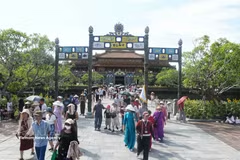
Visitors tour the Hue Imperial Citadel. (Photo: VNA)

Hue cuts heritage site entrance fees to attract more tourists

Under the first scheme, visitors using new tourist transport services to Hue will receive a 50% discount on entrance fees. Eligible services include the Hue – Phong Nha heritage railway, the Hue – Da Nang heritage steam train, and new domestic and international air routes, including charter and scheduled flights. The incentive does not cover existing air routes with increased flight frequencies.

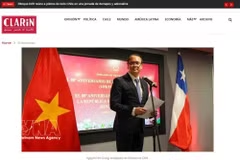
Screenshot of the article. (PhotoVNA)

Chilean media spotlight Vietnam’s growing global role

Chilean newspaper El Clarín recently published an interview with Vietnamese Ambassador to Chile Nguyen Viet Cuong, highlighting Vietnam’s foreign policy of independence and self-reliance and international integration, its contributions to regional cooperation, and prospects for bilateral ties as the two countries mark the 55th anniversary of diplomatic relations.

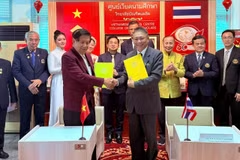
The exchange of a Memorandum of Understanding (MoU) on academic cooperation between the Vietnamese Consulate General in Khon Kaen and College of Asian Scholars. (Photo: VNA published)

Vietnam Studies Centre opens in northeastern Thailand

The centre would serve as a valuable academic hub for teaching and promoting Vietnamese language, culture and history, while fostering people-to-people exchanges and connecting younger generations of the two countries.

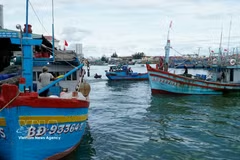
Fishing boats enter and leave Quy Nhon port (Photo: VNA)

Gia Lai tightens controls over vessels to combat IUU fishing

Inspections by an inter-sectoral working group identified weaknesses in managing ineligible fishing vessels, controlling vessels entering and leaving ports, seafood traceability, handling violations and implementing support policies for decommissioned vessels, according to the committee.

Construction site for the Ben Thanh - Tham Luong metro project on Cach Mang Thang Tam street (Photo: VNA)

Ho Chi Minh City plans five TOD areas along Metro Line No. 2

According to the Ho Chi Minh City Department of Planning and Architecture, the boundaries of the five TOD areas along Metro Line No. 2 (Ben Thanh – Tham Luong) have been approved, covering a total area of approximately 939 ha. The city is now drawing up plans for these areas.

Russian and CIS tourist groups visit the central city of Da Nang in 2026. (Photo: VNA)

Vietnam gains popularity among Russian tourists

Vietnam recorded the fastest growth in Russian tourist arrivals among mass-tourism destinations in the first nine months of 2026, according to data from the Association of Tour Operators of Russia (ATOR) and Russia’s Federal Security Service (FSB).

The 24th Asian Maritime and Fisheries Universities Forum takes place in Hai Phong city. (Photo: VNA)

Leading Asian maritime universities gather for Hai Phong forum

Vietnam needs engineers, seafarers, experts and managers who can adopt and develop advanced technologies for the maritime industry and future marine economy. That is why Vietnam attaches special importance to international cooperation in education, training and research.