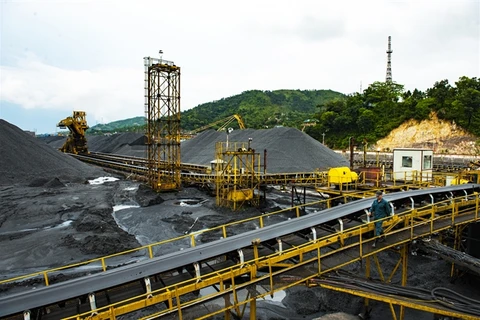
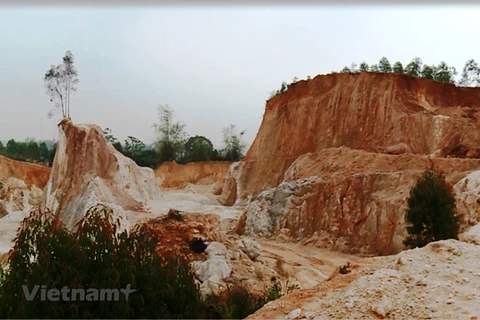
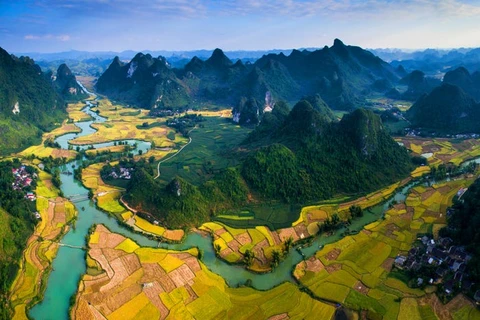
Illustrative image (Photo: VietnamPlus)
 Hanoi, (VNA) – Vietnam has designated 48 areas of mineral reserves by 2020, and the surface of such areas has great potential for use for different purposes such as tourism or wind power, but investment in such projects is facing legal difficulties.
Great mineral resources
According to the Ministry of Natural Resources and Environment, nearly six years after Decision 645/QD-TTg was issued on May 6, 2014, the country has zoned off 48 national areas of mineral reserves with 10 kinds of important minerals.
The areas included 23 areas of titanium reserves, four areas of white sand, four areas of iron-laterite, and six areas of coal reserves. Many of them are located along the coast, with favourable conditions for socio-economic development projects such as tourism, wind and solar power, and industrial parks.
Many localities, for example central provinces of Binh Thuan and Ninh Thuan, have proposed that the Prime Minister, ministries and agencies to allow the implementation of development projects on the surface of areas of mineral reserves.
Binh Thuan is looking for permission for 66 investment projects for airports, solar and wind power plants and tourism, Quang Nam has proposed 16 projects and the Central Highland province of Dak Lak 10 projects.
 Illustrative image (Photo: VNA)
 Urgent need for a management decree
The Ministry of Natural Resources and Environment, however, said Decision 645/QD-TTg only stipulated on the designation of areas of mineral reserves. It provided no rules for investment projects on the surface of those areas.
The decision neither mentioned the time limit for the mineral reserves, nor conditions for investment projects on the reserves’ surface, the responsibility to protect unexploited mineral reserves of local administrations and related organisations and individuals when investing in development projects.
The Investment Law and the Land Law regulate the duration of operation and area of land of surface development projects, but they contain no detailed stipulations on projects on land with mineral reserves beneath.
Therefore, to create legal foundations for the management and protection of unexploited minerals while facilitating the implementation of development projects on the surface of national areas of mineral reserves, the Ministry of Natural Resources and Environment is of the view that it is necessary to promulgate a decree on managing national areas of mineral reserves with regulations on development projects on the surface of such areas, so as to optimize the country’s land and mineral resources.
Article 80 of the Law on Minerals stipulates that the Government is in charge of State management of minerals”; and Article 86 of this law says “The Government shall stipulate in details and guide the implementation of articles, clauses in this law, give guidance on other necessary contents of this law to meet requirements of State management.”
Clause 2 of Article 19 in the 2015 Law on Promulgation of legal Documents stipulates that the Government shall issue decrees to stipulate “..other matters under the Government’s authority.”
 Illustrative image (Photo: VNA)
 As such, it is an urgent need to propose that the Government consider and allow the drafting of a decree on the management of minerals at national areas of mineral reserves, according to the Ministry of Natural Resources and Environment.
Safety must be ensured
At the same time, the Ministry underlined that development projects on the surface of mineral reserves areas must ensure safety and national mineral security; effectively use land, protect unexploited minerals in such areas and adhere to the Investment Law, Law on Public Investment, Land Law, Mineral Law, Law on Planning and other relevant regulations.
The operation duration of such projects must not extend beyond the remaining time limit of the mineral reserves within the approved areas at the time the projects are approved.
During the process of implementing development projects, investors have the responsibility to preserve unexploited minerals beneath the area of the projects.
In case the Prime Minister adjusts the acreage or the time limit of the mineral reserves to serve defence, security or especially important socio-economic development projects, investors of development projects on the surface of mineral reserves will receive compensation in accordance with the law./.