Tan Phu Plastic Company produces safe products to serve the local market. The "Zero COVID" policy of China means many Vietnamese producers lack input materials. (Photo courtesy of the firm)
 The worst sufferers were the electronics, wood, textiles, and footwear industries. According to the Ministry of Industry and Trade (MoIT), China was an important market for the export and import activities of Vietnam as it provides the majority of input materials for Vietnam's production, especially electronic components, machinery parts, fabrics and chemicals.
MoIT said from 50 to 55 percent of raw materials and accessories for the textile, garment, and footwear industries originated from China.
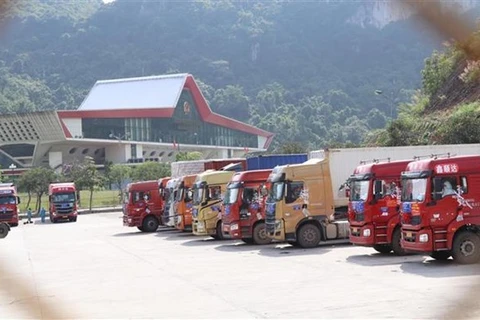
The country was currently implementing the "Zero COVID" strategy, which forced many factories there temporarily stop production to fight the pandemic. The import-export activities in the neighbouring country were affected a lot by the shortage of containers at ports.
Phan Thi Thanh Xuan, Vice Chairwoman and General Secretary of the Vietnam Leather, Footwear and Handbag Association, said businesses in the industry had to slow down export deliveries because their Chinese partners lacked empty containers for transporting raw materials and accessories.
She added the supply of raw materials from China also decreased because many factories had to suspend operations.
Nguyen Duc Minh, Director of Duc Minh Rubber Company and Chairman of the HCM City Rubber Plastics Association, said: "The Vietnam's rubber industry depends on up to 70 percent of raw materials, especially chemicals.
"However, the supply from this market is being blocked due to the Chinese side's implementation of Zero COVID. If the supply from this market continues to be interrupted, enterprises are forced to import from the Japanese and Korean markets at 15-20 percent higher prices. With this input material price, enterprises are at risk of not being profitable, making their products difficult to compete in the world market."
Phan Anh Tuan, General Director of Tan Phu Plastic Company, said besides the Zero COVID, the escalating fuel prices forced the plastic materials prices to go up, influencing his firm's input source.
Tuan said though operation costs were also put higher due to higher logistic prices, the Tan Phu company still kept prices of all products stable to support consumers.
Tuan said: "We keep modernising the production process to improve products and cut costs the most."
The company also aimed to use safe and high-technology materials so that the consumers could reuse them to protect the environment and avoid more consumption of plastic.
Tuan said they organised a campaign called "Live green, live Japanese style" to encourage customers to exchange the old products for the new ones instead of buying new products.
While the plastic company seemed to find a way to fix its problem, the textile and garment, an industry with a lot of imported materials, was still struggling.
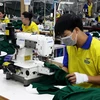
Local media reported that Dap Cau Garment Corporation, specialising in garment processing for major markets and imports up to 80 percent of raw materials from China, got orders until September, but it also had to postpone the delivery of many orders due to the lack of raw materials.
The company's leader said: "For orders that do not have enough materials, we have to renegotiate the delivery time. However, the delivery time cannot be too slow because that makes businesses face many payment risks."
In this case, MoIT asked local enterprises to adapt to an appropriate strategy.
"The most important task of enterprises at this time is to restructure production soon, find alternative sources of supply to offset the shortage of the current raw materials and outdated equipment. Enterprises also need to promote linkages, support and use made-in-Vietnam products in production and business activities to reduce dependence on external resources," MoIT said.
The ministry asked them to find new sources of supply outside of China besides negotiating with partners to share risks and extend the delivery time, but Nguyen Duc Thang, Director of the Dap Cau Garment Company, said: "It's not an overnight issue because China is the world's factory, supplying many raw materials and accessories at reasonable prices. In addition, most of the raw materials the Dap Cau company imports are pre-assigned by partners."
Vu Duc Giang, Chairman of the Vietnam Textile and Apparel Association, said that it was necessary to effectively promote the role of foreign trade counsellors to strengthen the search for markets to supply raw materials along with supporting them to access to a reliable source with good prices.
He said: "This not only increases competitiveness for local enterprises but also minimises the risks of dependence on a supply market."
A representative of MoIT's Department of Industry emphasised that in the long term, there must be solutions to develop supporting industries and several important primary material industries in order to minimise dependence on imported raw materials, components and input accessories./.
VNA