Malaysian government and opposition Pakatan Harapan ink ‘historic’ MOU

The Malaysian government signed a memorandum of understanding (MOU) with opposition Pakatan Harapan (PH) to strengthen political stability amid the COVID-19 pandemic through bipartisan cooperation.
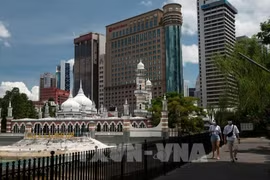
Malaysian government and opposition Pakatan Harapan ink ‘historic’ MOU ảnh 1The Malaysian government signs a memorandum of understanding (MOU) with opposition Pakatan Harapan (PH) to strengthen political stability amid the COVID-19 pandemic through bipartisan cooperation. (Photo: AFP/VNA)
Kuala Lumpur, (VNA) - The Malaysian government signed a memorandum of understanding (MOU) with opposition Pakatan Harapan (PH)to strengthen political stability amid the COVID-19 pandemic through bipartisancooperation. 

“Today, the federal government and PH made history by inking a Memorandum of Understanding on Transformation and Political Stability,” PrimeMinister Ismail Sabri Yaakob said in a statement, adding that a “solid andstable” bipartisan cooperation was formed with the MOU.

The MOU was signed on September 13 at the parliament’s banquethall. According to Ismail Sabri’s statement, the memorandum touched on aCOVID-19 plan, administrative transformation, parliamentary reform, judiciaryindependence, Malaysia Agreement 1963 and the establishment of a steeringcommittee which includes limiting the prime minister's time in office to 10years (2 terms) and introducing an anti-party change bill to prevent MPs fromchanging from one party to another without incurring any penalty.

Inaddition, Ismail also proposed giving opposition leaders equal status withministers, participating and contributing ideas at the National RecoveryCommittee, as well as equal representation in special committees.

Malaysia has been mired in political turmoil since the 2018 election defeatof the United Malays National Organization (UMNO) party after more than 60 years of governing the country. The two governments subsequently collapsedand Ismail was appointed, restoring the leadership of the government to UMNO./.
VNA


See more

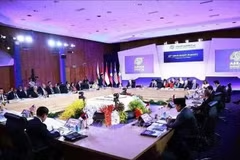
An overview of the dialogue between ASEAN leaders and the ASEAN Business Advisory Council (ASEAN-BAC) in Manila on November 15 (Photo: VNA)

Vietnam puts forward priorities to advance ASEAN cooperation

Appreciating ASEAN-BAC’s report and recommendations, Deputy Minister of Foreign Affairs Dang Hoang Giang, head of Vietnam’s ASEAN Senior Officials’ Meeting (SOM) delegation, called for simplifying procedures, reducing costs, accelerating digitalisation, upgrading the ASEAN Single Window (ASW) and effectively implementing the ASEAN Digital Economy Framework Agreement (DEFA) to make the regional market more accessible.

ASEAN signs Digital Economy Framework Agreement

ASEAN signs Digital Economy Framework Agreement

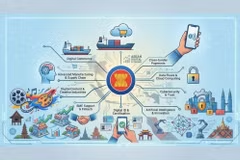
The Digital Economy Framework Agreement (DEFA), the bloc’s first standalone and legally binding digital economy agreement, establishes common rules covering digital trade, cross-border data flows, electronic payments, cyber security and artificial intelligence (AI).

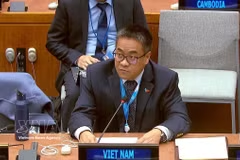
Minister Counsellor Nguyen Hai Luu, Deputy Permanent Representative of Vietnam to the UN, speaks at the discussion on November 12, 2026. (Photo: VNA)

Vietnam supports peace, reconstruction efforts in Gaza: diplomat

Minister Counsellor Nguyen Hai Luu, Deputy Permanent Representative of Vietnam to the UN, expressed deep concern over the dire humanitarian situation in Gaza, particularly as recent heavy rains and flooding have worsened living conditions for residents.

Thailand diversifies oil sources to ensure energy security

Thailand diversifies oil sources to ensure energy security

Although the diversification of oil import sources has helped reduce the risk of domestic oil shortage, it has not immediately reduced energy costs because import prices depend on market mechanisms, transportation costs, foreign exchange rates and the terms of oil contracts.

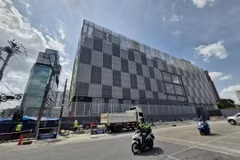
ST Telemedia Global Data Centres (Thailand), an affiliate of Singapore Telecom, is developing three data cehtres in Thailand including this facility on Rama IX Road in Bangkok. (Photo: bangkokpost)

Thailand tightens regulations on data centres

The new rules focus on controlling investment scale, electricity and water consumption, environmental impacts, and preventing investors from reserving resource quotas beyond their actual needs.

A road is under construction in Dong Nai city, Vietnam. (Photo: VNA)

ADB: Southeast Asia needs 7.1 trillion USD in infrastructure investment by 2040

ADB estimates that the region will need an average of 476 billion USD in infrastructure investment annually during 2026–2040, equivalent to 8.7% of GDP. However, at current investment levels, government budget resources would cover only around 45% of this demand, leaving an annual financing gap of 264 billion USD.

Kyodo News publishes an article titled “Sculptures by Japanese, Vietnamese artists on display in Yokohama,” (Screenshot photo)

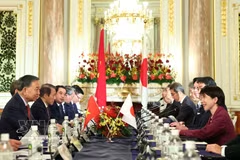
Japanese media widely cover top Vietnamese leader ’s visit

Japanese media have continued extensive coverage of General Secretary of the Communist Party of Vietnam (CPV) Central Committee and President To Lam’s activities in Japan, highlighting his meetings with representatives of leading financial institutions at the Tokyo Stock Exchange, witnessing of cooperation agreement signing and participation in cultural exchanges.

Thailand pushes for establishment of ASEAN emergency public health centre

Thailand pushes for establishment of ASEAN emergency public health centre

The draft agreement stipulates that ACPHEED will comprise three specialised centres based in three ASEAN member states. Vietnam will oversee the centre for prevention and preparedness; Indonesia will host the centre for detection and risk assessment; and Thailand will be responsible for the centre for response and risk communication.