Prime Minister Pham Minh Chinh (R) and Malaysian Prime Minister Anwar Ibrahim in a meeting in Indonesia last May. (Photo: VNA)
 This is the Malaysian leader’s first official visit to Vietnam since he took office last December. The trip will be made at the invitation of his Vietnamese counterpart Pham Minh Chinh, according to an announcement of the Vietnamese Ministry of Foreign Affairs.
Vietnam and Malaysia set up their diplomatic ties on March 30, 1973, and upgraded their relations to the Strategic Partnership level in August 2015.
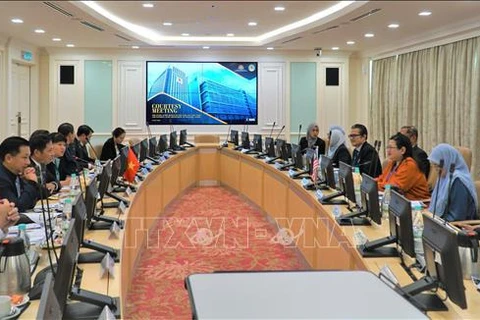
The two sides have regularly organised high-level meetings and contacts and delegation exchanges, and maintained cooperation mechanisms.
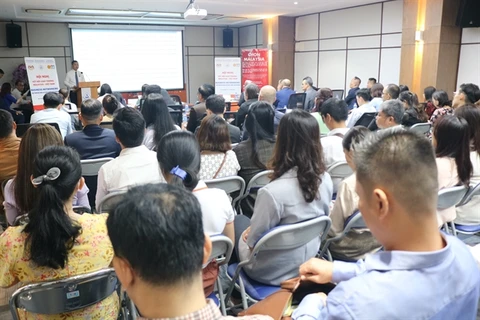
 The two countries are striving to raise two-way trade to 18 billion USD by 2025. (Photo: VNA)
 Malaysia is currently Vietnam's second largest trade partner in ASEAN, after Thailand, and ninth in the world, and is Vietnam's third biggest export market in ASEAN. Meanwhile, Vietnam is Malaysia's third largest trade partner in the association. Two-way trade reached 14.68 billion USD in 2022, up 17.4% year-on-year. The two countries are striving to raise the figure to 18 billion USD by 2025.
Malaysia ranks second in ASEAN and 10th out of 140 countries and territories pouring capital into Vietnam, with 702 valid projects totaling 13 billion USD in 32 out of the 63 provinces and cities.
Meanwhile, Vietnam has 21 valid projects totaling 853 million USD in Malaysia, ranking ninth out of 78 countries and territories investing in the country.
At present, around 12,000 Vietnamese people are working in Malaysia, accounting for nearly 1% of the number of foreign workers in the nation.
Over the past years, Vietnam and Malaysia have also promoted collaboration in education, culture-tourism, science and technology and people-to-people exchange.
Currently, there are about 1,000 Vietnamese students studying in Malaysia. The two sides signed a Memorandum of Understanding on cooperation in education on March 6, 2019 to replace the one inked in 2004, and another on cooperation in the field of higher education on October 17, 2023.
Malaysia is among 10 markets seeing the largest numbers of Vietnamese tourists. Before the COVID-19 pandemic, the total visitor exchange between the two countries in 2019 reached about 1 million. In 2022, Vietnam welcomed more than 170,000 Malaysian tourists, and Malaysia also served about 170,000 Vietnamese travellers.
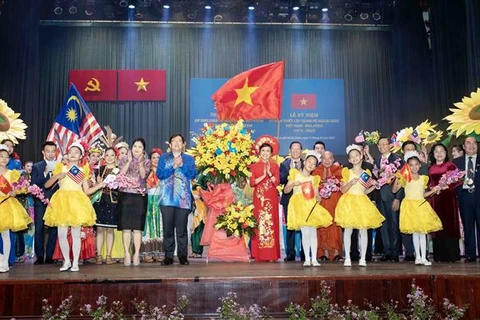
In Vietnam's relationship with Malaysia, people-to-people diplomacy plays a particularly important role and is becoming more and more important.
The Vietnam-Malaysia Friendship Association was established on June 5, 1994. The association has maintained regular exchanges with the Malaysian Embassy in Hanoi and the Vietnamese Embassy in Kuala Lumpur. On March 8, 2022, the Malaysian government granted a license to establish the Malaysia - Vietnam Friendship Association.
Currently, there are around 30,000 Vietnamese people living in Malaysia./.
Malaysia ranks second in ASEAN and 10th out of 140 countries and territories pouring capital into Vietnam, with 702 valid projects totaling 13 billion USD in 32 out of the 63 provinces and cities.
Meanwhile, Vietnam has 21 valid projects totaling 853 million USD in Malaysia, ranking ninth out of 78 countries and territories investing in the country.
At present, around 12,000 Vietnamese people are working in Malaysia, accounting for nearly 1% of the number of foreign workers in the nation.
Over the past years, Vietnam and Malaysia have also promoted collaboration in education, culture-tourism, science and technology and people-to-people exchange.
Currently, there are about 1,000 Vietnamese students studying in Malaysia. The two sides signed a Memorandum of Understanding on cooperation in education on March 6, 2019 to replace the one inked in 2004, and another on cooperation in the field of higher education on October 17, 2023.
Malaysia is among 10 markets seeing the largest numbers of Vietnamese tourists. Before the COVID-19 pandemic, the total visitor exchange between the two countries in 2019 reached about 1 million. In 2022, Vietnam welcomed more than 170,000 Malaysian tourists, and Malaysia also served about 170,000 Vietnamese travellers.
In Vietnam's relationship with Malaysia, people-to-people diplomacy plays a particularly important role and is becoming more and more important.
The Vietnam-Malaysia Friendship Association was established on June 5, 1994. The association has maintained regular exchanges with the Malaysian Embassy in Hanoi and the Vietnamese Embassy in Kuala Lumpur. On March 8, 2022, the Malaysian government granted a license to establish the Malaysia - Vietnam Friendship Association.
Currently, there are around 30,000 Vietnamese people living in Malaysia./.
VNA