Manufacturing enterprises need to adapt to trends to develop: experts

Besides the factors of price, product quality and delivery time, green and sustainable development are competitive criteria that more and more markets are requiring from suppliers in Ho Chi Minh City as well as across the country.

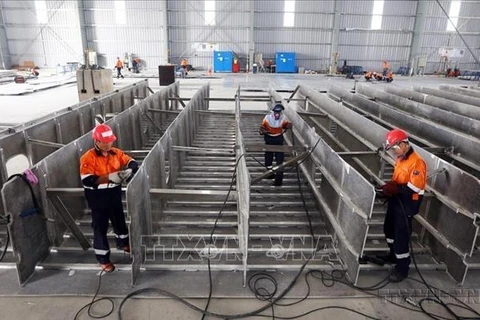
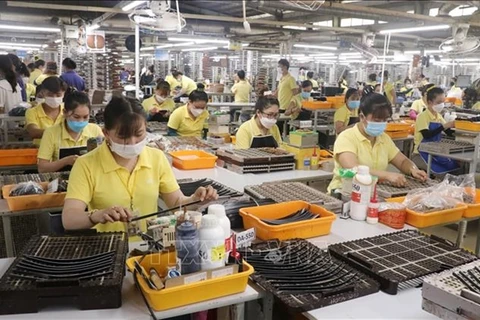
Illustrative image (Photo: vneconomy.vn)

HCM City (VNS/VNA) - Besides the factors of price, product quality and delivery time, green and sustainable development are competitive criteria that more and more markets are requiring from suppliers in Ho Chi Minh City as well as across the country.

Although manufacturing enterprises in the city are constantly striving to contribute to the recovery of economic growth, many domestic and foreign challenges are affecting businesses.

According to experts, the current global economic context requires manufacturing enterprises to convert production according to market trends, especially product standards that must meet consumer tastes.

Conflicts around the world such as between Russia and Ukraine are creating a series of new difficulties for manufacturing businesses.

In addition, the challenges of inflation, consumer markets and technical barriers are also challenges for manufacturing enterprises to quickly adapt to new market trends.

The EU market has introduced a series of new policies on ecological products, expanding responsibility for manufacturers, supply chain traceability, recycling and special requirements to reduce carbon emissions.

When these series of policies are issued, they will require all countries exporting to the EU market to comply. Obviously, this is a big challenge for manufacturers, including Vietnam. If Vietnamese businesses want to participate in the supply chain, there is no other option than to comply with consumer regulations.

Bui Ta Hoang Vu, director of the City's Department of Industry and Trade, said the City's index of industrial production (IIP) in June increased only 0.3% over the previous month and increased 7.8% over the same period a year ago.

Meanwhile, the IIP index in the first six months of the year reached a growth rate of 5.6% over the same period last year, the biggest increase in the last three years.

However, the production index of four key industries including pharmaceutical chemistry, food processing, mechanical engineering, and electronic manufacturing in the first six months of 2024 increased by 5% over the same period, 0.6 percentage points lower than the industry-wide IIP.

The production index of the three traditional industries of clothing, textiles, leather and leather products decreased by 2.3% over the same period.

These statistics show that industrial production activities in the City are recovering but may not be sustainable.

Faced with these difficulties, manufacturing enterprises need to proactively change strategies in accordance with market trends and improve quality to meet increasingly strict production standards, experts said.

Nguyen Anh Duc, Chairman of the Association of Vietnam Retailers and general director of Saigon Co.op, said that switching to production that closely follows market trends is no longer an option but a mandatory requirement. Currently, businesses that want to survive and develop sustainably must overcome "green production" criteria such as meeting waste treatment standards, energy-saving production and waste recycling solutions.

Besides price, product quality and delivery time, green and sustainable development are competitive criteria that more and more global markets are demanding from suppliers.

In additional, applying digital transformation in production and distribution activities is also one of the big challenges for domestic businesses, Duc added.

Many micro, small and medium-sized enterprises do not prioritise greening in production because of many limitations such as human resources and access to capital.

According to a survey by the Ministry of Planning and Investment, 98% of domestic micro, small and medium enterprises face many difficulties in changing their business models to green standards and applying digital transformation.

Therefore, most small and medium-sized enterprises have only just learned about green production models and digital transformation applications without taking actions towards sustainable development.

There are many barriers to carrying out green development, especially micro, small and medium sized units. About 70% of businesses have not been made fully aware of green development and the benefits of pursuing a circular economy.

Foreign retailers possess advantages in terms of capital, technology and expertise, and domestic enterprises are at a disadvantage when trying to go digital, he said.

To enhance their position in the market, manufacturing enterprises need to promote investment in research and development, technological innovation and improvement of production processes according to green and circular trends. Manufacturing businesses also need to focus on building and protecting brands, improving management capacity and developing effective distribution channels.

Manufacturing enterprises also need to change their management style and apply digital transformation to have a continuous flow of data to the factory so that leaders can update and make timely decisions to meet requirements.

In addition to the efforts of businesses, government support also plays an important role.

Policies on capital support, cooperation promotion, infrastructure investment and trade defense capacity enhancement also play an important role in promoting the sustainable development of businesses./.
VNA

See more

Vietnam, RoK expand supply chain, manufacturing cooperation

Vietnam, RoK expand supply chain, manufacturing cooperation

Beyond sourcing products, RoK companies aim to build long-term partnerships with Vietnamese firms through product showcases, business-to-business (B2B) matchmaking, investment opportunities and sustainable supply chain development.

Ho Chi Minh City, GTEL partner on technology transfer for metro network

Ho Chi Minh City, GTEL partner on technology transfer for metro network

The two sides will study and localise key technologies covering signalling, communications, power supply, electromechanical systems (E&M), SCADA, operations control centres (OCC), automatic fare collection (AFC) and platform screen doors (PSD), while advancing technology transfer, workforce development and the capabilities of domestic enterprises.

Vietnamese Ambassador to Laos Nguyen Minh Tam and Lao Deputy Minister of Industry and Commerce Phouthavanh Nanthavong visit a Vietnamese booth at VIETLAO EXPO 2026. (Photo: VNA)

Vietnam-Laos trade targets 10 billion USD

Held on the sidelines of VIETLAO EXPO 2026, the seminar aimed to help businesses explore trade and investment opportunities and foster cross-border production and supply chains.

Standing Deputy Prime Minister Pham Gia Tuc chairs a meeting with representatives of US business associations and companies operating in Vietnam on July 17, 2026. (Photo: baochinhphu.vn)

Standing Deputy PM meets with US business community

Chairing a meeting with representatives of US business associations and companies operating in Vietnam, Tuc praised the US business community for its substantive contributions to Vietnam's socio-economic development as well as the two countries’ relations.

Workers assembles electronic components on the production line at the Bao Sen Co., Ltd. in Bac Ninh province. (Photo: VNA)

Vietnam's economy needs to shift from quantity to quality: ADB experts

Shantanu Chakraborty, ADB Country Director for Vietnam, noted that while achieving strong growth in a single year is encouraging, maintaining both the pace and quality of growth over many years will be essential if Vietnam is to achieve its goal of becoming a high-income country by 2045.

The Long Son Petrochemical Complex, an investment project of Thailand's SCG Group, is located in Long Son commune, Ho Chi Minh City. (Photo: VNA)

Vietnam reshapes FDI strategy with focus on technology, innovation

Politburo Resolution No. 10-NQ/TW, issued on June 8, 2026, recognises the foreign-invested sector as an important component of the national economy, signalling a major shift in the country's investment attraction strategy. Rather than prioritising labour-intensive projects, Vietnam is now seeking high-quality investments capable of driving technological progress, innovation, sustainable development and stronger participation in global value chains.

International tourists love shopping for souvenirs at Hanoi's Old Quarter night market (Photo: VNA)

Hanoi aims to raise tourists' night-time spending to 30%

Hanoi will establish and operate flagship night-time economy zones supported by preferential policies, including heritage and cultural districts in Hoan Kiem, Cua Nam, Ba Dinh, Son Tay and Soc Son; modern entertainment hubs in Tay Ho-West Lake West, My Dinh and Dong Anh; creative economy zones linked to cultural industries such as theatres, cinemas and museums; and cultural tourism and resort destinations in suburban craft villages including Bat Trang, Ba Vi and Huong Son.

Vietnamese Ambassador to Laos Nguyen Minh Tam and Lao Deputy Minister of Industry and Commerce Phouthavanh Nanthavong visit the Vietnamese pavilion at VIETLAO EXPO 2026 (Photo: VNA)

VIETLAO EXPO 2026 helps boost Vietnam-Laos strategic cohesion

The Vietnam-Laos Trade Fair 2026 (VIETLAO EXPO 2026) opened on July 16 in Vientiane, serving as a key platform for businesses from both countries to showcase products, seek partnerships, transfer technologies and expand investment cooperation.

The Vietnam-EFTA FTA is one of the longest-negotiated trade agreements in Vietnam's history. (Illustrative Photo: VNA)

Vietnam-EFTA deal set to further boost bilateral trade growth

The Vietnam-EFTA FTA is one of the longest-negotiated trade agreements in Vietnam's history, reflecting its broad scope of commitments covering trade in goods and services, investment, intellectual property, government procurement, environmental protection, sustainable development, small and medium-sized enterprises (SMEs), and other areas of cooperation.

Passengers and visitors check in at Terminal 1 of Noi Bai International Airport. (Photo: VNA)

Hanoi-Ho Chi Minh City route among world’s busiest

According to IATA’s ranking of global air passenger markets, the US remained the world’s largest market in 2025, with 890.1 million passengers, up 1.6% from 2024. China, the world’s second-largest market, recorded stronger growth of 4.8%, reaching 776.1 million passengers. China is widely forecast to overtake the US and become the world’s largest air passenger market in the 2030s.

An overview of the working session between the Kazakh delegation and the Can Tho City People's Committee on July 16. (Photo: VNA)

Kazakhstan explores agricultural by-product recycling project in Can Tho city

The proposed project would use rice husks as its primary feedstock, with an estimated one million tonnes processed annually using advanced technology developed in Kazakhstan. At present, the top priority is to secure a stable supply of raw materials from rice-producing provinces across the Mekong Delta.